


TOP-5 studies on sports and bodybuilding from 08.08.2026 - 15.08.2026
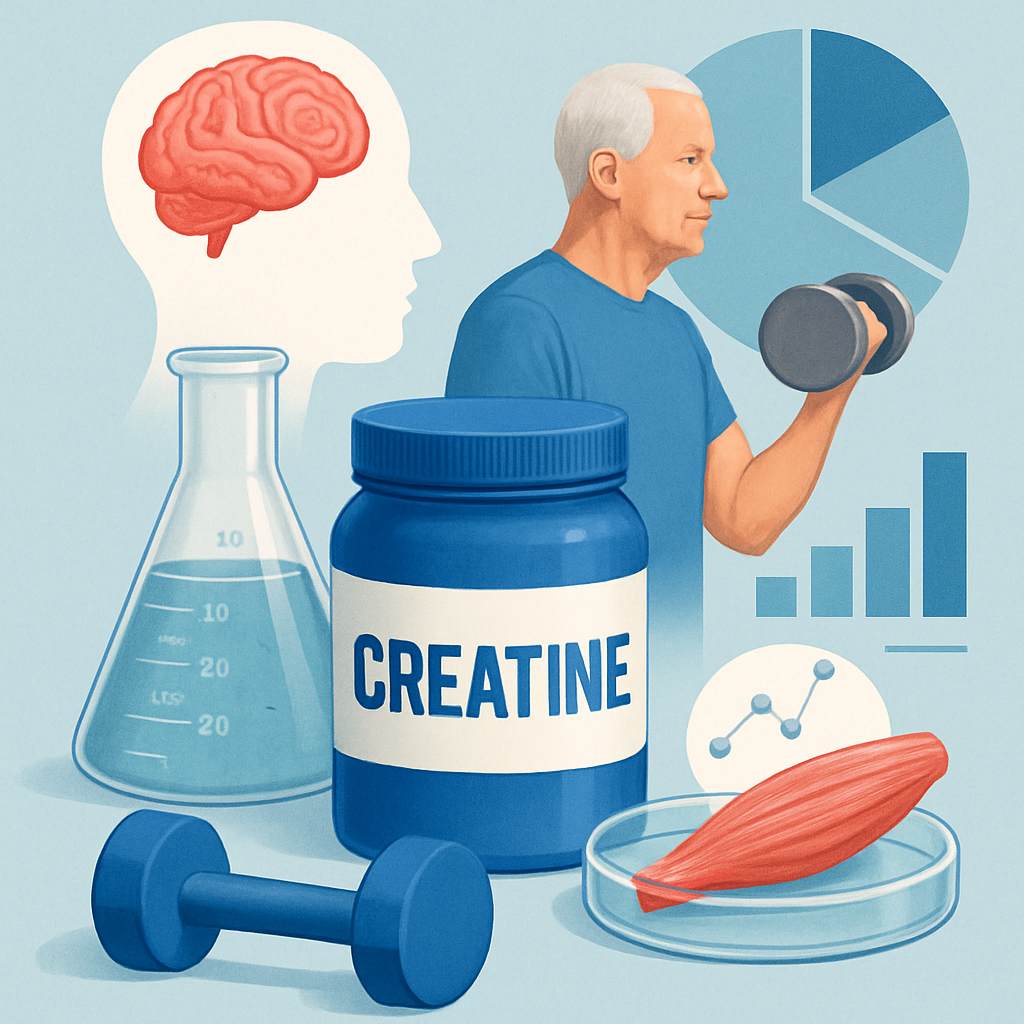

The influence of creatine supplementation with and without physical activity, as well as with and without dietary interventions, on body composition, cognitive functions, and health indicators in middle-aged and older adults; A machine learning-derived sarcopenia signature reveals a high-risk molecular state in skeletal muscle in type 2 diabetes; Common mechanisms of musculoskeletal dysfunction in type 2 diabetes: Perspectives on future therapeutic directions (Review); Neuromuscular determinants of performance in rowing: a systematic review and meta-analysis; Production, regulation of cells, and co-culture strategies for vascularization and neural innervation of skeletal muscle tissue.


5. The impact of adding creatine with and without intervention in physical activity and diet on body composition, cognitive functions, and health markers in middle-aged and older adults.
About the work.
The study aims to evaluate the impact of creatine supplementation on body composition, cognitive functions, and health markers in middle-aged and older adults. The effects of creatine in the absence of physical activity and dietary interventions were compared with the effects when they were present.
Results.
Creatine without physical activity and diet increased muscle mass, strength, and endurance, as well as contributed to improvements in lipid profile and cognitive functions. When creatine was added during physical activity and diet, a greater reduction in body fat percentage and improvements in strength and endurance were observed.
4. A machine learning-derived sarcopenia signature reveals a high-risk molecular state in skeletal muscle in type 2 diabetes.
About the work.
The study aims to identify molecular markers of sarcopenia in skeletal muscle in type 2 diabetes (T2D) using machine learning. Associations between molecular state and physical performance of the lower limbs were assessed.
Results.
The model achieved an AUC of 0.906 in the training set and 0.762 in the validation set. High-risk molecular states were associated with inflammatory processes, extracellular matrix, adhesion, and stress responses. A higher score of the frozen signature was associated with lower SPPB scores.
3. Common mechanisms of musculoskeletal dysfunction in type 2 diabetes: Perspectives on future therapeutic directions (Review).
About the work.
The review is dedicated to the impact of type 2 diabetes on the musculoskeletal system, including skeletal muscles, tendons, tendon-bone interface, and bones. Common and specific pathophysiological pathways of these tissues are discussed.
Results.
Common pathogenic mechanisms such as metabolic dysregulation, chronic inflammation, oxidative stress, extracellular matrix remodeling, and impaired regenerative capacity were identified. These mechanisms may serve as a basis for identifying new therapeutic targets.
2. Neuromuscular determinants of performance in rowing: a systematic review and meta-analysis.
About the work.
The aim of this study was to examine the relationship between neuromuscular strength indicators and performance on the rowing ergometer. Data from 11 studies meeting the inclusion criteria were analyzed in the systematic review and meta-analysis.
Results.
Meta-analyses showed strong, significant correlations between maximum strength in leg press/squats (r = -0.72, p < 0.01) and performance on the rowing ergometer.