


Sarcopenia
Sarcopenia is loss of muscle mass and strength that affects not only appearance but also walking, stability, metabolism, recovery and fall risk, so the key issue is not only weight but actual muscle function.



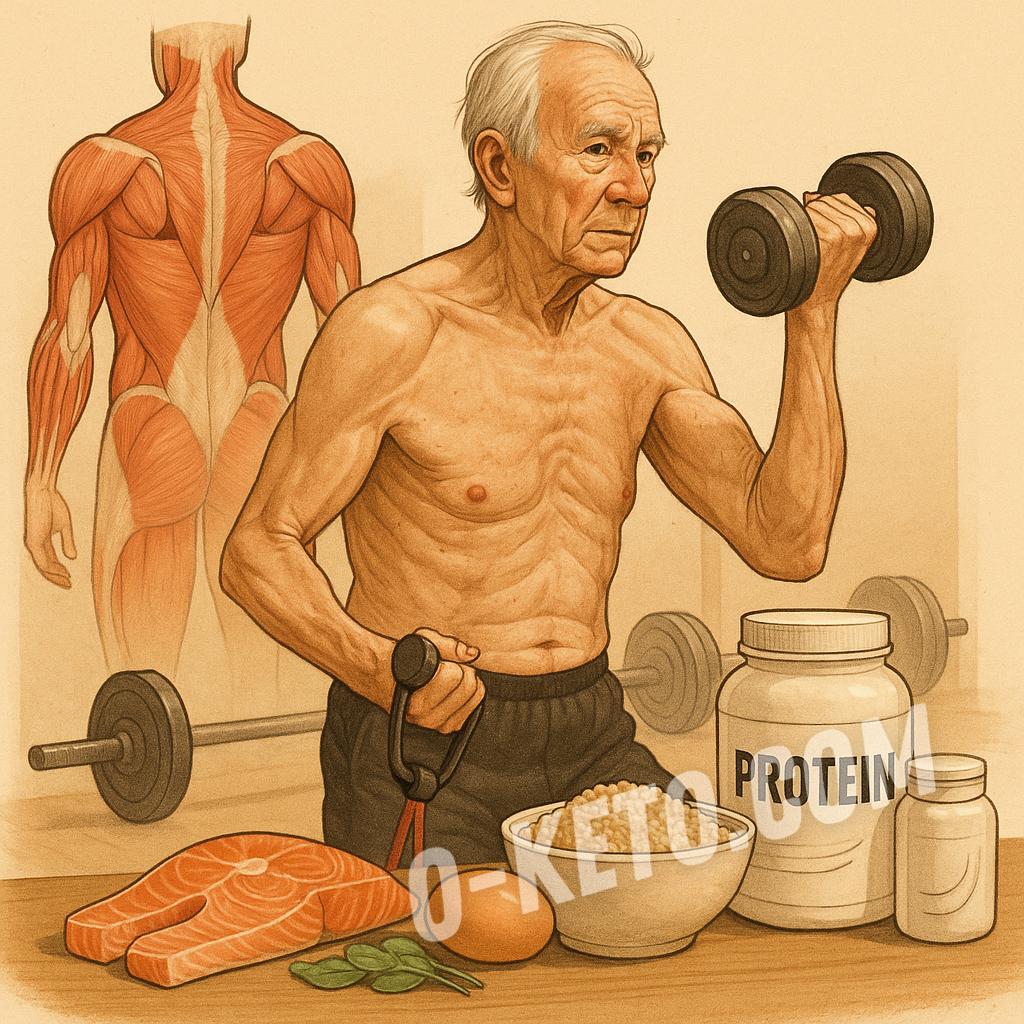
Sarcopenia is a state of losing muscle mass and, even more importantly, muscle strength and function. It is often described as “natural age-related muscle loss,” but in practice it is far more important than that because it affects stability, grip strength, walking, recovery, illness tolerance and overall metabolic reserve. This is why sarcopenia matters not only in older age: it may also develop earlier with undernutrition, chronic inflammation, serious illness, inactivity and rapid weight loss. Loss of muscle is not just an aesthetic issue, but a question of the organism’s functional reserve.
Why muscles are lost
Age-related change, reduced physical activity, low protein intake, chronic inflammation, hormonal shifts, illness, post-hospital recovery, energy deficiency and neuromuscular deconditioning all contribute to sarcopenia. Sometimes the problem develops quietly because body weight may stay fairly stable while fat mass remains and muscle gradually disappears. This is why ordinary scales can be misleading. In practice it is more useful to ask whether it is becoming harder to stand up, walk, keep pace and recover than to focus on weight alone.
A common mistake is to assume that if body weight looks “normal,” muscle reserve must also be fine.
How it shows up in life
Typical signs include reduced strength, fatigue, unsteady gait, difficulty rising from a chair, worse balance, slower movement and loss of endurance. In some people the first obvious sign is frequent falling or the feeling that the body has become unreliable. In others sarcopenia becomes visible during illness, when infection, surgery recovery or ordinary daily activity are tolerated much worse than expected. This again shows that muscle is not only about body shape, but about the resilience of the whole organism.
Functional losses are often felt before a person clearly realizes how much muscle reserve has already been lost.
Protein, movement and metabolic background
Sarcopenia is tightly linked to protein intake, resistance-type activity, recovery quality, hormonal state and the overall inflammatory background. Even an apparently good diet does not fully protect muscle if there is no meaningful loading, yet exercise works poorly when chronic protein and energy deficiency are present. This is why nutrition, movement and the reasons that interfere with muscle maintenance all matter. In low-carbohydrate or ketogenic patterns this can be especially visible: if calories are cut too hard and protein is not adequate, muscle loss may accelerate even while body fat is dropping impressively.
The practical aim is not only weight loss, but preservation of a better body composition and stronger function.
Why sarcopenia is often noticed too late
Sarcopenia is easy to miss when attention stays fixed only on body weight or on the fact that weight is going down. A person may be losing not only fat, but also functionally valuable muscle tissue without realizing that this is why movement and recovery feel worse. This is especially common after illness, crash dieting, long inactivity and in older age. In practical terms it is important to notice not only body mass, but also strength, balance, walking speed and tolerance of ordinary physical load.
Why sarcopenia is more serious than it seems
Less muscle does not simply mean weaker legs. It means worse illness tolerance, higher fall risk, slower recovery, less metabolic reserve and greater risk of losing independence later in life. When muscle function drops, insulin sensitivity, everyday stamina and the ability to withstand stress also suffer. That is why sarcopenia is not “just aging,” but an important target for prevention, nutrition and movement strategy.
The earlier the shift toward muscle weakness is noticed, the easier it is to turn the situation back toward greater resilience.
When closer review is needed
Closer review is needed with clear weakness, repeated falls, rapid weight loss, chronic undernutrition, serious disease, poor recovery or the sense that strength is disappearing faster than can be explained by “age.” The most sensible way to think about sarcopenia is as a state of reduced muscle function and reserve that demands attention to protein, movement, causes of loss and the wider health picture.
If you have any questions about the term "Sarcopenia", you can ask them to AI. Please note, a low-cost OpenAI model is used. It may answer questions about disease treatment with errors!


 1 / 4
1 / 4


 1 / 4
1 / 4 1 / 4
1 / 4