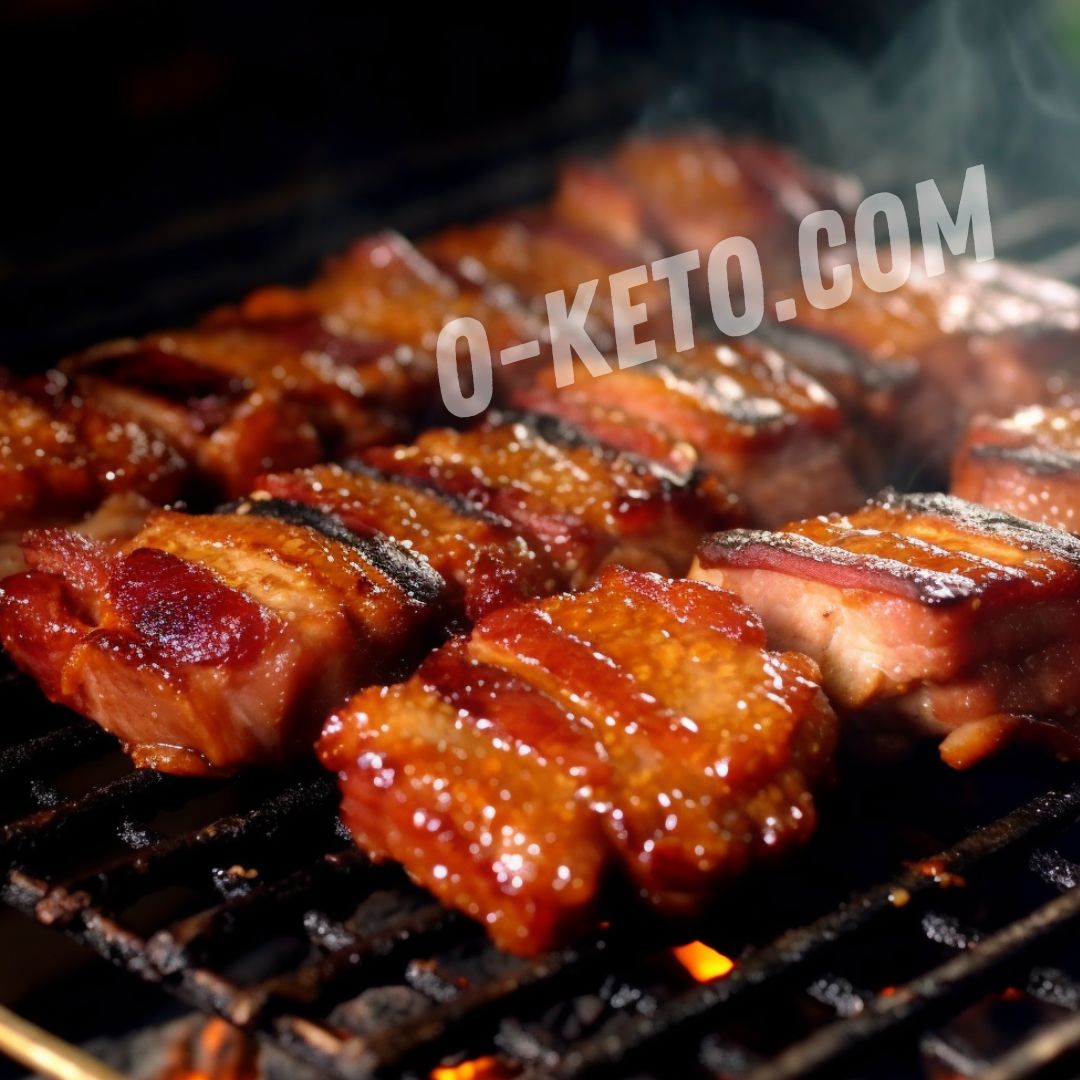

Pork is versatile meat used for pan cooking, oven dishes, slow braising, broths, minced dishes, homemade sausages, and cold appetizers. In a keto diet, the most convenient option is natural pork without sweet marinades, breading, starch-thickened sauces, or ready-made glazes. This keeps the dish easy to control.
The nutritional value depends on the cut. Tenderloin and loin are leaner, neck and belly are fattier, while ribs and shoulder work well for long gentle cooking. Pork cannot be judged by one number: the final plate depends on the cut, amount of fat, sauce, side dish, and portion size.
Nutritional value
Natural pork provides complete protein, B vitamins, especially B1, B3, B6, and B12, as well as iron, zinc, selenium, and phosphorus. A 100 g portion may contain about 20-27 g of protein, while the fat content varies widely. Meat without additives contains no carbohydrates, so its glycemic index is zero.
Fat content is the main practical parameter. Lean cuts are easier to fit into a menu where fat already comes from sauce, cheese, or oil. Fattier cuts provide richer taste and satiety, but they raise calories faster. In keto this is not a mistake, but portion and side dish matter more.
Processed pork products should be judged separately. Bacon, ham, sausages, smoked meats, and deli products may contain sugar, dextrose, starch, crumbs, flavor enhancers, and a lot of salt. Even with few carbohydrates, such products are different from a simple piece of meat.
Is it suitable for keto?
Fresh pork without additives fits keto and LCHF well. Problems usually come not from the meat itself but from sweet barbecue sauce, honey glaze, store-bought marinade, flour, breading, sausage fillers, and sides made from potatoes, grains, or bread.
For strict keto, clear dishes are easier: pork neck with sugar-free cabbage salad, shoulder with mushrooms, ribs with dry spices, cutlets without bread, tenderloin with creamy sauce and herbs. If a ready-made sauce is used, its ingredient list should be checked separately.
How to choose cuts
Neck stays juicy in a pan and in the oven because of marbling. Tenderloin is soft but needs short cooking and dries out easily. Shoulder is suitable for long braising because connective tissue gradually softens. Belly and ribs give a fattier, richer result.
For minced meat, it is better to choose meat with a known fat ratio rather than the cheapest ready-made mince with unclear composition. For soup and broth, cuts with bone and connective tissue work well. For quick dishes, choose pieces that can be sliced across the grain and cooked without long processing.
If a milder taste is needed, loin, boneless loin, or tenderloin can be used and the sauce added separately. If richness is the goal, neck, ribs, belly, or shoulder are better choices. For keto this is convenient: the fat level can be matched to the day instead of treating all pork as the same.
How to cook
Fattier cuts tolerate long gentle cooking well, while lean cuts require more precise timing. Salt can be added in advance for large pieces, and acidic sugar-free marinades make the flavor brighter. Garlic, sugar-free mustard, rosemary, thyme, paprika, bay leaf, pepper, and cumin all work well.
For safety, pork should be cooked through, without a raw center. At the same time, it does not need to be dried out: lean cuts are better removed from heat on time and allowed to rest briefly before slicing. Large pieces are easier to cook slowly so the meat becomes tender without a harsh crust.
Good keto options include:
- pork neck from the oven with cabbage and cucumber salad;
- ribs with dry spices and a vegetable side;
- cutlets without bread, with egg, onion, and herbs;
- shoulder braised with mushrooms or cauliflower;
- pan-cooked tenderloin with creamy sauce and spinach.
How to choose and store
Fresh meat smells neutral, has a firm texture, and shows a natural color. A sticky surface, gray patches, too much liquid in the package, or a sharp odor are poor signs. For pan cooking, cuts with thin streaks of fat are convenient; for slow cooking, denser pieces work better.
Raw meat should be stored away from ready-to-eat food, in a closed package or container, on a cold refrigerator shelf. For longer storage, freeze it in portions. Thawing is safer in the refrigerator rather than on the counter. Freezing again worsens the texture.
Limits and substitutes
Pork can be very calorie-dense, especially belly, ribs, bacon, and sausages. If the dish is already fatty, it is better to add greens, cabbage, cucumbers, mushrooms, zucchini, or a sour sugar-free sauce rather than another heavy side dish.
Depending on the recipe, pork can be replaced with beef, veal, chicken, turkey, or lamb. If juiciness is needed, choose a less lean cut or add a butter-based sauce. If a lighter texture is needed, poultry, veal, or lean beef work better.