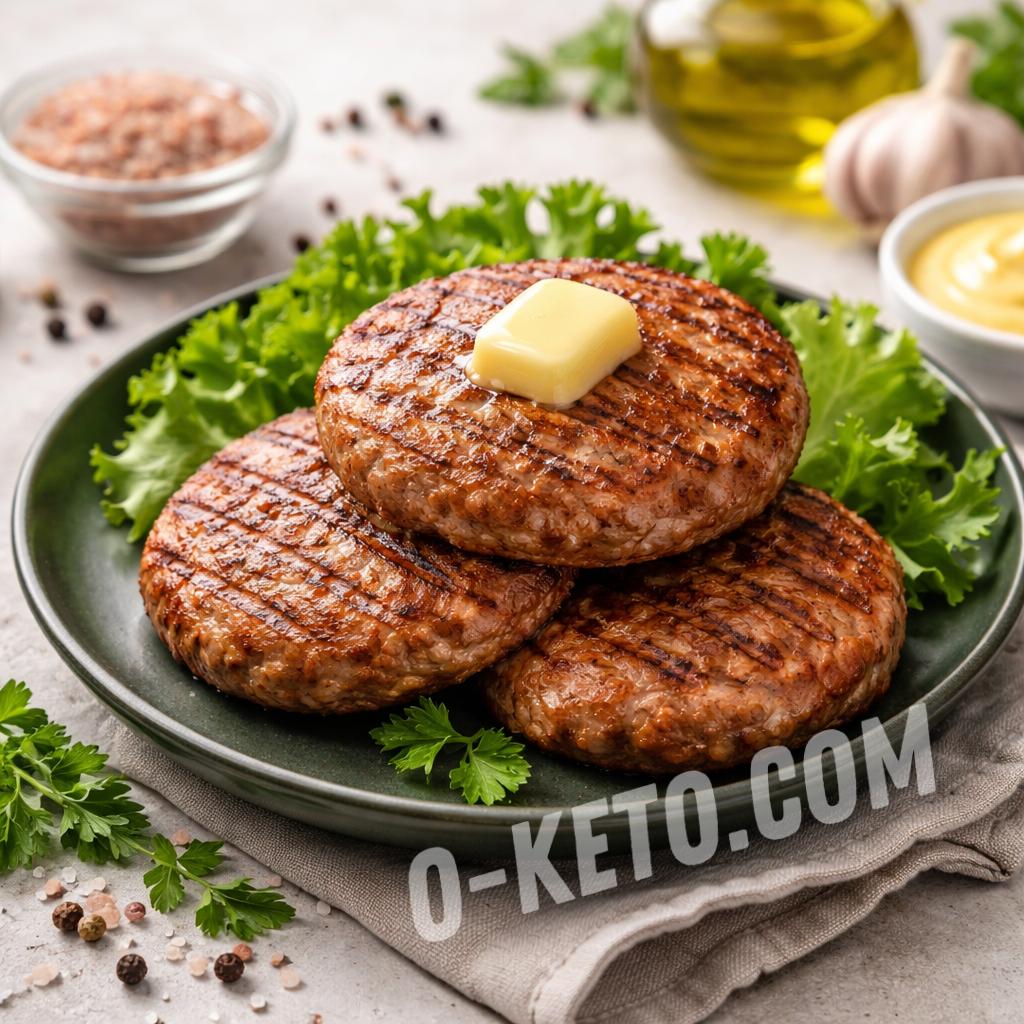

Juicy keto patties are not about bread and semolina, but about the proper handling of protein, fat, and temperature. Juiciness is determined by how much moisture and fat the meat can retain during cooking. When heated, protein contracts and pushes out juice, so the goal is to minimize losses and create a structure that holds moisture inside.
How to Retain Juice Without Carbs
In the classic version, starch, flour, bread, semolina, potatoes, or rice are used for juiciness. In keto, such components are excluded. Their role can be replaced by other ingredients that work through fat, collagen, and fiber.
Options for keto components to retain moisture:
- finely ground pork skin or collagen powder;
- psyllium in small amounts;
- coconut or almond flour (1–2 tbsp per 1 kg of minced meat);
- egg yolk;
- cream cheese or mascarpone;
- finely grated zucchini, squeezed from excess moisture.
After adding the ingredients, it is advisable to let the minced meat rest in the refrigerator for 30–60 minutes. During this time, the fiber and protein structures will bind the moisture, and the mixture will become more stable.
Adding “Juicy” Components
Juiciness is not just water, but also fat. In keto, fat plays a key role in texture and flavor:
- fatty beef or mixed minced meat with a fat content of at least 20%;
- beef or bone broth;
- butter or clarified ghee;
- finely chopped lard;
- hard cheese with good melting properties.
The optimal ratio for keto patties is at least 20–25% fat in the total mass. Too lean meat will almost always yield a dry result.
Technology That Preserves Juiciness
Cold mince. The meat, fat, and all add-ins should stay cold. If the cut pieces of meat or poultry are lightly chilled before grinding, they cut more cleanly, smear less, and give the mince a tighter texture without extra wateriness.
It is better not to beat the mince. For patties, beating usually makes the mass denser and later pushes out more juice during cooking. It is more reliable to mix the mince thoroughly but gently with a fork or a stiff whisk until it becomes sticky and even.
Breading is not always necessary. If you want a crisp crust and the patties will be eaten right away, breading makes sense. But for batch cooking, reheating, or a cleaner keto version, it is often better to fry them without breading so the crust does not turn soggy and the meat flavor stays clearer.
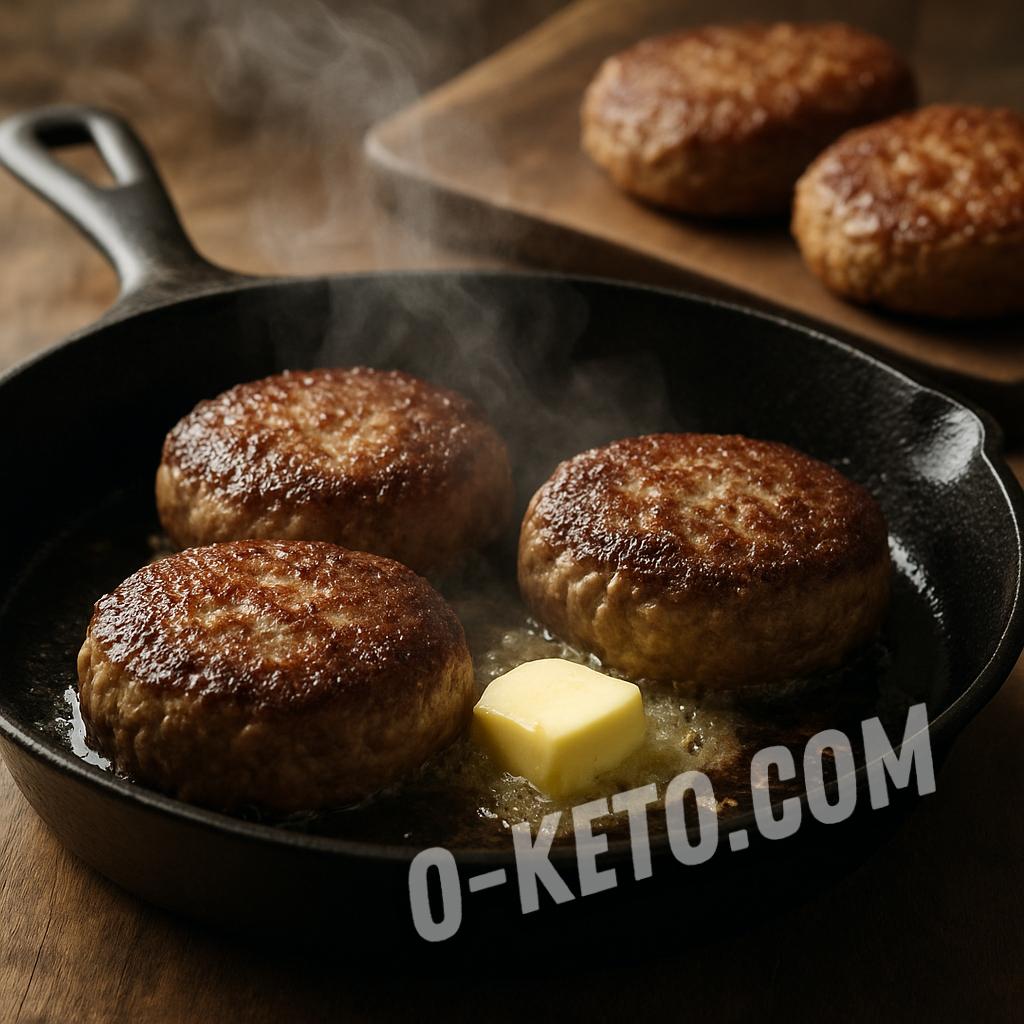
Proper cooking. Put the patties onto a well-heated pan so the surface sets quickly. Then lower the heat and finish them calmly. If the patties are large or you are cooking many at once, it is convenient to finish them in the oven after a short sear.
Additional Keto Secrets
A short rest in the refrigerator after mixing or after shaping also helps juiciness. During this time the fat firms up again and the patties hold their shape more neatly in the pan.
- do not flip the patties too often;
- do not pierce them with a fork while cooking;
- remove the finished patties from the pan right away instead of leaving them in hot fat;
- let them rest for 5-7 minutes before serving.
Together, these details often matter more than random “secret” ingredients. Juicy keto patties come mainly from cold mince, enough fat, and calm technique.
Sources
- Mechanisms of Water-Holding Capacity of Meat: The Role of Postmortem Biochemical and Structural Changes
- Factors Affecting the Water-Holding Capacity of Red Meat Products: A Review of Recent Research Advances
- USDA Table of Cooking Yields for Meat and Poultry
- USDA FSIS Safe Minimum Internal Temperature Chart