


TOP-5 studies on disease treatment from 27.09.2026 to 04.10.2026
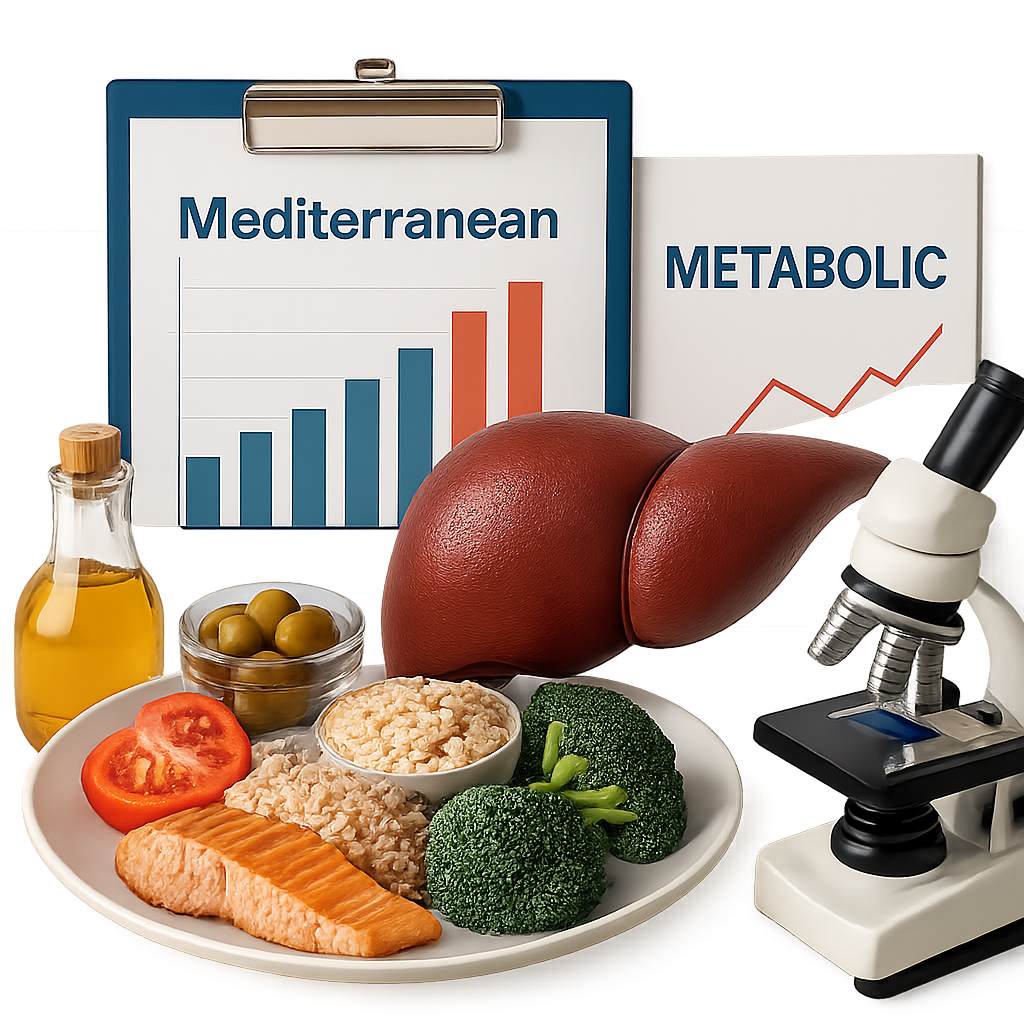

Mediterranean diet and metabolic outcomes in NAFLD/MASLD: systematic review and meta-analysis of randomized controlled trials; Prevalence of metabolic syndrome among Alzheimer's disease patients: systematic review and meta-analysis; Metabolic and endocrine modulation of the gut-adipose tissue axis using probiotics, prebiotics, and postbiotics in overweight dogs; The effect of ice cream sweetened with sugar-free brazzein on continuously monitored glycemic response in patients with metabolic dysfunctional steatosis of the liver: randomized controlled double-blind crossover study; Meal sequence affects postprandial metabolic, hormonal, and appetite responses in healthy male footballers: randomized crossover study.


5. Mediterranean diet and metabolic outcomes in NAFLD/MASLD: systematic review and meta-analysis of randomized controlled trials.
About the work.
The aim of the study was to evaluate the impact of the Mediterranean diet on metabolic and liver outcomes in patients with non-alcoholic fatty liver disease (NAFLD) and metabolic dysfunction associated with fatty liver disease (MASLD). The study compared the outcomes of adherence to the Mediterranean diet versus control diets.
Results.
The Mediterranean diet was associated with a significant reduction in body mass index (SMD -0.43; 95% CI -0.84 to -0.02; p = 0.04) and triglyceride levels (SMD -0.50; 95% CI -0.88 to -0.12; p = 0.01) compared to control diets. No statistically significant differences were found for most other metabolic or liver outcomes.
4. Prevalence of metabolic syndrome among Alzheimer's disease patients: systematic review and meta-analysis.
About the work.
The study aimed to assess the prevalence of metabolic syndrome (MetS) among Alzheimer's disease (AD) patients using a systematic review and meta-analysis. Observational studies reporting the prevalence of MetS among AD patients were included.
Results.
The overall prevalence of MetS among AD patients was 46.7%. In Asia, it was 26.1%, in Europe 52.8%, and in North America 72.2%. Comparative analysis showed an odds ratio of 1.64, but no statistically significant association between AD and MetS was found. Meta-regression revealed a significant relationship between glucose levels and the prevalence of MetS.
3. Metabolic and endocrine modulation of the gut-adipose tissue axis using probiotics, prebiotics, and postbiotics in overweight dogs: systematic review.
About the work.
This systematic review evaluated the effectiveness of probiotics, prebiotics, and postbiotics in modulating the gut-adipose tissue axis in overweight dogs. The study was based on seven experimental trials found in databases.
Results.
The postbiotic Bifidobacterium animalis subsp. lactis CECT 8145 reduced postprandial glucose AUC by 6% during energy restriction. Pasteurized postbiotics Akkermansia muciniphila limited weight gain on a diet, but the effect on glucoregulation was strain-specific. Certain probiotics reduced fasting hyperinsulinemia and maintained adiponectin levels, but improvements in lipid profiles were inconsistent.