


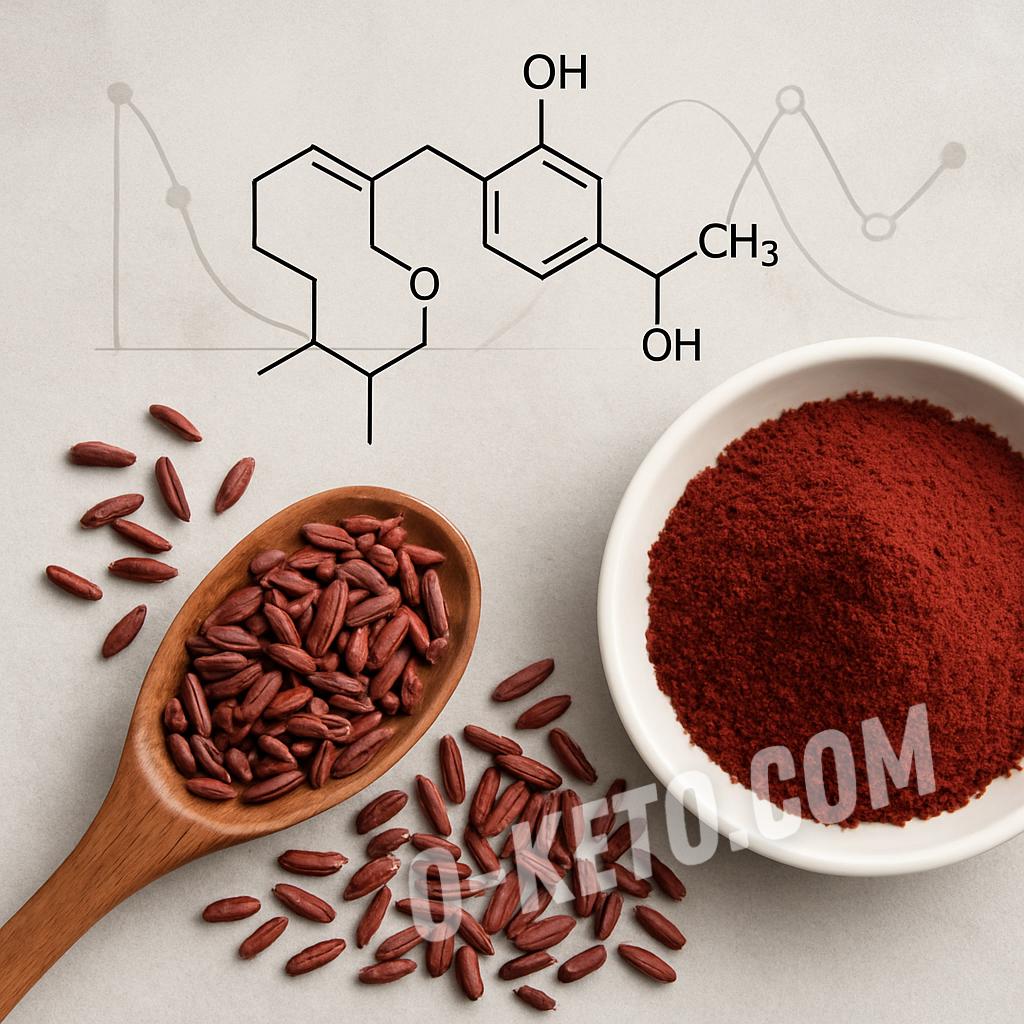

Monacolin K is one of the main active compounds of red yeast rice. It is the component that makes fermented red rice relevant in discussions about cholesterol and lipid metabolism at all. Unlike many gentler plant polyphenols, monacolin K already has a meaningful pharmacologic profile and deserves more caution because its action is close to lovastatin.
Why it matters
If a red yeast rice product does not clearly disclose monacolin K content, there is no reliable way to judge how active it really is or whether it resembles the products discussed in lipid-support protocols. That is why this page focuses on monacolin K itself rather than on the broad ingredient name alone.
Where it occurs
The practical source on this site is red yeast rice. Monacolin K content in these products can vary dramatically: some supplements contain little active substance, while others approach clearly pharmacologically relevant levels. The same product name therefore does not guarantee the same strength.
Practical benchmarks
There is no official food-based daily requirement for monacolin K. This page uses a practical milligram benchmark so readers can compare a product’s potency with the ranges that actually appear in lipid-lowering discussions. For monacolin K the number matters a great deal, because the gap between a weak product and a clinically meaningful one can be large.
What to consider
Monacolin K should not be treated like a neutral everyday nutrient. Extra caution is needed alongside medicines, liver issues, muscle complaints, and especially during pregnancy. On this page it functions mainly as a marker of the active strength of red yeast rice and as a reminder that this is a compound with real pharmacology.