


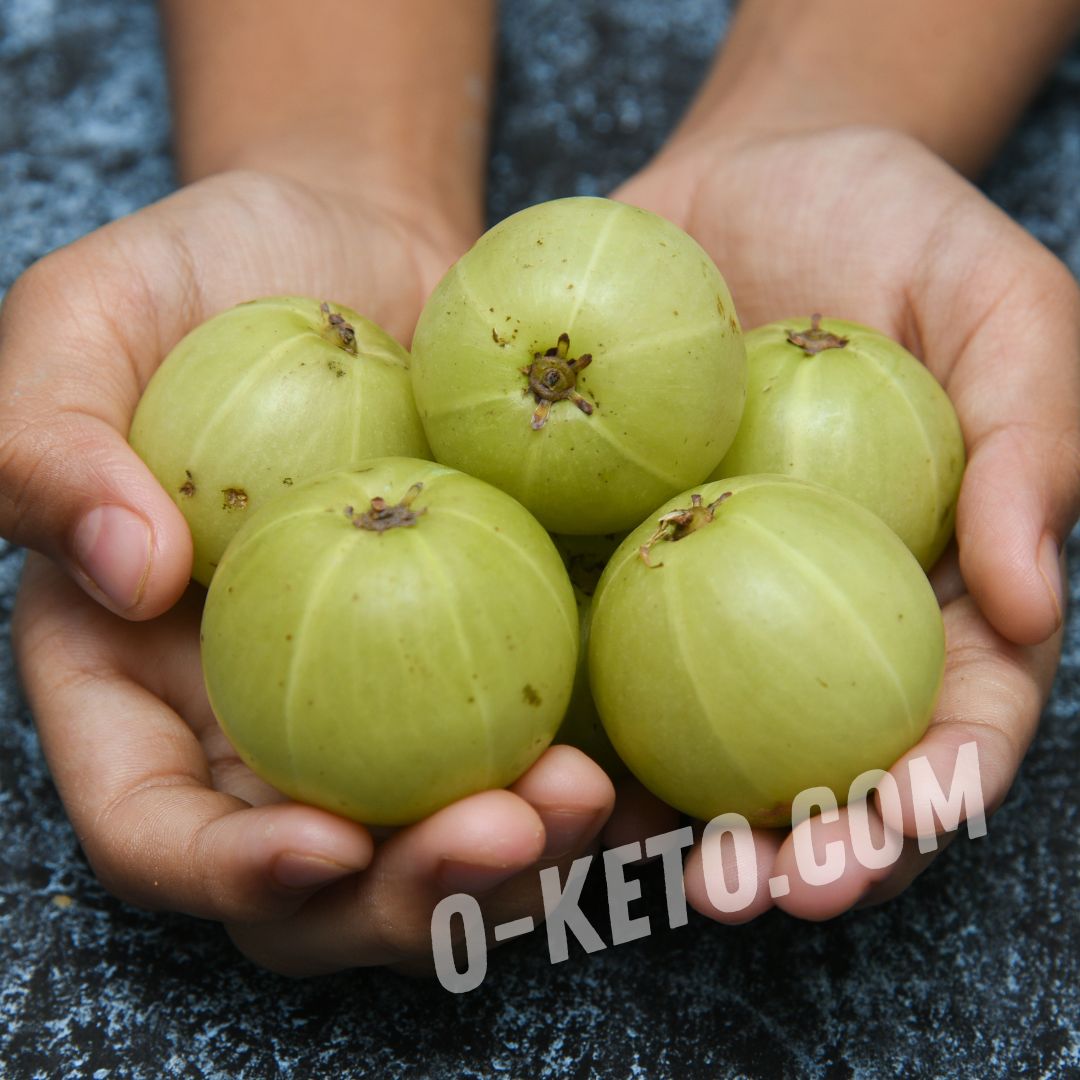

Amla, or Indian gooseberry, is a small sour fruit of the Phyllanthus emblica plant. In India it is eaten fresh, dried, pickled, added to chutneys, spice blends, drinks, and Ayurvedic preparations such as chyawanprash. Its taste is vivid: sour, astringent, tart, sometimes with a slight bitterness. That is why it is rarely eaten in large portions like an ordinary sweet berry.
The main feature of amla is not sweetness, but concentrated acidity, plant acids, tannins, and vitamin C. Older tables often give very high vitamin C values, sometimes around 600–700 mg per 100 g of fresh fruit, but the actual number depends on variety, ripeness, storage, and processing. Powder, dried pieces, juice, and sweetened products differ greatly in composition.
Nutritional value
Fresh amla is usually low in calories: roughly 40–60 kcal per 100 g. It does contain carbohydrates, but because the taste is so sour, the real serving is often small. The fruit also contains fiber, organic acids, potassium, calcium, phosphorus, small amounts of iron, flavonoids, and tannins. This makes the taste dense and tart rather than dessert-like.
Dried amla needs separate attention. If it is simply dried pieces or powder without additions, the serving is usually measured by a teaspoon or a few grams. If amla is candied, turned into sweet pieces, syrup, or a thick sweet tonic, the carbohydrate load will be much higher. For low-carb eating, that is already a different product.
Is it suitable for keto?
For keto and LCHF, amla is better treated as a sour accent, not as a fruit for a large bowl. A small amount of powder in a sauce, sugar-free drink, or marinade is usually easier to fit into the diet than a glass of juice or sweet chyawanprash. What matters is not the fruit name, but the form and serving.
Fresh amla is used little by little: thin slices, sour seasoning, or a mix with salt, ginger, pepper, herbs, or unsweetened yogurt. Amla juice is often diluted with water because it is too sour on its own. Sweet blends with honey, sugar, dates, or molasses are usually unsuitable for strict keto.
How to use it
Amla powder can be added in small amounts to cold drinks, sauces based on unsweetened yogurt, spicy marinades, sugar-free chutneys, sour-salty dressings, and spice blends. It gives acidity and astringency, so it pairs well with ginger, coriander, cumin, mint, black pepper, lemon, cucumber, and fatty dairy bases.
Fresh fruits are sliced thinly because a piece of amla feels much sharper than apple or ordinary gooseberry. In Indian cooking it is often salted, pickled, or combined with spices to soften the astringent taste. A few thin slices are enough for a salad, especially when there is a fatty dressing nearby.
How to choose
Fresh amla should be firm and smooth, without wet spots, mold, or a strong fermented smell. The color may be green, yellow-green, or light amber depending on ripeness. Very soft fruits store worse and develop unpleasant acidity faster.
Powder should smell sour and herbal, without dampness or mustiness. On the package, look for one ingredient: amla, Indian gooseberry, or Phyllanthus emblica. Drink mixes often contain sugar, flavorings, starch, maltodextrin, or sweeteners; for keto this matters more than the attractive word “natural”.
Limitations
Because of its acidity and astringency, amla may irritate a sensitive stomach, intensify heartburn, or cause discomfort in large servings. Caution is needed with easily irritated mucosa, iron supplements, anticoagulants, and other products where compatibility and a stable schedule matter. Amla supplements are better not combined at random with several active complexes.
If pain, burning, nausea, rash, or an unusual reaction appears after amla, reduce the serving or remove the product. Children should receive sour powders and concentrated juices only in small amounts and as part of ordinary food or a drink.
How to store it
Fresh fruits are kept in the refrigerator, dry and unwashed until use. Powder is stored in a tightly closed jar, away from steam, light, and the stove. Moisture quickly spoils texture: powder clumps, the smell becomes flat, and the taste turns rough.
After opening, juice is kept only in the refrigerator and used quickly, especially if it contains no preservatives or sugar. For powder, a small jar is more convenient: it is opened often, but the contents finish before much aroma is lost.
What can replace it?
If a sour fruit note is needed, lemon juice, lime, a little cranberry, green apple in a small serving, or unsweetened sea buckthorn juice can work. If astringency is the goal, sumac, sugar-free pomegranate acidity, or a sour-spicy chutney without sweeteners will be closer. They do not repeat amla completely, but they can solve the same culinary task.


