


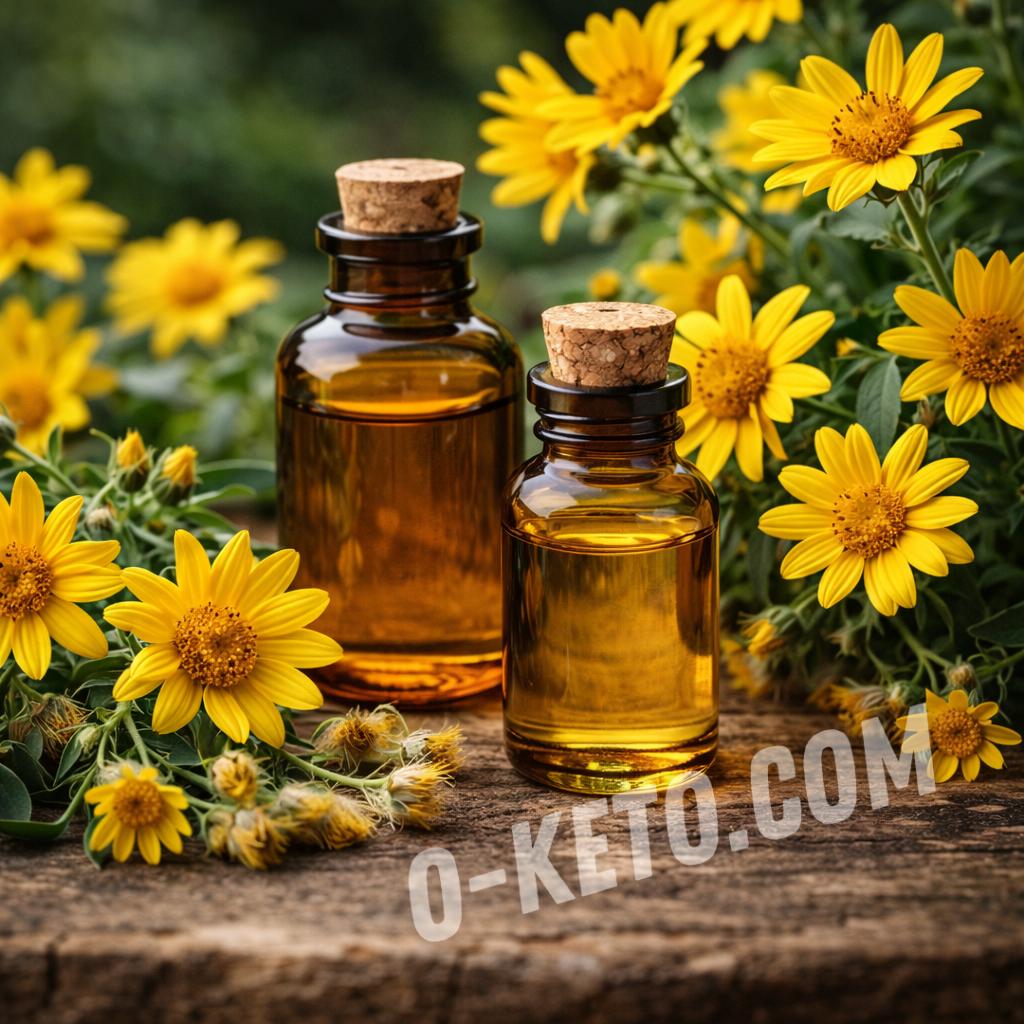

The essential oil of mountain arnica is obtained from the flowers of the plant Arnica montana, which has long been valued in traditional medicine for its pronounced anti-inflammatory and restorative effects. This oil belongs to the category of topical agents and is primarily used for treating soft tissue injuries, muscle strain, and congestion. Arnica is not widely used in classical aromatherapy for emotional correction, but it holds an important place in bodywork and restorative practices, as well as in natural cosmetics.
Unlike many essential oils, arnica requires particularly careful handling. Its active substances have high biological activity, so the oil is used strictly externally and in low concentrations, most often as part of massage blends, balms, and creams.
Composition and Key Properties
The essential oil of arnica is characterized by a complex phytochemical composition. It contains sesquiterpene lactones, flavonoids, triterpenes, and other biologically active compounds that determine its therapeutic effects. These substances provide a pronounced effect when dealing with inflammation, pain, and microcirculation disorders.
The main properties of arnica essential oil include:
- anti-inflammatory action;
- pain-relieving effect for bruises and strains;
- reduction of swelling and hematomas;
- stimulation of local blood circulation;
- acceleration of tissue recovery processes.
Arnica oil is especially valued during the recovery period after physical exertion, injuries, and surgical interventions, when it is necessary to gently support tissue regeneration and reduce inflammatory reactions.
Application in Body Practices and Cosmetology
The primary area of application for arnica essential oil is related to body and skin care. It is widely used in massage oils, sports balms, and recovery products after exertion. Arnica helps to reduce muscle soreness, relieve stiffness, and accelerate the resorption of bruises.
In cosmetology, arnica oil is used for:
- reducing puffiness and signs of fatigue;
- caring for skin with couperose and a tendency to redness;
- accelerating the healing of micro-injuries;
- supporting the skin after cosmetic procedures.
In aromatherapy, arnica is rarely used and, as a rule, not for inhalations, but as a component of complex products aimed at physical recovery.
Features and Limitations of Use
The essential oil of arnica belongs to the group of oils with a limited safety profile. It is not intended for internal use and is not used on damaged skin. Improper or excessive use can cause irritation, allergic reactions, and worsening of skin conditions.
Main contraindications include:
- pregnancy and breastfeeding;
- allergy to plants of the Asteraceae family;
- open wounds and skin damage;
- childhood;
Recommendations for Safe Use
To minimize risks and maximize benefits, it is essential to follow basic rules:
- use the oil only externally;
- dilute in a carrier oil at low concentration;
- do not apply to mucous membranes and eye areas;
- conduct a skin test before first use;
- avoid prolonged continuous use.
The essential oil of mountain arnica is a specialized remedy for the recovery and support of the musculoskeletal system and skin. When used correctly and cautiously, it can significantly accelerate recovery processes and reduce the severity of inflammation while remaining a safe tool for natural therapy.


