


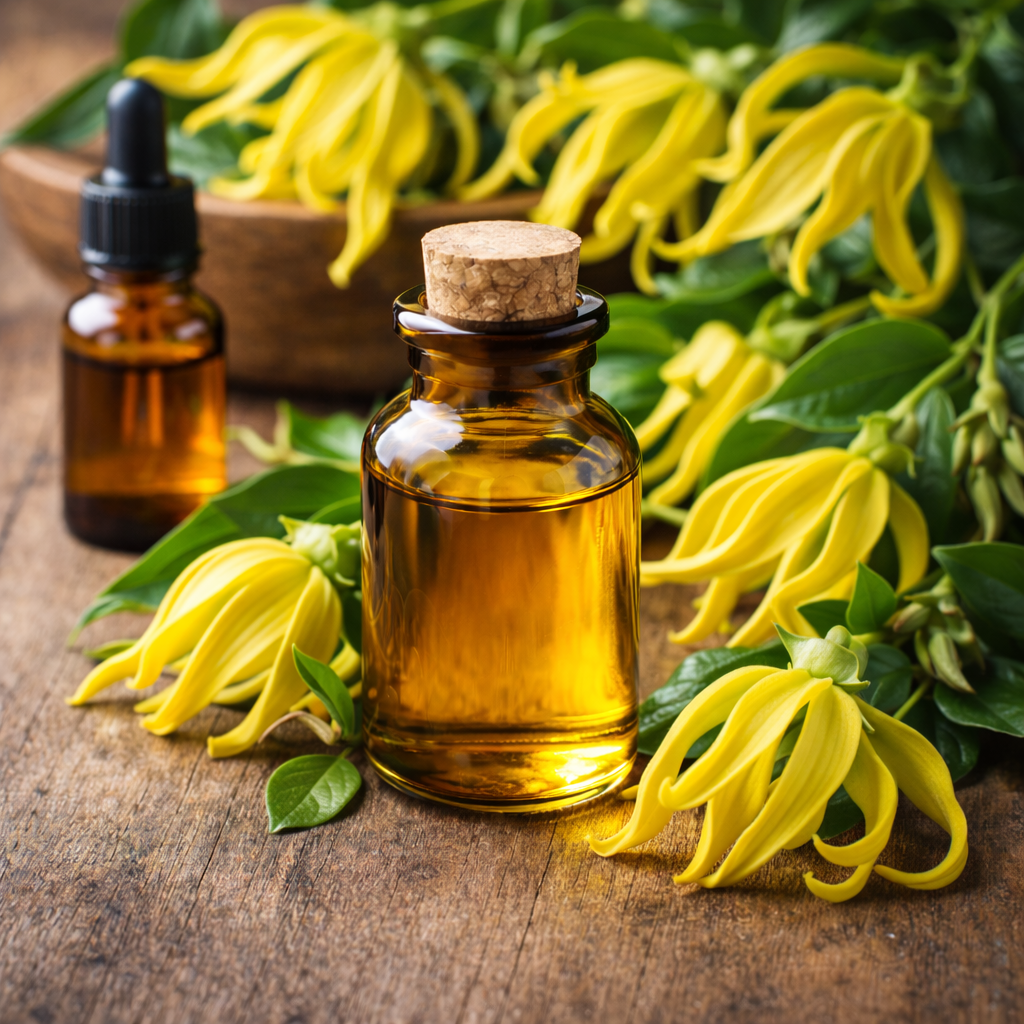

Ylang-ylang essential oil is obtained from the flowers of the tropical tree Cananga odorata. It is characterized by a rich sweet, floral, and exotic aroma and has long been used as a means of harmonizing emotional states and body care.
Ylang-ylang oil is valued for its ability to reduce tension, support the nervous system, and positively affect the condition of the skin and hair. Due to its gentle yet profound action, it is widely used in aromatherapy and cosmetology practices.
History and Origin
Ylang-ylang grows in the tropical regions of Southeast Asia, primarily in the Philippines, Indonesia, and Malaysia. In the traditional cultures of these regions, ylang-ylang flowers were used in rituals, ceremonies, and everyday life. In the Philippines, the petals of the flowers were traditionally scattered on the wedding bed of newlyweds as a symbol of love, harmony, and fertility.
In the 19th century, ylang-ylang essential oil became popular in Europe, especially in France, where it was highly appreciated by perfumers. The oil became an important component of floral compositions and classic fragrances. Over time, ylang-ylang secured a strong place not only in perfumery but also in aromatherapy and natural cosmetics.
Composition and Physiological Properties
Ylang-ylang essential oil has a complex and multi-component composition. It is dominated by aromatic alcohols and esters, which form its characteristic effects on the nervous and endocrine regulation. The oil has a mild sedative effect while simultaneously supporting emotional balance.
The main effects of the oil are associated with relaxation, reduction of stress levels, and improvement of overall psycho-emotional background. Additionally, ylang-ylang exhibits antiseptic and sebum-regulating properties, making it beneficial for skin and hair care.
Main Effects of Ylang-Ylang Essential Oil
- reduction of nervous tension and anxiety;
- support for emotional balance and relaxation;
- normalization of skin condition;
- support for hair and scalp health;
- creation of a sense of coziness and harmony.
Application in Aromatherapy
In aromatherapy, ylang-ylang essential oil is used for relaxation and recovery after emotional overloads. Its aroma helps to slow down the internal rhythm, reduce irritability, and create a sense of safety and comfort. The oil is often used in the evening and in relaxation practices.
Ylang-ylang is well-suited for diffusers and aromatic blends. It harmoniously combines with bergamot, lavender, marjoram, sandalwood, and citrus oils.
Use in Skin Care
In cosmetology, ylang-ylang essential oil is valued for its ability to regulate sebum production and improve the overall condition of the skin. It is used in products for oily, combination, and stressed skin. The oil helps to even out skin tone and maintain its natural balance.
The essential oil is added to creams, serums, and masks in minimal concentrations, always previously diluted in a carrier oil or ready-made cosmetic product.
Use for Hair
Ylang-ylang oil is widely used in hair and scalp care. It helps to maintain scalp balance, improves the appearance of hair, and gives it softness and shine.
Main Directions for Hair Application
- support for the scalp and reduction of greasiness;
- improvement of hair structure and appearance;
- reduction of brittleness and dryness;
- aromatization of hair care products.
Usage Recommendations
Ylang-ylang essential oil is a concentrated product and requires careful application. It is not recommended to use it in its pure form on the skin.
Before the first use, it is necessary to conduct a test for individual sensitivity.
During pregnancy, with pronounced hypotension, and increased sensitivity to strong aromas, the use of the oil should be agreed upon with a specialist.
Ylang-ylang essential oil is a gentle yet profound tool for working with emotional states, skin, and hair. When used correctly, it helps create a state of inner harmony, relaxation, and bodily comfort, remaining one of the key oils in aromatherapy and natural care.


