


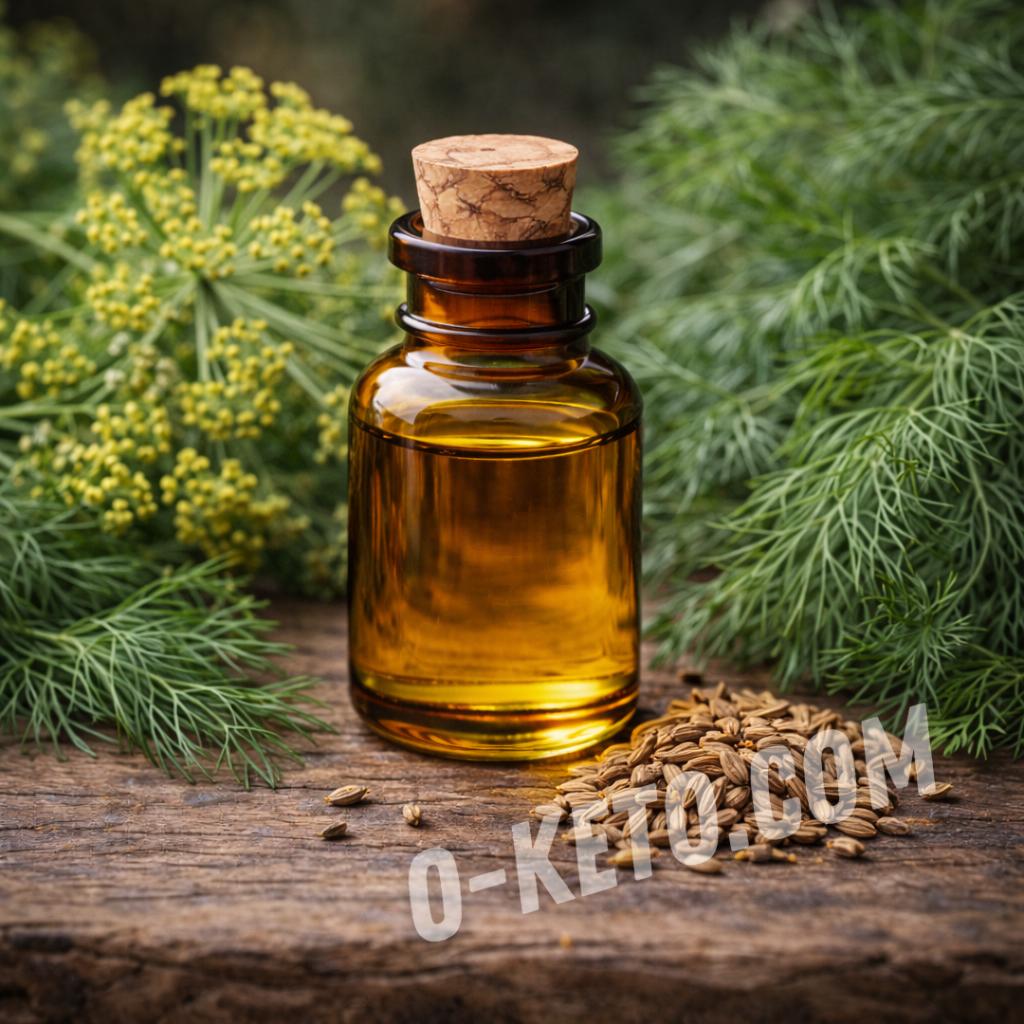

Fennel essential oil is obtained from the fruits, often called seeds, of Foeniculum vulgare. It has a sweet anise-like aroma with herbal and slightly spicy notes. This is a concentrated aromatic product, not a regular cooking oil for frying or dressing a salad. In nutrition it should not be grouped with olive oil, coconut oil, or butter: a practical dose contributes almost no macros, and the amount is measured in drops.
In cooking, fennel is more often used as seeds, fronds, or bulb. The essential oil is a much more concentrated form of the aroma. It may be used in scent blends, cosmetic formulas, perfumery, room fragrance, and sometimes in food manufacturing when the product is food-grade and used according to instructions. For home cooking it requires caution: one extra drop can overpower a whole batch of cream, drink, or sauce.
Composition and aroma
The aroma of fennel oil is linked mainly to anethole, fenchone, limonene, and other volatile compounds. Their ratio depends on plant variety, region, maturity of the raw material, and distillation method. Because of this, different batches may smell different: one may be softer and sweeter, while another may be sharper, drier, and closer to medicinal anise. This is normal for natural aromatic oils, but it matters when a recipe needs precision.
It is important to distinguish essential oil from infused oil. Infused oil is a base vegetable oil in which herbs or spices have been steeped. Essential oil is a volatile concentrate obtained by distillation, and it should not be poured into food by the spoonful. Even when the aroma feels familiar and food-like, the concentration remains high.
Is it suitable for keto?
From a carbohydrate perspective, fennel essential oil has almost no effect on keto because it is used in micro amounts. But it is not a fat source for LCHF. Its role is aroma, not satiety or energy. If you want fennel flavor in a low-carb dish, it is usually easier and more predictable to use fennel seeds, fresh fronds, thinly sliced fennel bulb, or spices with a similar profile.
In sweet keto recipes, the anise note can pair with cream, vanilla, lemon, almond, and berries. In savory dishes, fennel aroma can work with fish, seafood, pork, poultry, cabbage, cucumber, creamy sauces, and marinades. Essential oil gives a very direct aroma, so it is best used only when a strong aromatic note is truly wanted, not when you need the softer taste of the vegetable or seeds.
How to use it
For food, use only oil that is clearly marked as suitable for food use. Oils sold for aromatherapy, cosmetics, or household scent should not be added to dishes. Even food-grade oil needs very careful dosing: do not drop it straight into a pot or dough. Dilute it first in a fatty or alcoholic base, then add only part of that mixture. This makes the aroma easier to control and helps avoid a harsh taste.
In home cooking, it is safer to begin with a dilution rather than a full drop in a small portion. For example, one drop can be mixed into several teaspoons of neutral oil or alcohol-based extract, then only a fraction of that mixture is used. This matters especially for cold creams, drinks, and sauces because without heat the aroma can open sharply and distribute unevenly.
Where it fits
Fennel aroma belongs in dishes that already have a sweet-spicy logic. It can support a keto dessert with cream cheese, lemon cream, almond cookies, unsweetened spiced tea, creamy sauce for fish, or a pork marinade. In savory dishes, it pairs well with lemon, dill, parsley, black pepper, garlic, cucumber, cabbage, and mild dairy sauces. It can clash with strong smoked foods, heavy chili heat, or sweet artificial flavorings.
Limits
Fennel essential oil is a concentrate, so it should not be handled like an ordinary spice. Do not apply it to skin undiluted, use it near eyes or mucous membranes, leave it within reach of children, or take it internally unless the label clearly allows food use. Pregnancy, breastfeeding, childhood, seizure conditions, hormone-sensitive diagnoses, regular medication use, and allergic reactions are situations where a qualified professional should be consulted before use.
For skin, any new aromatic oil should first be checked on a small area in a strong dilution with a carrier oil. Redness, burning, itching, headache, or nausea are reasons to stop using it. For pets, strong scents can be an issue, so diffusers and room fragrance require separate caution.
How to choose
A good label should show the Latin name Foeniculum vulgare, plant part, extraction method, country of raw material, volume, shelf life, and intended use. For cooking, a separate food-use indication is needed. The bottle should be dark glass with a tight cap and dropper. A suspiciously low price, cloudy liquid, solvent-like smell, or lack of clear producer information are poor signs.
Storage
Keep the bottle tightly closed, away from light, heat, and children. The best place is a cool cabinet without temperature swings or steam from the stove. After each use, wipe the neck so the cap closes tightly. If the aroma becomes rancid, harsh, or noticeably different, do not use the oil in food or on skin.
What can replace it?
In food, it is often simpler to replace fennel essential oil with fennel seeds, ground fennel, fennel fronds, anise, star anise, or dill seed. The right option depends on the task: seeds give a softer and fuller flavor, star anise is sweeter and more forceful, while fennel fronds add a fresh herbal note. If you need an aroma for a room or cosmetic blend, anise essential oil may sometimes be used, but it is not the same scent and requires the same careful dosing.


