


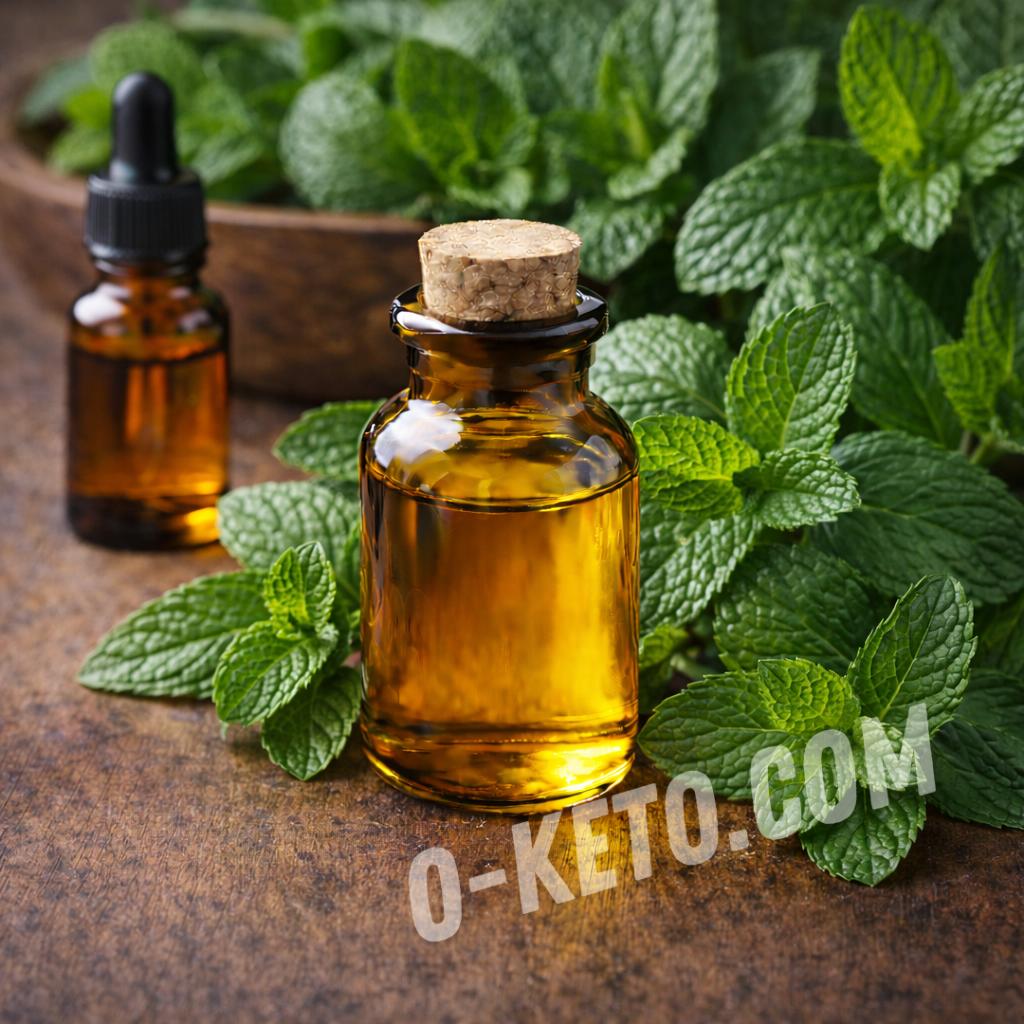

Peppermint essential oil is obtained from the aerial parts of the Mentha piperita plant through steam distillation. It is one of the most functional and physiologically active essential oils, widely used in aromatherapy, natural medicine, cosmetology, and everyday life. Its characteristic cooling, fresh, and sharp aroma is due to the high content of menthol, which directly affects the nervous system and skin receptors.
Peppermint has been known to humanity since ancient times. It was used to improve digestion, relieve pain, enhance concentration, and cool the body in hot climates. In modern practice, peppermint essential oil is valued primarily for its rapid effect, high biological activity, and versatility, although it requires careful and measured application.
Composition of Peppermint Essential Oil
The main active component of peppermint essential oil is menthol, which usually makes up 30–55%. It is responsible for the cooling effect, analgesic action, and the sensation of “freshness”.
Additionally, the composition includes:
- menthone – enhances antispasmodic and analgesic effects;
- isomenthone – supports anti-inflammatory effects;
- limonene – has mild antioxidant properties;
- carvone – participates in regulating digestive processes.
This combination of components makes peppermint oil one of the most “reflexively active” essential oils.
Beneficial Properties of Peppermint Essential Oil
Peppermint essential oil has a pronounced effect on the nervous, digestive, and vascular systems.
- relieves headaches and migraine conditions;
- reduces smooth muscle spasms;
- improves concentration and clarity of thought;
- provides cooling and analgesic effects;
- supports digestion and bile flow.
The aroma of peppermint activates the sympathetic nervous system, so the oil is not considered relaxing or suitable for evening use. It is appropriate for mental fatigue, drowsiness, overheating, and decreased tone.
Use of Peppermint Essential Oil in Aromatherapy
In aromatherapy, peppermint essential oil is used for quick effects and short-term impact.
- to enhance concentration and productivity;
- for motion sickness and nausea;
- for feelings of overheating;
- to ease breathing.
For diffusion, 1–2 drops are sufficient for a room. Long-term diffusion is not recommended, especially in the evening.
Use in Cosmetology and Body Care
In cosmetology, peppermint essential oil is mainly used in products for oily and problematic skin, as well as in scalp care.
- reduces skin oiliness;
- has antiseptic effects;
- reduces itching and irritation;
- stimulates microcirculation of the scalp.
In facial products, it is used exclusively in minimal concentrations and only in rinse-off products.
Use in Household and Everyday Practice
Peppermint essential oil is also used for household purposes.
- to repel insects;
- to freshen the air;
- in cleaning and deodorizing mixtures;
- as a component of cooling compresses.
Precautions and Contraindications
Peppermint essential oil is classified as a potent oil and requires caution:
- do not apply undiluted to the skin;
- do not use in children under 6 years old;
- avoid use in bronchial asthma;
- do not apply to the eyes and mucous membranes;
- do not use before sleep.
During pregnancy and in the presence of chronic diseases, use is only possible after consultation with a specialist.
Peppermint essential oil is a powerful tool for quick action. It is not about gentle relaxation, but about focus, clarity, cooling, and relieving spasms. When used correctly, the oil becomes a valuable assistant in everyday life, but it requires respect for its potency and strict adherence to dosages.


