


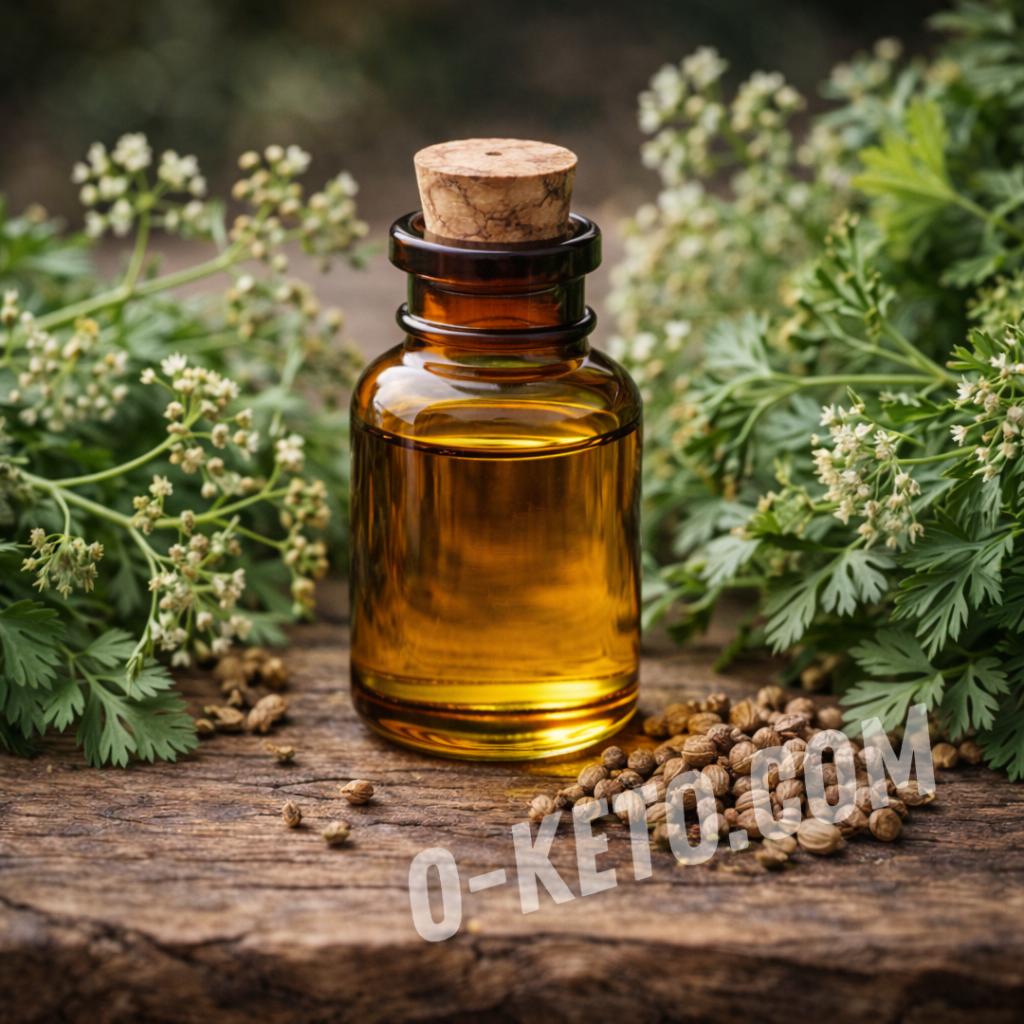

Coriander essential oil is obtained from the seeds of Coriandrum sativum, the same plant whose leaves are known as cilantro and whose dried seeds are used as a spice. Seed oil smells different from fresh greens: it is warmer, softer, drier, with a sweet-spicy note and a light woody shade. It is a concentrated aromatic product, not ground coriander and not a vegetable oil for frying.
It is used in aromatic blends, perfumery compositions, cosmetic formulas, and sometimes food aromas when the bottle is marked for that purpose. For keto and LCHF, it has almost no carbohydrate impact because it is used in microdoses. Dose safety matters more than macros, and essential oil does not replace the spice in ordinary amounts.
Composition and aroma
The main recognizable component of coriander oil is linalool; in different batches its share can be high. Alpha-pinene, gamma-terpinene, camphor, geranyl acetate, borneol, and other volatile compounds may also be present. This profile makes the aroma rounded, spicy, and less sharp than many hot spices.
Good oil smells clean, dry-spicy, with a warm seed note. If the smell becomes flat, sour, rancid, or solvent-like, do not use the product in food or on skin. The shade may differ between producers: some batches are closer to coriander seed, while others move toward floral-woody notes.
Is it suitable for keto?
From a macronutrient perspective, coriander essential oil does not interfere with keto, but it is not a fat source and not a full culinary spice. In low-carb cooking, ground coriander is often simpler: dosing is clearer, it gives spice texture, and it is gentler in a home recipe. Essential oil is useful only when a clean aromatic note is needed without powder.
If the product is food grade, it can be used in very weak dilution for sauces, marinades, creamy dressings, meat dishes, spiced desserts, or drinks. One drop can be too strong for a small portion. For everyday cooking, dry seeds, ground spice, or fresh cilantro are usually safer and more convenient.
How to use it
Essential oil should not be dropped straight onto a finished plate. Dilute it first in a fatty base, alcohol extract, or another suitable mixture, then use part of that dilution. In cosmetic blends, use only in low concentration and after a patch test. For a diffuser, a few drops per room are usually enough.
Coriander aroma pairs well with citrus, ginger, cardamom, cumin, black pepper, lavender, marjoram, and woody notes. In food, it fits lamb, chicken, carrot, cauliflower, creamy sauce, coconut milk, and lemon marinades. In sweet dishes, use it especially carefully so the spice does not become perfumery-like.
How to choose
The label should show Coriandrum sativum, plant part, extraction method, country of raw material, shelf life, and intended use. For food, a separate food-use indication is needed. A dark glass bottle with a tight cap and dropper is preferable. Suspiciously low price, sticky cap, cloudiness, and missing producer data are weak signs.
If the oil is bought for recipes, compare it with ordinary coriander seeds first. A good batch gives recognizable spice without dusty, moldy, or soapy notes. For cosmetics, freshness, clear batch information, and concentration guidance matter more.
Limits
Coriander essential oil is concentrated and may irritate skin, eyes, and mucous membranes. Do not use it undiluted, leave it where a child can take it, or add it to food without food-use labeling. Pregnancy, childhood, allergy to Apiaceae plants, sensitive skin, and regular medication use are reasons to discuss use with a qualified professional.
Storage
Keep the bottle tightly closed in a cool dark place, away from the stove, window, and damp bathroom. After opening, write the date on it. Wipe the neck after use so the cap closes evenly. Blends with carrier oil are better made in small portions rather than stored for months.
What can replace it?
In food, the best substitutes are ground coriander, lightly crushed seeds, fresh cilantro, cumin with lemon zest, or coriander mixed with cardamom. In aromatic blends, lavender, marjoram, cardamom, or sweet orange oil may move in a related direction, but they will not match exactly. If a culinary spice is needed, dry seeds are usually better than essential oil.


