


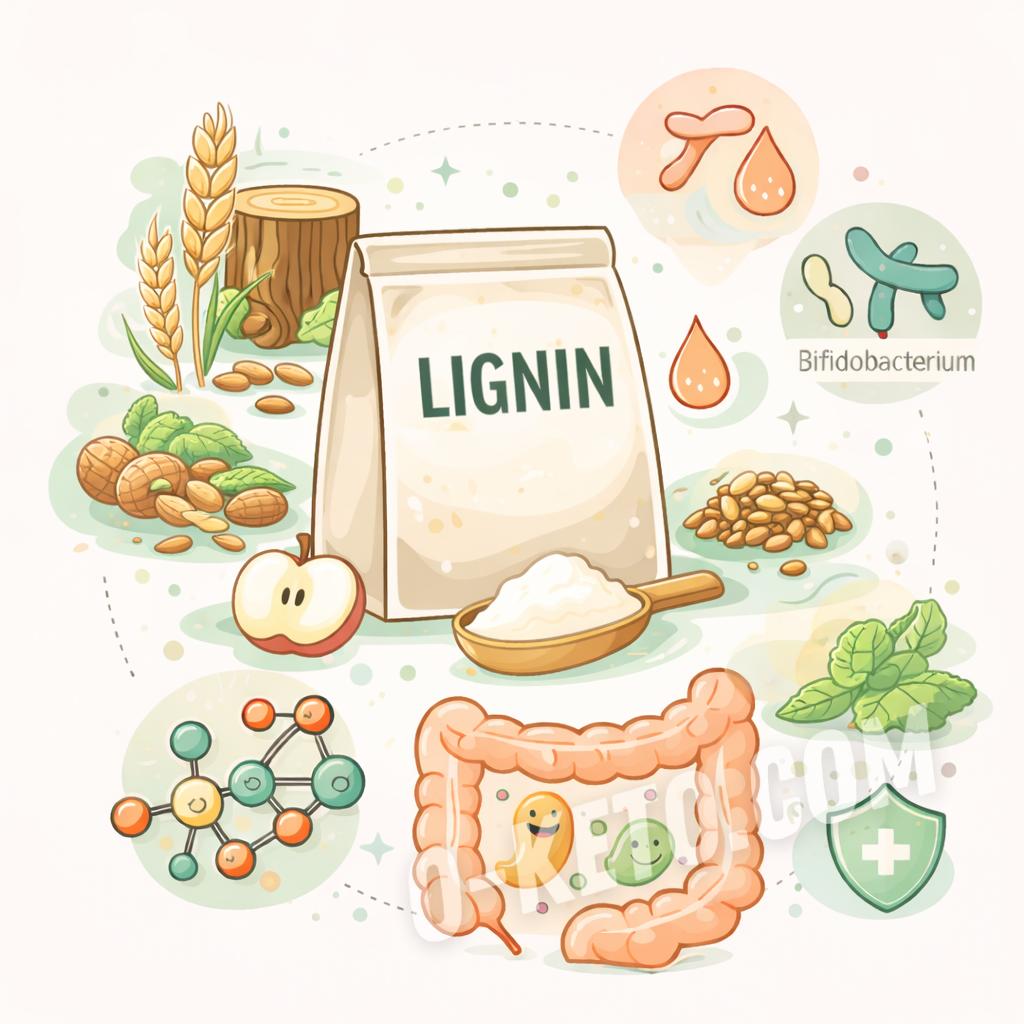

Lignin — is a structural polymer of plants that, along with cellulose and hemicelluloses, forms the strength of cell walls. It provides rigidity, resistance to mechanical damage, and protection of plants from pathogens.
From the perspective of human nutrition, lignin is classified as an indigestible component of plant food and is part of insoluble dietary fibers.
Beneficial Properties
In the human body, lignin is not broken down by enzymes and does not serve as a source of energy. Its physiological action is mainly mechanical and sorptive in nature:
- it participates in the formation of the volume of intestinal contents;
- it can bind bile acids and some metabolites;
- it has antioxidant activity due to its phenolic structure;
- it may reduce the absorption rate of some compounds in the intestine;
- it affects stool consistency on a mixed diet.
Daily Requirement and Sources
There is no separate daily intake norm for lignin. It is accounted for in the total volume of dietary fibers. The amount of lignin in the diet directly depends on the proportion of coarse plant products.
Main sources of lignin:
- whole grain cereals and bran;
- flax and chia seeds;
- nuts and seeds;
- legumes;
- vegetables with a dense structure and skin.
Symptoms and Consequences of Deficiency
Lignin is not an essential nutrient. Its absence does not cause deficiency states. With low overall dietary fiber intake, some individuals may experience functional changes in the gastrointestinal tract:
- changes in the frequency and volume of stool on a mixed diet;
- reduced mechanical filling of the intestine;
- changes in subjective feelings of satiety.
However, these depend on the overall type of diet, fat intake, and individual intestinal motility.
Possible Risks of Excess and Their Manifestations
Excessive intake of lignin may occur with high consumption of coarse plant food and bran. In this case, its mechanical action may be undesirable:
- bloating and a feeling of heaviness in the intestine;
- irritation of the mucosa in sensitive gastrointestinal tracts;
- reduced absorption of certain minerals with prolonged excess;
- worsening tolerance in IBS and a tendency to constipation.
Lignin and Low-Carbohydrate Diets
In the context of ketogenic and carnivore diets, lignin is not a necessary component. The practice of low-carbohydrate diets shows that normal intestinal function is possible without plant fibers with adequate fat intake and sufficient bile secretion.
On a keto diet, lignin may only be present as a minor component of some permitted products, such as seeds and nuts. Its use is optional and not mandatory for maintaining gastrointestinal health.
Thus, lignin — is a structural element of plant food with mechanical and sorptive action. It can be part of a mixed diet but is not a physiologically essential nutrient and is not required for the normal functioning of the digestive system on a low-carbohydrate or carnivore diet.


