


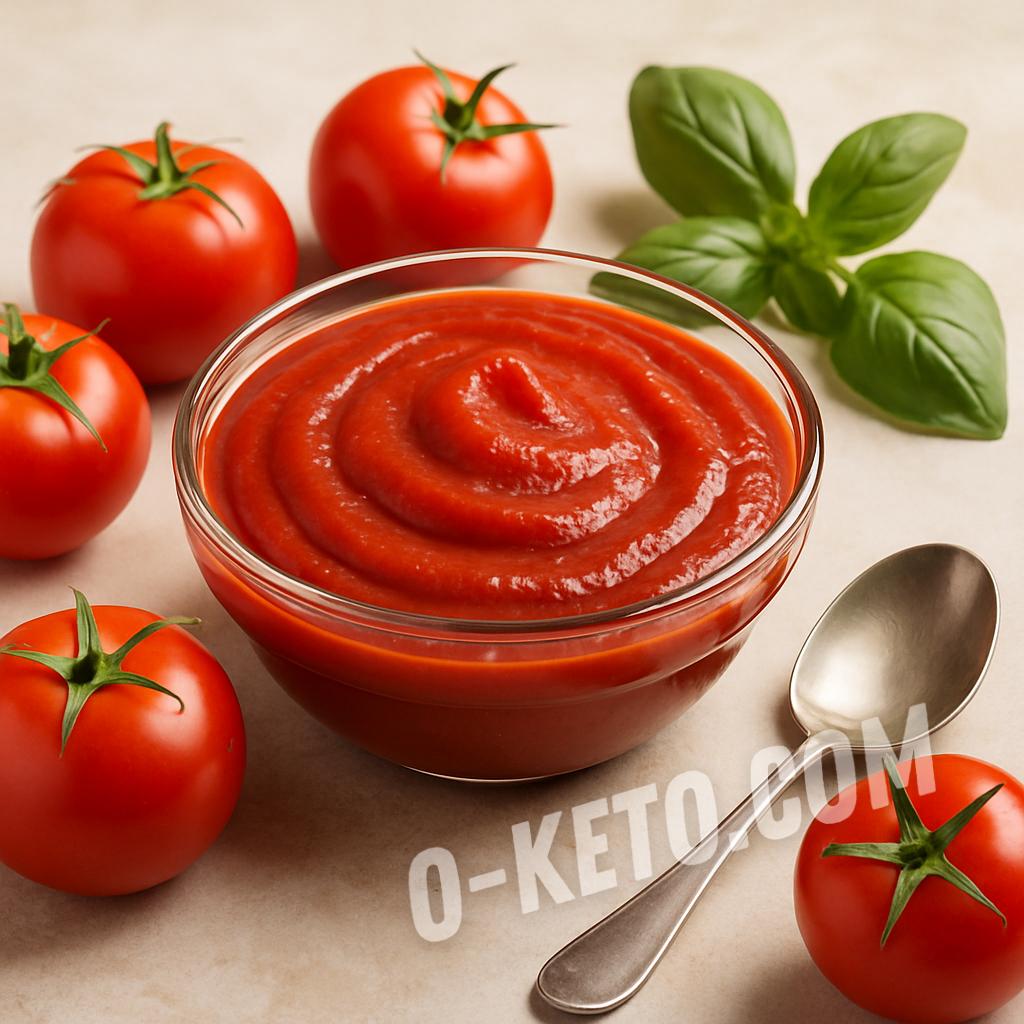

Passata is strained tomato puree, usually made without skins and seeds and with a smooth, thick texture. For keto it is not a free food like oil or leafy herbs, but a measured ingredient: it contains natural tomato sugars, yet no starch if the formula is clean. In the right serving, passata works well in sauces, stews, shakshuka, casseroles and dishes with meat, fish or eggs.
The main rule is to check ingredients and amount. Good passata contains only tomatoes, sometimes salt and citric acid. Versions with sugar, syrups, starch, carrot puree or sweet vegetable additions are better avoided because they quickly increase carbohydrates and change the sauce flavor.
How It Differs from Paste and Tomatoes
Passata comes from Italian cooking, where tomatoes were strained and preserved for sauces. It is less concentrated than tomato paste but smoother than chopped tomatoes. This makes it useful where a dish needs a smooth sauce without skins, seeds or long simmering.
Tomato paste gives a denser flavor and more carbohydrates per spoon because it is reduced further. Chopped canned tomatoes give texture but need more cooking time. Passata sits between them: it quickly combines with oil, spices, cream, broth and juices from meat or vegetable dishes.
Nutrition
Nutrition depends on concentration and salt. On average, 100 g of tomato puree provides about 35-40 kcal, around 1.5-2 g of protein, less than 0.5 g of fat and about 7-9 g of carbohydrates, some of which is fiber. Thick versions may be higher, so the package is worth checking each time.
Passata contains potassium, vitamin C, folate and tomato carotenoids including lycopene. It has almost no fat, so on keto it is often cooked with olive oil, unsweetened cream, cheese, ground meat, fish, eggs or seafood. This makes the dish more filling while tomato remains the flavor base rather than the whole volume.
Is It Keto-Friendly?
For strict keto, passata should be counted as a carbohydrate source. A small serving of 2-4 tablespoons in a sauce is usually easier to fit than a large bowl of tomato gravy. If the dish already contains onion, pepper, eggplant, dairy or nut flour, carbohydrates add up.
In moderate LCHF, passata is a convenient replacement for ketchup and ready sauces, which often contain sugar. It can be diluted with broth, olive oil or cream, then seasoned with basil, oregano, garlic, chili and salt. Sweetness is best not increased with sweeteners if the goal is to move away from dessert-like flavors.
How to Use It
Passata likes fat and spices. If simply poured into a pan, it can taste sour and flat. It is better to warm olive oil with garlic or spices first, then add passata and let the sauce reduce a little. For softness, add cream, butter or cheese.
Good uses include:
- sauce for keto pizza bases made from cheese, chicken or cauliflower;
- shakshuka with eggs, herbs and feta;
- sauce for meatballs, fish, squid or chicken;
- braised zucchini, eggplant, cabbage or mushrooms;
- tomato-cream sauce for seafood.
How to Choose
The ingredient list should not contain sugar, glucose syrup, starch or sweet sauces. Salt is acceptable, but then it should be considered while cooking. A glass bottle makes color and texture visible, but carton packaging is also fine if the formula is clean.
Overly bright red color, strong sweetness or a metallic taste may suggest poor raw material or additions. A smooth texture without seeds is normal for passata. If a rustic sauce with pieces is needed, chopped tomatoes are a better choice than expecting that texture from strained puree.
Limits and Storage
Passata may be too acidic for reflux, gastritis during a flare or individual tomato sensitivity. In that case, reduce the serving, cook it with fat and protein or choose another sauce. For keto, it should not be treated as an unlimited vegetable.
After opening, keep passata in the refrigerator and use it within the time stated on the package. Leftovers can be frozen in portions of 2-4 tablespoons for later sauces. If mold, gas, a sharp smell or swelling appears, discard the product.


