


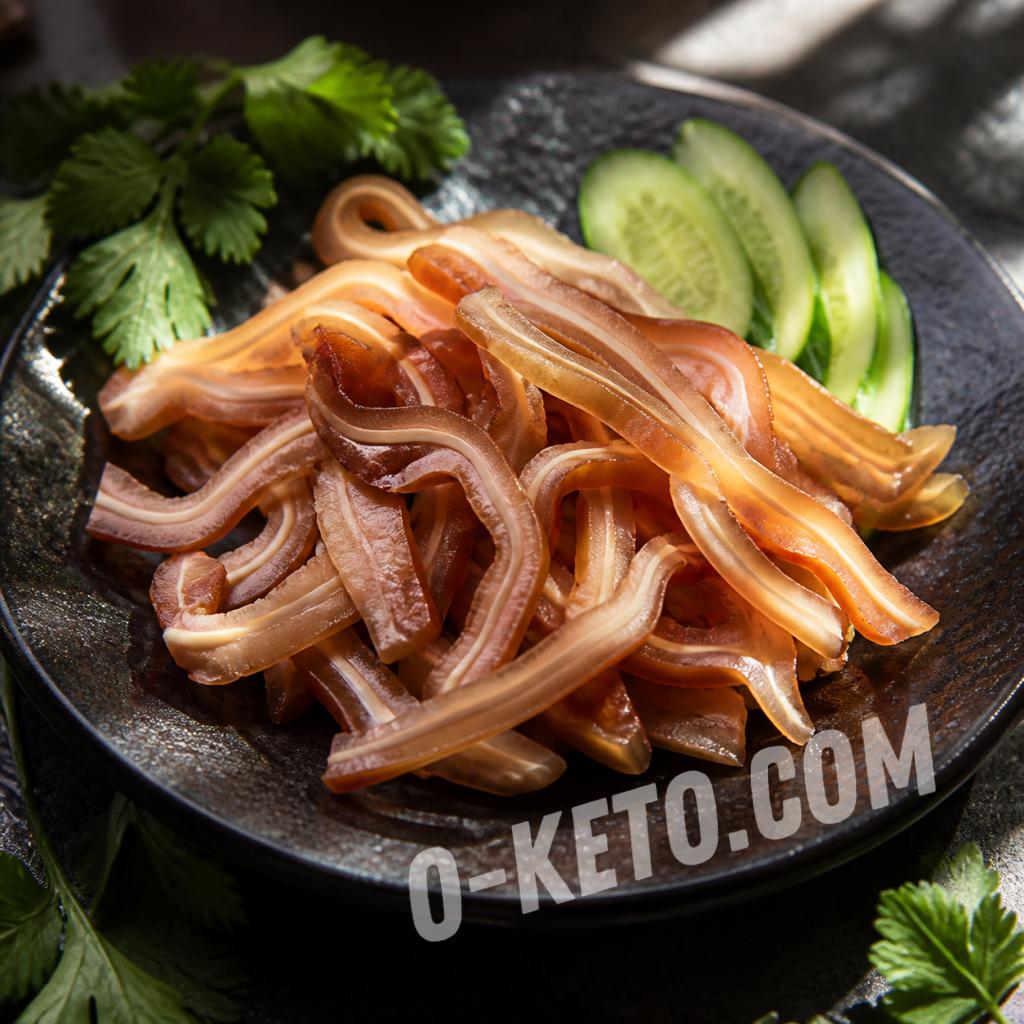

Pork ears contain skin, cartilage, connective tissue, and some fat. Raw ears are dense and require long preparation; after boiling, baking, or smoking they become tender with a firm, chewy cartilage texture.
Composition and flavor
Their main food feature is connective-tissue protein and collagen rather than tender muscle meat. Energy values change after trimming fat, boiling, and frying. Smoked and marinated versions are often high in sodium.
Clean and blanch the ears before cooking, then simmer until tender. Slice them into salads, roast them until crisp, or use them in jellied dishes. Frying in a sweet sauce changes the carbohydrate profile more than the plain ears do.
How to use it
Choose pieces without a gray sticky film or off odor. For ready-to-eat ears, check the date, marinade, salt, and the absence of sugar, syrup, or starch when the product is intended for keto.
Pork ears Count the portion by the actual weight and the label of the particular package: salted, smoked, dried, and fermented versions can differ substantially in sodium, moisture, and carbohydrates.
For a practical menu, use Pork ears in a measured serving and pair it with foods that do not duplicate its dominant flavor. This makes it easier to control the salt, acidity, fat, or carbohydrate load of the whole plate rather than judging one ingredient in isolation.
When calculating a dish, account for the form of the product: drying concentrates nutrients, cooking changes weight and density, and a sauce may add sugar, flour, oil, or alcohol. Those additions are not part of the plain raw ingredient.
How to choose
Plain pork ears contain no meaningful carbohydrate but can be calorie-dense and absorb more fat during frying. They can fit keto, but the serving depends on the total fat and preparation method.
Introduce Pork ears gradually and taste the dish before adding the final salt. Strong ingredients often need less seasoning than a recipe suggests; excess additions hide the original flavor and increase the overall food load.
Keto and carbohydrates
Pork allergy, intolerance, and sodium restrictions require caution. Undercooked offal is unsafe, so cook ears thoroughly and do not leave them at room temperature for long.
If you are buying it for the first time, start with a small package. This lets you assess real saltiness, texture, and tolerance without creating a large stock of a perishable or strongly flavored ingredient.
Limits and safety
Pork ears are valued in Eastern European and Asian cuisines for their chilled crunch and ability to absorb marinades. They are a specialized salad and appetizer ingredient, not a universal replacement for meat.
When comparing packages, do not look only at calories. For Pork ears, moisture, edible yield, serving size, processing method, and secondary ingredients listed after the main raw material also matter.
A useful home test is to prepare a small portion without a complex sauce. This reveals the ingredient’s own aroma, saltiness, density, and aftertaste. If it works only because of sugar, large amounts of oil, or flavor enhancers, assess it as a finished mixture rather than as the plain food.
Nutritional value cannot be separated from serving context. The same ingredient may be a minor part of a balanced dish or a source of excess salt, sugar, and calories once combined with a ready-made sauce. Judge the complete recipe and serving size.
For a new purchase, save a photo of the ingredient list and compare it with your portion calculation. This is especially useful for salted, dried, alcoholic, and paste-like forms, where a small formulation difference can change the final values.
History and culinary role
Keep raw ears refrigerated for a short period or freeze them. Cool cooked ears quickly, store them covered, and use them promptly. Reheating should be thorough rather than a brief warming.
Storage
Keep raw pork ears refrigerated, separate from ready-to-eat food, and use them promptly; freeze portions for longer storage. Cool boiled ears quickly, store them in a covered container, and do not leave them at room temperature for long. Check their smell and surface before serving.
Substitutes
Pork hock, skin, or chilled pork tongue can provide related texture, but with a different meat-to-fat ratio. Radish and cucumber can replace the ears in a salad when freshness matters more than gelatinous texture.


