


E1413 (phosphorylated distarch phosphate)
Phosphated distarch phosphate combines phosphorylation and starch cross-linking to withstand heat, acidity and storage; in low-carb eating it is a technological starch.
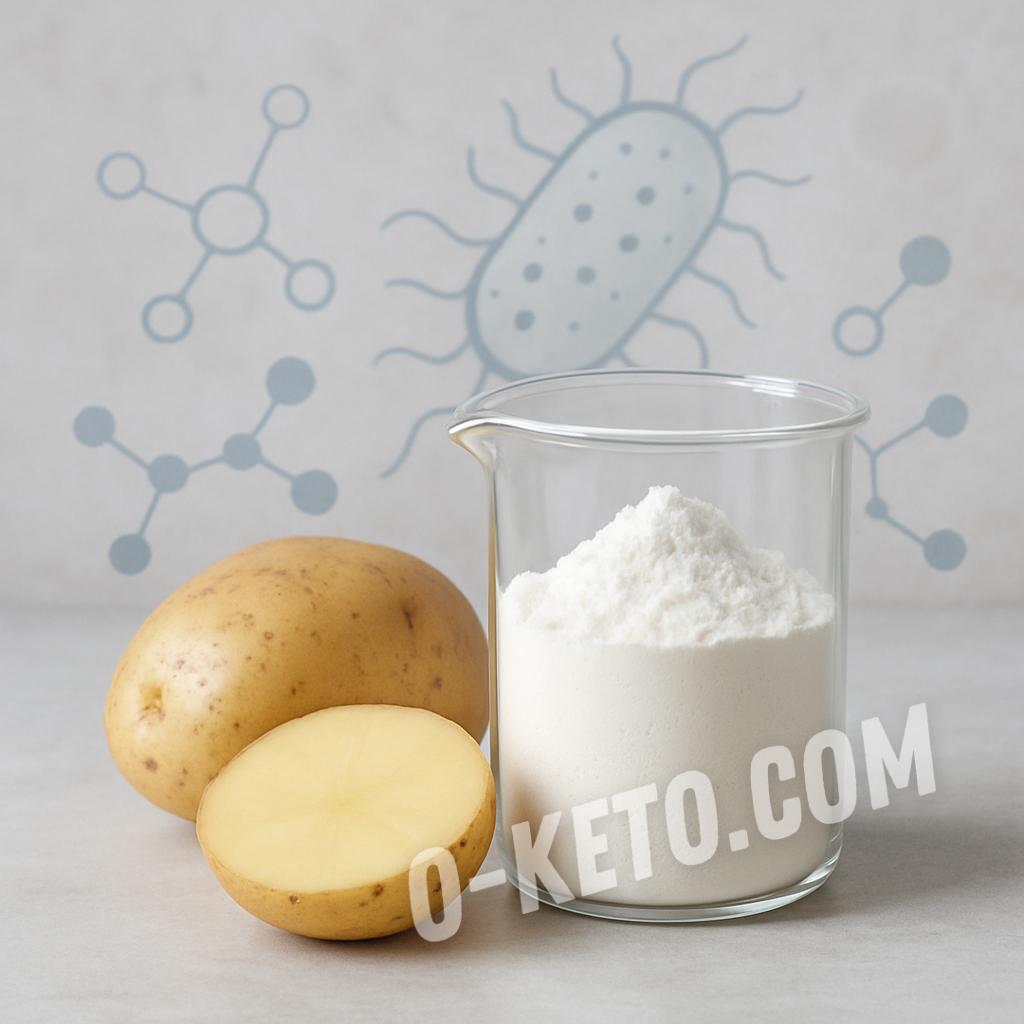
E1413 is phosphated distarch phosphate, one of the more resistant phosphorylated modified starches. Its production combines two directions of processing: starch is partially phosphorylated and the chains are also cross-linked. The result is an ingredient that better tolerates heat, acidity, mechanical stress, storage, cooling and reheating.
This kind of starch is not needed in ordinary home cooking, where a sauce can be eaten immediately. It is useful for industry, where a product must remain the same across batches and survive transport, a shop shelf, a refrigerator and a microwave. E1413 helps preserve thickness, smoothness, water binding and stable structure where ordinary starch might break down or release water.
How E1413 differs from plain starch
Plain starch swells in water and forms a viscous mass, but that mass is sensitive to conditions. Acidic sauces, strong mixing, prolonged heating or freezing can damage texture. Phosphated distarch phosphate is more resistant: phosphate groups and cross-links help the starch system hold shape and break down less under stress.
This change does not make the starch nutritionally valuable. It does not become a source of complete protein, beneficial fats or meaningful minerals. The word phosphated describes technological structure, not a useful mineral supplement. For a person reading a label, E1413 mainly means that the product was designed to maintain industrial texture under demanding conditions.
Where E1413 appears
E1413 may be used in ready meals, frozen sauces, creamy fillings, acidic fruit preparations, soups, meat and fish semi-finished products, dessert bases and foods intended for reheating. It is especially convenient where acidity, salt, fat, mixing and storage are present. Manufacturers want the product not to release water, become grainy or lose density.
In the ingredient list it may look like a small line, but its role can be large. If a thick filling or sauce forms a significant part of the food, modified starch may create much of the texture. In that case it is not a random trace additive but part of the product’s construction. The position in the ingredient list, serving size and neighboring carbohydrate ingredients all matter.
Keto and LCHF context
For low-carb eating, E1413 should be considered a processed starch thickener. The code itself does not make a product dangerous, but it also does not make it suitable for keto. If the additive is present in traces, its practical meaning may be small. If it forms the base of a sauce, dessert, ready meal or diet-style semi-finished food, the carbohydrate load may be meaningful.
The phrase sugar free can be especially misleading here. A product may contain no table sugar while still being built on starch stabilizers, syrups, fruit fillings and other carbohydrates. For glucose or ketosis control, sugar alone is not enough. Total carbohydrates, fiber, polyols, serving size and the actual response after eating give a more realistic picture.
Safety and tolerance
EFSA evaluated E1413 within the group of modified starches. In ordinary food-use amounts, the presence of this additive does not mean that a product is toxic. A more practical question remains: why eat foods regularly that require this level of technological stability. The more a food depends on modified starches, the further it is from simple whole low-carb cooking.
Tolerance depends on the whole formula. Some people experience bloating, heaviness or a quick return of hunger after ready-made sauces, creams and semi-finished foods with starch stabilizers. The cause may not be E1413 alone, but the combination of starches, fat, salt, acid, emulsifiers and a large portion. The practical conclusion is simple: keep such products as occasional exceptions and build everyday thickness from recognizable low-carb ingredients.
If you have any questions about the term "E1413 (phosphorylated distarch phosphate)", you can ask them to AI. Please note, a low-cost OpenAI model is used. It may answer questions about disease treatment with errors!


