


E201 (the sodium salt of sorbic acid, sodium sorbate)
Sodium sorbate is a sorbic acid salt with preservative action but a more disputed regulatory status; on keto it should be judged with the food, not alone.
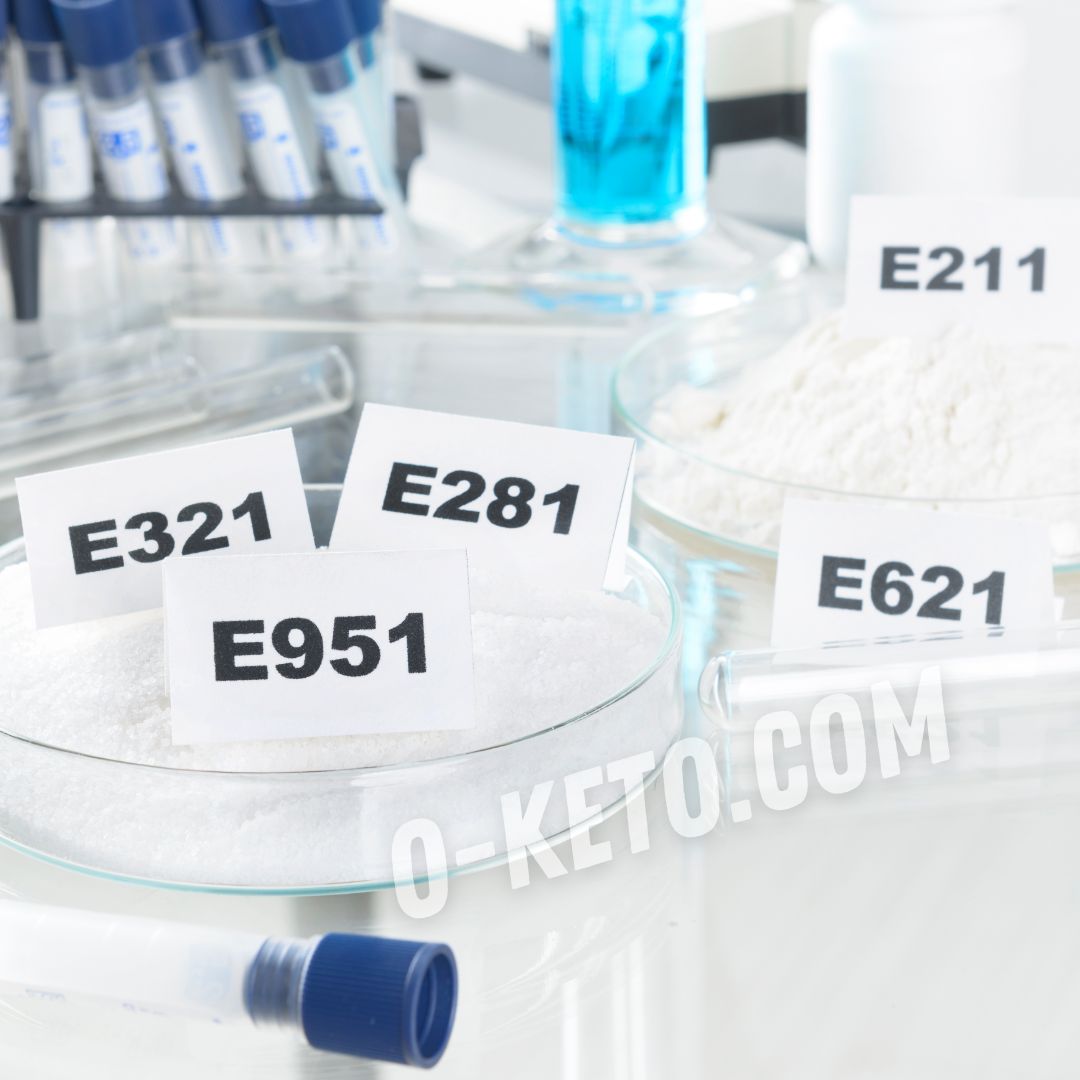
E201 is sodium sorbate, the sodium salt of sorbic acid. Functionally it belongs to the same chemical family as E200 and E202: sorbates are used as preservatives against yeasts and molds. But E201 should not be described simply as “the same thing, only sodium.” The sodium salt has its own regulatory status and safety questions, which is why current European materials more often discuss sorbic acid E200 and potassium sorbate E202.
For a shopper, the most important point is the role of the substance. Sodium sorbate is not added for flavor, protein, minerals or microbiome benefits. Its task is technological: slow microbial growth and extend shelf life. If this code appears on a label, the question is what kind of product is being preserved: cheese, sauce, drink, sweet filling or a long industrial mixture.
How E201 differs from E200 and E202
Sorbic acid is the parent acid, while sorbates are its salts. Salts are usually easier to dissolve and distribute in food, which is why potassium sorbate E202 became a common preservative. Sodium sorbate E201 can theoretically serve a similar function, but in the EU it does not sit in the same current authorized food-additive context as E200 and E202. Information about potassium sorbate should therefore not be transferred automatically to E201.
Functionally, sorbates work better in acidic conditions, where active undissociated sorbic acid is present. This form interferes more strongly with yeasts and molds. Sorbate preservatives are therefore more logical in acidic sauces, drinks, fruit fillings, cheeses and pH-controlled foods. In neutral conditions their effect may be weaker.
Where sodium sorbate may appear
In modern ingredient lists, E201 is much less common than E202. If it is listed, it is a reason to read the label, country of origin and product purpose more carefully. It may be expected in the context of preserving sauces, drinks, fillings, acidic foods and some industrial mixes, but actual authorization and use depend on the market and legislation.
For keto and LCHF, the sodium in the name is not the issue: this is not table salt as an electrolyte source, but a salt of an organic acid. If there is a problem, it is usually the product itself. Sodium sorbate in a sweet drink, fruit filling or sugar-containing sauce does not make them low-carb. In a small unsweetened serving, its carbohydrate contribution may be minimal.
Keto and LCHF context
On a low-carb diet, E201 should be treated as a marker of a processed product. The preservative itself is not sugar and is not starch, but it often appears where a product is designed for long shelf life. That means sweeteners, acids, flavors, thickeners, syrups and other technological components may be nearby.
If strict ketosis, glucose control or craving reduction is the goal, composition and serving size matter most. A product with E201 may be low in carbohydrates if it is a small unsweetened serving. If it is a drink, dessert, sweet filling or ready sauce, total carbohydrates, sugars, polyols and response after eating need to be checked.
Safety and practical conclusion
E201 deserves careful wording. It is not a case where text about E202 should be copied without thought. Sodium sorbate has a more limited and disputed regulatory context, so if it appears in real labeling, the product and market should be checked. For a nutrition article, it is more honest to call it a sorbic acid salt with preservative function than a universally interchangeable version of potassium sorbate.
In practice, E201 is not needed in fresh home cooking. It appears where a manufacturer wants to extend shelf life and reduce spoilage risk. That can be a reasonable technological goal, but it does not make the product healthy automatically. The longer the formula around the preservative, and the more sugar, syrups, starches and flavors it contains, the less it resembles simple low-carb food.
If you have any questions about the term "E201 (the sodium salt of sorbic acid, sodium sorbate)", you can ask them to AI. Please note, a low-cost OpenAI model is used. It may answer questions about disease treatment with errors!


 1 / 4
1 / 4 1 / 4
1 / 4


 1 / 4
1 / 4 1 / 4
1 / 4