


Spectral hair mineral analysis
Spectral hair mineral analysis can help assess longer-term mineral patterns, but it should not be read from one number alone: symptoms, diet, protein status, thyroid context, gut function, and the relationship between several elements all matter.
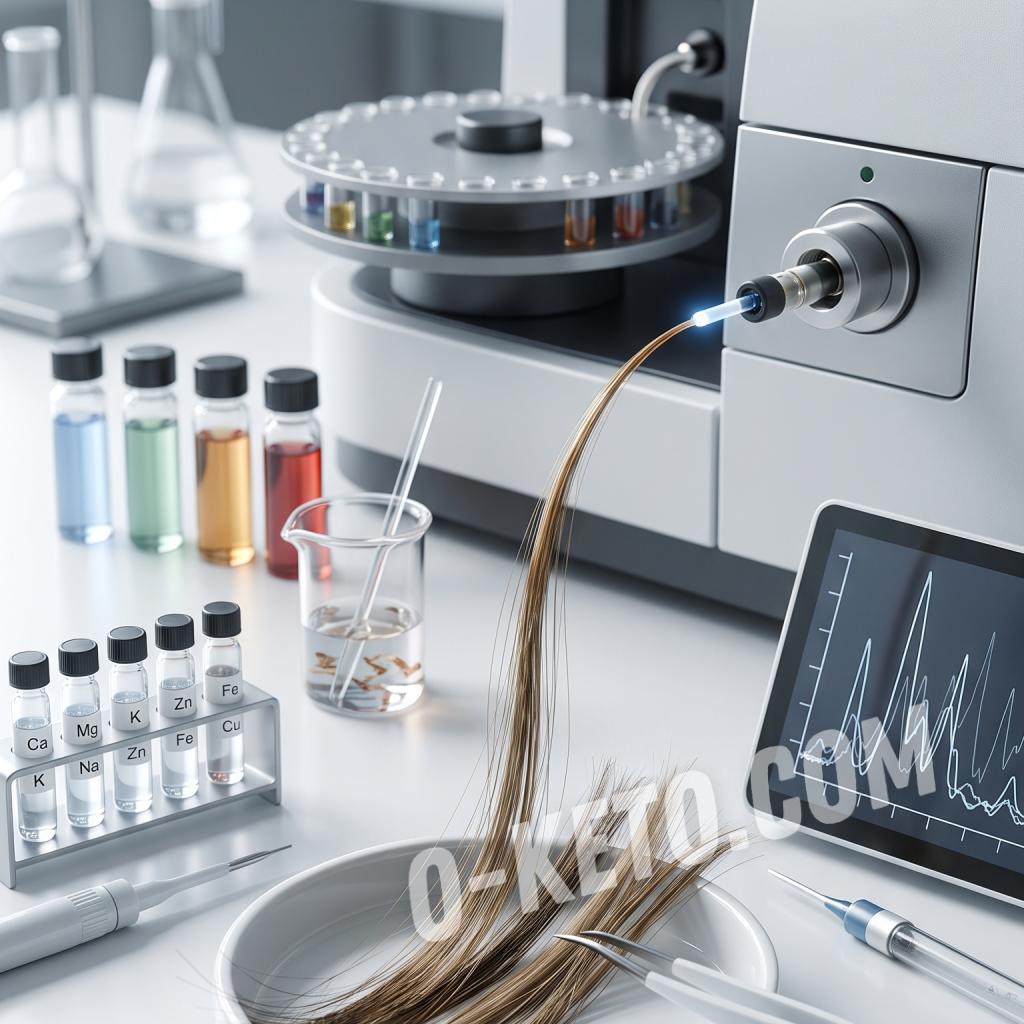
Spectral hair mineral analysis is used as a longer-range orientation tool when the goal is to look beyond a single blood snapshot and see a more extended trace of how the body has been handling minerals over weeks and months. Hair does not speak as directly as serum testing and it does not replace standard clinical laboratory work, but it can still be useful when there is concern about chronic depletion, poor mineral retention, persistent imbalance, impaired absorption, low protein reserve, or a broader long-term disturbance in macro- and trace-element handling. The main mistake is to treat every isolated number as a standalone diagnosis. This test is far more useful as a map of tendencies than as a collection of final conclusions.
What the test reflects
Hair accumulates mineral information gradually, so the result is usually read as a reflection of longer-term mineral background rather than a same-day state shaped only by yesterday’s meal or a single stressful event. In practice, that becomes relevant when the question is whether there may be chronic mineral washout, buildup of certain elements, deficiency patterns linked to restrictive eating, low-protein support, poor gut absorption, unstable thyroid-related mineral handling, or broader metabolic stress. But the test does not explain by itself why a value moved. It points toward a direction that still needs to be checked against symptoms, diet, blood chemistry, protein status, and sometimes endocrine or gastrointestinal context.
When the analysis can be especially helpful
This kind of panel may be useful in people with chronic fatigue, hair shedding, brittle nails, recurrent suspicion of nutrient deficits, muscle tension, weak recovery, heavy dietary restriction, intestinal complaints, long periods of stress, or a history that suggests minerals are not being retained well. It may also add context when there is concern about chronic low-resource states, poor dietary diversity, thyroid fragility, or a pattern that does not fully make sense from serum testing alone. Still, the practical value comes from reading the profile as a whole. What matters is not only which element is low or high, but whether several shifts together point toward one broader physiological pattern.
Why the result should not be interpreted in isolation
A common error is to treat the hair result as if it were a final and superior truth. In reality, a high or low element may reflect different mechanisms: altered intake, poor retention, inflammatory burden, protein deficiency, tissue breakdown, long-term dietary pattern, or even external influences related to the sample itself. Iron in hair, for example, may rise not only in overload-type settings but also when tissue breakdown or poor protein support changes the pattern. Lower-border iodine, selenium, or cobalt values may raise suspicion of deficiency background, but they still need to be interpreted together with symptoms, diet, and neighboring laboratory markers. The role of the test is guidance, not automatic diagnosis.
How to read groups of elements together
Calcium, magnesium, and strontium are often read together when the question involves mineralization balance and broader bone-related trends. Iron and zinc become more meaningful when considered alongside protein status, inflammatory context, and possible overload versus breakdown scenarios. Cobalt can point attention toward vitamin B12 support, while iodine and selenium are especially relevant for thyroid resilience, energy metabolism, and metabolic stability. Silicon is more often discussed in relation to connective tissue support and broader deficiency terrain. This is why a useful interpretation rarely comes from one isolated row. It comes from seeing whether several indicators are reinforcing the same direction.
What can distort interpretation
Hair treatment, coloring, aggressive cosmetic products, environmental contamination, sample preparation quality, recent weight loss, chronic stress, intestinal disease, prolonged dietary imbalance, and low protein intake can all influence how the profile looks. Another common distortion is the belief that hair analysis is always “deeper” or automatically more truthful than blood testing. In reality, the two methods answer different questions. Hair gives a longer background signal, while blood often reflects the more current state of a given day. The best use of the panel is not to pit one method against the other, but to combine them when the history justifies it.
How to use the result constructively
The most practical approach is to treat spectral hair mineral analysis as an additional navigation tool that can highlight patterns: possible chronic deficits, weak protein support, accumulation of certain elements, a mineralization-related shift, or an unfavorable background for thyroid and energy regulation. Its real usefulness appears only when the findings are connected to symptoms, diet, food tolerance, blood chemistry, and the overall clinical picture. Used this way, the panel becomes much more than a list of unusual numbers. It becomes a structured prompt for deeper evaluation rather than a shortcut to overconfident labeling.
If you have any questions about the term "Spectral hair mineral analysis", you can ask them to AI. Please note, a low-cost OpenAI model is used. It may answer questions about disease treatment with errors!


 1 / 4
1 / 4
 1 / 4
1 / 4

