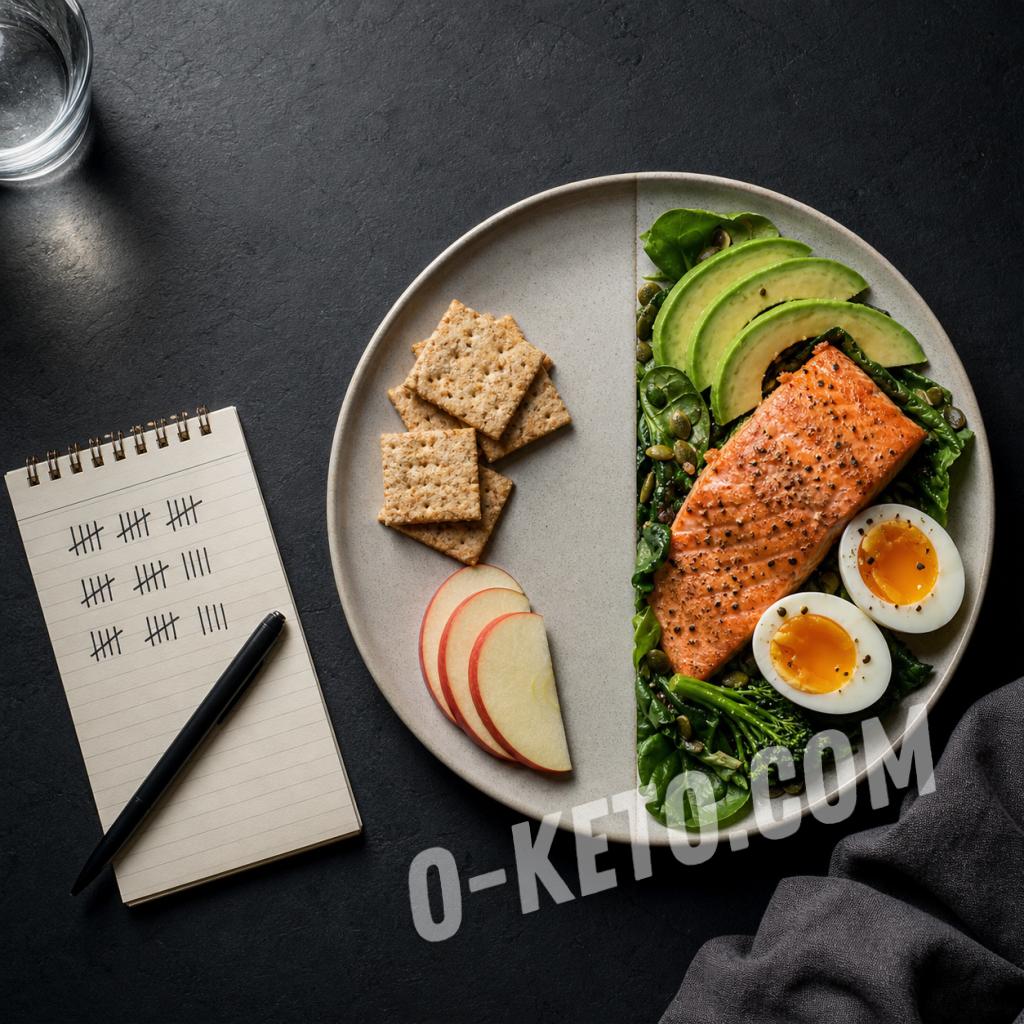

Calorie counting can be a useful observation tool, but by itself it often does not solve a weight problem because body weight depends not only on food arithmetic, but also on hormonal context, satiety, access to stored fat and a person’s ability to tolerate long gaps without eating. That is why two diets with the same calorie level can produce very different results in hunger, energy and the speed of fat loss. In practice, people often struggle not because they “cannot count,” but because they remain hungry, tired and metabolically tied to frequent carbohydrate-driven energy swings.
Why a calorie deficit does not always work the way people expect
When someone sharply cuts calories but keeps a lot of rapidly absorbed carbohydrates and frequent snacking, the body often faces a double problem. On one side, less energy is coming in. On the other, insulin and blood sugar fluctuations still keep interfering with calm access to body fat stores. The result is a familiar pattern: hunger returns quickly, mood and work capacity fall, and weight loss moves much more slowly than the simple formula of “eat less and lose more” promised.
Another difficulty is that low-calorie strategies without enough satiety are usually harder to follow in real life. A person may tolerate them for a few days or weeks and then compensate with overeating, sweets or endless grazing. From the outside that can look like weak discipline, but physiologically the problem is deeper: if the diet keeps driving hunger and never gives metabolic flexibility, sustaining a deficit becomes harder and harder.
How insulin affects access to fat stores

Insulin is needed not only for glucose control, but also as a signal that helps the body distribute and store energy after a meal. If insulin rises often and stays elevated for longer, the body has a harder time switching calmly to its own fat between meals. This does not mean calories are irrelevant, but it helps explain why the same energy intake can feel very different depending on food composition and meal rhythm.
Insulin also matters in a more practical sense for weight gain. First it helps remove extra glucose from the bloodstream and direct it into cells, and then it supports energy storage. Some carbohydrate is stored as glycogen, mainly in the liver and muscles, but glycogen capacity is limited. When those reserves are repeatedly filled, the body is more likely to convert excess energy into fat, including fat in the liver and around the abdomen. That is why constant sweet and starchy signals can support not only hunger, but also fat accumulation even when someone is formally controlling calories.
Sugary drinks, pastries, repeated desserts, sweet snacks and large servings of refined starch are especially problematic because they push glucose up quickly. After such meals, a person may first feel an energy lift and then return to hunger and food cravings soon afterward. In that state, calorie counting turns into a fight against appetite rather than a sustainable fat-loss strategy.
Why food quality matters as much as the numbers
For weight control, it matters not only how much energy came with the meal, but also what that meal does to fullness, blood sugar stability, food behavior and the desire to snack again later. Protein, whole foods, enough natural fats and non-starchy vegetables usually help people stay satisfied longer. In contrast, a diet built around low-fat, sweet or heavily processed products often gives poor satiety even when calories are being tracked “correctly.”
That is why two people can eat the same calories and still get different results. One can go for hours without thinking about food. The other remains hungry, looks for something sweet and drifts out of the plan by evening. For weight loss, that difference is fundamental, because diet sustainability depends not just on a calorie table, but on whether the food itself helps control appetite and reduce repeated insulin stimulation.
Where keto and intermittent fasting can help
Low-carbohydrate eating and intermittent fasting are interesting because they often work through more than a formal reduction in calories. They can help reduce sharp glucose excursions, make appetite more predictable and lengthen the periods when the body can use its own fat as fuel. For many people, that changes the subjective experience first: less intrusive hunger, fewer constant thoughts about eating and less urgency to keep reaching for another snack.
Keto should not be treated like a magic word that cancels every other rule. If a person overeats low-carb desserts, keeps snacking between meals and never observes the body’s real response, progress can still stall. But as a strategy for breaking constant dependence on carbohydrate-driven eating, keto and intermittent fasting often help better than endlessly shrinking portions without changing the type of food.
Why people get stuck in the “I eat little but do not lose weight” pattern
This situation often comes from several factors at once: hidden snacks, weak satiety, poor sleep, chronic stress, reduced insulin sensitivity and unrealistic expectations from counting alone. A person may honestly believe they eat very little while still getting frequent sweet signals from coffee, drinks, sauces, “healthy” bars or evening snacks. Even small but repeated triggers can prevent the body from leaving a constant search-for-energy mode.
There are also earlier clues that the problem may involve more than calories alone and may be tied to insulin resistance. Many people first notice sleepiness after meals, strong cravings for sweets or starchy foods, brain fog and the sense that energy drops quickly unless they keep eating. These signs do not confirm a diagnosis by themselves, but they do suggest that the person may be metabolically dependent on repeated carbohydrate signals and therefore tolerate a calorie deficit much worse than the numbers on paper would suggest.
There is also the opposite trap: a diet that is too strict lowers satisfaction and provokes cycles of restraint and rebound eating. In that case, weight does not stall because energy balance stopped existing, but because the chosen strategy is poorly tolerated and does not account for hunger physiology, insulin and satiety.
What to look at besides calories
If weight loss is going poorly, it helps to evaluate more than total calories: meal frequency, liquid calories, cravings after meals, tolerance for longer gaps without snacks, waist circumference, sleep quality and responses to different carbohydrate loads. In some cases it is also useful to look at laboratory markers such as fasting glucose, fasting insulin, HbA1c and HOMA-IR. These clues help show whether insulin resistance and constant carbohydrate stimulation are part of the reason weight loss is stuck.
The practical conclusion is usually simple: calorie counting can be part of the system, but it rarely works as the only solution. A much more sustainable strategy is one in which food creates satiety, gaps between meals become longer, blood sugar behaves more calmly and the body gets real access to stored fat. That is why many people improve first not by creating an even harsher deficit, but by changing food composition and lowering the frequency of insulin signals.
Sources
- Ultra-Processed Diets Cause Excess Calorie Intake and Weight Gain: An Inpatient Randomized Controlled Trial of Ad Libitum Food Intake
- Low-fat versus Low-carbohydrate Weight Reduction Diets: Effects on Weight Loss, Insulin Resistance, and Cardiovascular Risk – A Randomized Controlled Trial
- Effectiveness of Low-carbohydrate Diets for Long-term Weight Loss in Obese Individuals: A Meta-analysis of Randomized Controlled Trials
- Efficacy and Safety of Low and Very Low Carbohydrate Diets for Type 2 Diabetes Remission: Systematic Review and Meta-analysis of Published and Unpublished Randomized Trial Data
- Is Isocaloric Intermittent Fasting Superior to Calorie Restriction? A Systematic Review and Meta-analysis of Randomized Controlled Trials
- Facilitating Positive Health Behaviors and Well-being to Improve Health Outcomes: Standards of Care in Diabetes – 2026