


Why are complex carbohydrates harmful?
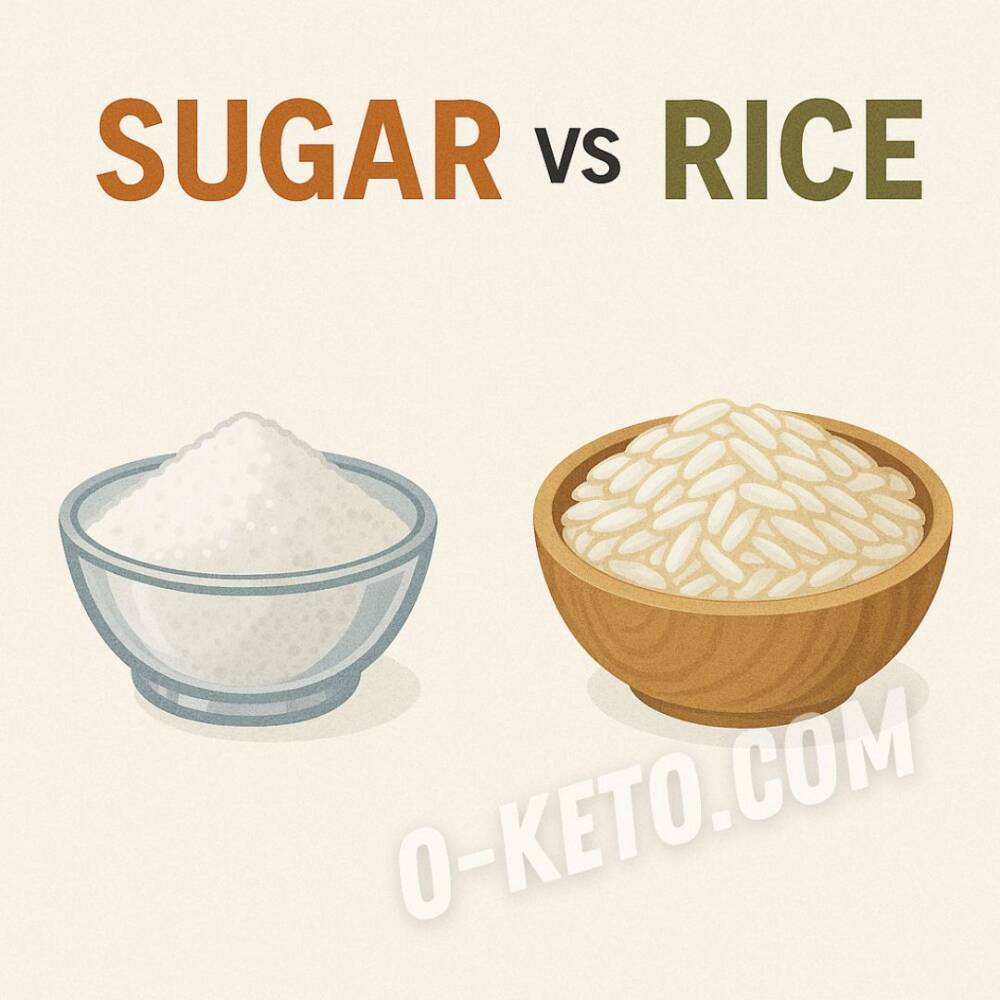
Everyone is already saying that sugar is very bad and harmful. However, if you compare sugar, for example, with rice, then rice turns out to be worse. Sugar has a glycemic index of around 58. Rice, on the other hand, has a glycemic index of 70 and above. At the same time, if you consume no more than 20-30 grams of sugar, then you eat much more rice – 100 grams or more.
Sugar. The glycemic index (GI) of sugar is approximately in the range of 58–65. This is because it consists of glucose and fructose in equal parts. Glucose raises blood sugar quickly. Fructose has little direct effect on glycemia but burdens the liver, as it is metabolized there.
Therefore, a small amount of sugar (20–30 g) will give a short-term spike in insulin, but is unlikely to cause disaster if a person does not consume it constantly and in large doses.
Rice. The glycemic index depends on the type:
- white long-grain — about 70,
- short-grain, sticky — up to 80–90,
- basmati — closer to 50–55,
- brown — about 50.
This means that some varieties are indeed "worse" than sugar in terms of GI. And considering that a serving of rice is usually 100–150 g of the cooked product, or even more, the glycemic load (GL) becomes significantly higher:
- For sugar: 20 g × 58 ÷ 100 = ≈12.
- For white rice: 100 g × 70 ÷ 100 = ≈70.
This means that rice causes a much stronger and longer-lasting spike in glucose and insulin.
But there is a difference. The difference is that rice is starch, pure chains of glucose. It completely enters the blood as glucose. Sugar, on the other hand, is a combination of glucose and fructose, and fructose "masks" glycemia, but at the same time puts a hidden burden on the liver (risk of fatty liver disease, increased triglycerides, stimulation of lipogenesis).
This means that rice in large quantities is "worse" in terms of glycemic load, but sugar in the long term is "worse" in terms of metabolic consequences, as it directly stimulates lipogenesis and fatty liver.