




Homemade sugar-free marmalade often disappoints because people try to cook it with the logic of a classic sugar marmalade, just without the sugar. The result can stay too soft, release water, stick to the knife, or turn into a strange brittle gel without the normal chewy texture people expect. The problem is usually not one wrong ingredient. It is that low-carb marmalade has to be built on a different technological logic.
In classic marmalade, ordinary sugar does several jobs at once. It adds solids, helps control moisture, affects syrup density, and supports the way the gelling system behaves. Once sugar is removed, those functions have to be redistributed. That is why low-carb versions often rely on allulose, a syrup-style base, pectin NH, a small amount of agar, and carefully added acid.
Why the usual sugar method does not work here
Traditional recipes often use high-methoxyl pectin that performs well only with a large amount of sugar and can tolerate longer boiling. With enough sugar in the system, the mixture thickens, concentrates, and sets into the familiar dense texture. In a low-carb version that logic breaks down because the environment is fundamentally different once the sugar is gone.
If you simply remove sugar and keep the same method, the marmalade often becomes weak, watery, or inconsistent. That is why modern low-sugar dessert work usually turns to pectin NH or another more suitable gelling system instead of relying on the old jam-style approach.
Why pectin NH and agar are useful together
Pectin NH is useful because it gives a more elastic, marmalade-like texture without depending on the heavy sugar load required by older systems. It helps create the springy bite people expect from marmalade rather than a simple thickened puree. For home desserts it is one of the most convenient options when you want a stable, neat, and repeatable result.
Agar plays a supporting role. A small amount improves heat stability, helps the pieces keep their form, and adds a little structural firmness. If you use only pectin in a sugar-free formula, the result can become too soft. If you use only agar, the gel can become too glassy and rigid. Together they create a better balance: pectin gives elasticity, while agar reinforces shape and temperature resistance.
What allulose and a syrup base actually do
Allulose matters for more than sweetness. In these recipes it helps move the texture closer to a familiar confectionery feel and supports the whole system. Even when marmalade is made with water rather than fruit puree, allulose helps the result feel less empty and more complete on the palate.
A syrup-style base, when used, adds body, softness, viscosity, and better moisture retention. This is especially noticeable in versions meant to feel slightly more candy-like rather than very clear and glassy. At the same time, low-carb marmalade can also be made without a syrup component, for example with allulose and water or a clear sugar-free juice. The final texture will simply be somewhat different.
Why the dry mix step matters
Pectin does not like being dumped straight into liquid on its own. If you do that, it can form stubborn lumps that are hard to disperse even with active stirring. That is why the dry mix is not just a formality. It is a real technical step. Pectin is first mixed with sweeteners and other dry ingredients, then added to the warm liquid base.
This method is often described as dispersing the pectin. It spreads the particles more evenly and greatly reduces clumping. That is also why the liquid is often warmed in advance to around 30-35°C before the dry mix is added in a thin stream. The whole system comes together much more cleanly that way.
What a good cooking sequence looks like
After the dry ingredients are added, the mixture is often left for about 5 minutes so the pectin can absorb moisture and start hydrating. Then the base is brought to a boil and cooked only briefly, often around 2 minutes. In a low-carb formula the goal is not to boil the mass for a long time the way some sugar-based recipes do. The goal is to activate the system cleanly, not to evaporate moisture as aggressively as possible.
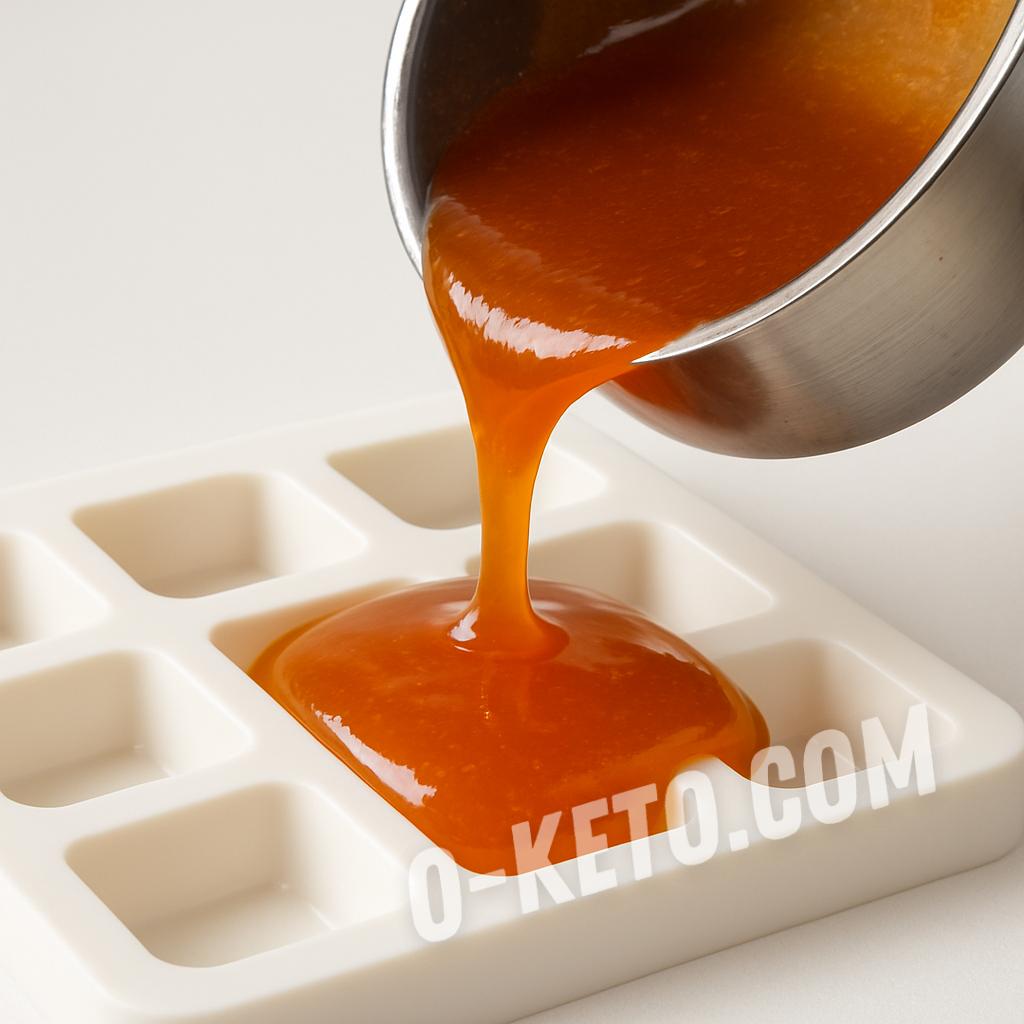
Acid is best added near the end rather than at the beginning. That gives better control over both flavor and structure. Many recipes use either a citric-acid solution or lemon juice. Once the acid is added, the mixture usually stays on the heat only for another 20-30 seconds before it is removed and allowed to cool slightly before being poured into the mold.
Readiness here is not measured by time alone. After hydration, the dry blend should be uniform; after reduction, the mixture should still flow but be visibly more viscous; after the acid is added, it should not be held over the heat for long. If water is replaced with juice or purée, assess thickness and acidity separately because both change the load on the pectin-agar system and may require a process adjustment.
Why a sugar-style coating fails
Many people want to coat finished marmalade with erythritol or allulose to imitate a classic sugar crust. In practice this usually works poorly. These sweeteners do not behave like ordinary sugar. They pull moisture from the marmalade surface and from the air much more quickly.
Instead of a dry coating, you get a wet sticky film. Then moisture migration begins: the surface becomes damp, the pieces lose their neat shape, and shelf life gets worse. That is why low-carb marmalade is usually better left uncoated, with the focus placed on a correct internal texture rather than a fake sugar finish.
Which liquid base to choose
If you want a clearer and more transparent texture, water or a clear sugar-free juice is usually the easiest choice. That approach gives a cleaner appearance and makes texture control simpler. If you want a fuller fruit flavor, berry puree or juice can work well too, but the visual result will be less transparent and the gel may behave slightly differently.
Different liquids respond differently to heat and can change the final consistency. So when moving from water to puree or juice, it is wise to expect some small adjustment and remember that ideal texture depends not only on numbers in a formula, but also on the actual ingredients used.
How to store finished marmalade
After pouring, the mixture is usually left briefly at room temperature and then moved to the refrigerator for full stabilization. That can take several hours, and it is better not to rush the cutting stage. A fully set structure usually cuts more cleanly and looks far neater.
Finished marmalade is best stored in a clean closed container in the refrigerator. With good technique it stays stable quite well, but surface moisture and the absence of a bad external coating are major factors in how good it continues to look. If the outside has not been overloaded with sweetener, the pieces usually store much more calmly.
Conclusion
Good sugar-free marmalade is not built by trying to imitate a classic sugar formula step for step. It comes from a properly assembled low-carb system. Pectin NH gives elasticity, agar supports shape, allulose and syrup-like components give body, and acid finishes the structure at the right moment. If you respect the mixing order, avoid overcooking by old sugar rules, and skip the fake sugar coating, homemade marmalade can become dense, elastic, and reliable even without ordinary sugar.


