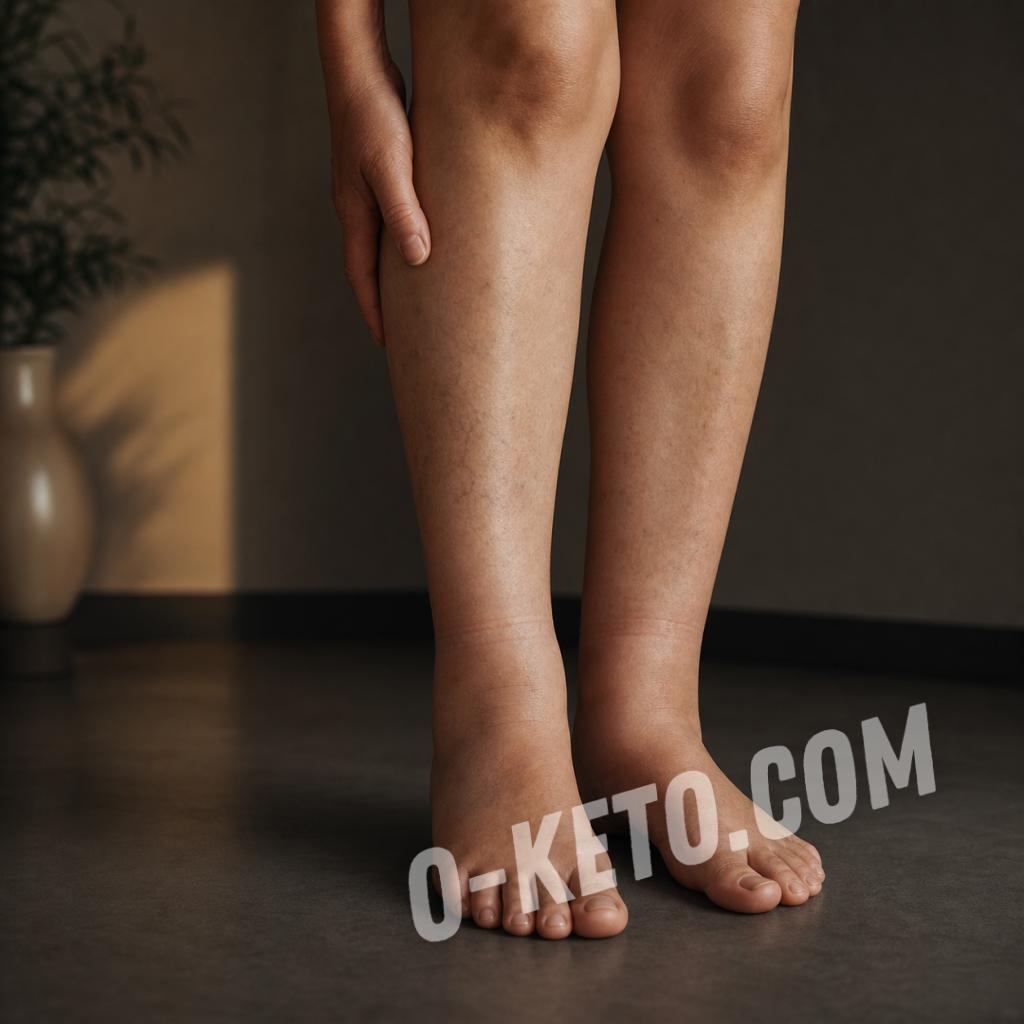

Varicose vein problems do not always begin with large twisted veins that are obvious at first glance. In many people the earliest stage is much quieter: the legs feel heavier by evening, shoes become tighter, the skin around the ankles looks a little puffier, sock marks stay visible longer, and heat becomes harder to tolerate. That is why early varicose trouble or a clear tendency toward it is often missed for years. People blame fatigue, age, desk work, or summer weather while the venous system is already beginning to work under strain.
It helps to understand that varicose disease is broader than a visible vein. It involves rising venous pressure, valve dysfunction, blood pooling in the lower limbs, irritation of the microcirculation, and gradual tissue changes. Early on, the body may show this mostly through sensations and daily fluctuations rather than through dramatic visible deformity. But the longer these patterns repeat, the more likely it becomes that they will progress into more obvious vascular and skin changes.
Which sensations often appear before visible veins
One of the most typical early complaints is heaviness in the legs by evening. In the morning the legs may feel nearly normal, but by the end of the day they seem denser, more tired, and slower to recover from ordinary activity. Many people describe a bursting or full feeling in the calves and a desire to stretch out, elevate the legs, or remove tight shoes as soon as possible. In some, this is worse after standing work; in others, after long sitting without enough walking.
Another common early signal is the feeling that the legs “fill up” more quickly in heat, during travel, after flights, or by the end of the workday. This does not always look like a dramatic edema, yet the person notices a difference through tighter straps, deeper sock impressions, or a more stretched feeling in the skin near the ankles. At this stage symptoms may fluctuate: stronger for several days, then milder again. That inconsistency is exactly what often makes people ignore the pattern.
Why things get worse by evening, in heat, and after static work
The lower limbs must return blood upward against gravity every day. To do that efficiently, the body relies on competent venous valves, rhythmic calf-muscle contractions, ankle movement, and the absence of prolonged static overload. When a person sits or stands for many hours without real movement, the calf muscle pump becomes much less effective. Blood stays lower for longer, venous and capillary pressure rises, and fluid shifts into the tissues more easily.
That is why a classic early pattern is simple: easier in the morning, worse in the evening. Heat dilates vessels, makes the venous system fill more readily, and makes tissue fluid balance harder to maintain. Summer weather, hot indoor environments, flights, long car rides, kitchen work, salon work, surgical work, and many retail jobs can all intensify an already existing venous tendency. When the same response repeats regularly, it matters more than a single exhausting day.
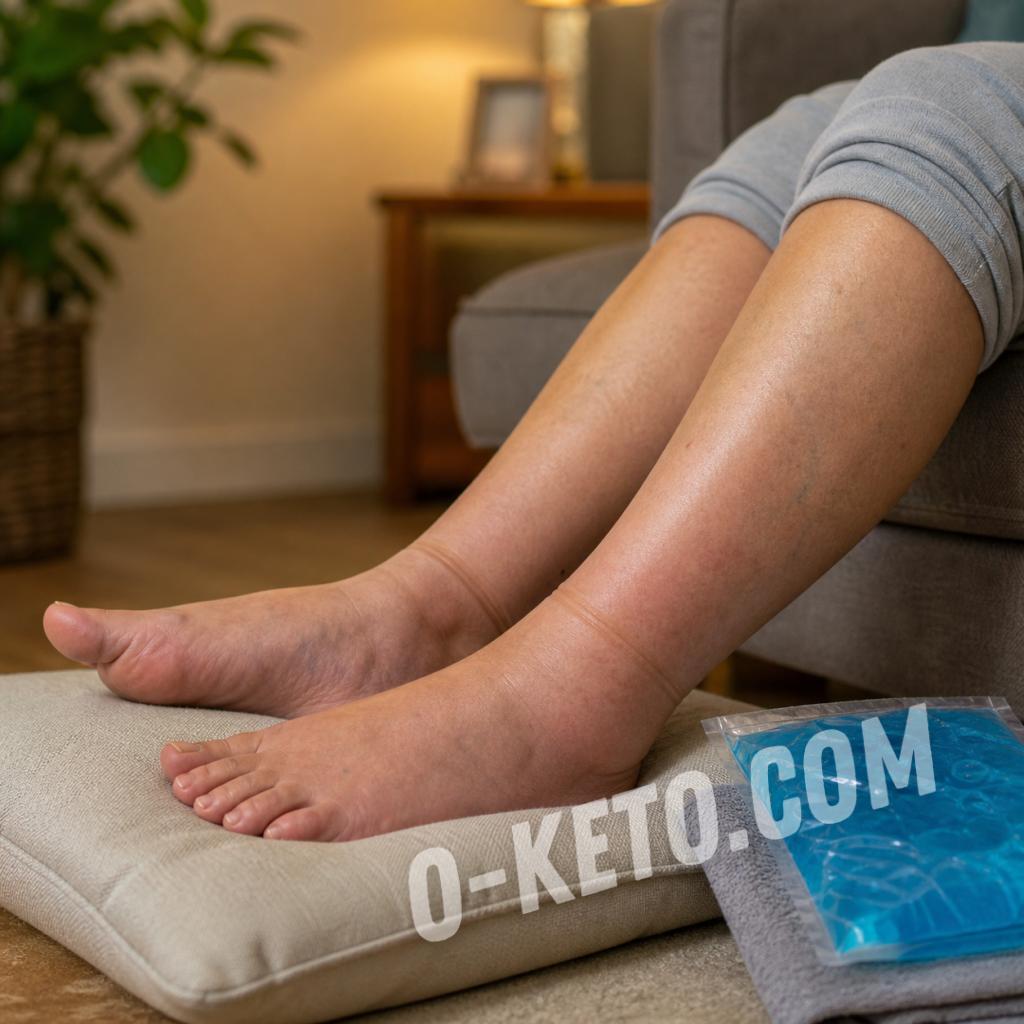
Which skin and visible changes should no longer be dismissed
As the problem moves beyond simple heaviness, more concrete external clues begin to appear. These can include spider veins, a fine superficial vascular web, segments where veins seem more noticeable than before, or visible asymmetry between the legs. Sometimes the first clue is not a bulging vein at all but gradual darkening near the ankles, itching, dryness, irritation, mild thickening of the skin, or slower healing of small skin injuries.
These changes matter because they reflect more than blood sitting in one vein. With chronically elevated venous pressure, the microcirculation also suffers: capillaries become more permeable, fluid enters the tissue more easily, and metabolic waste and inflammatory signals are cleared less efficiently. As a result, the skin and subcutaneous tissues slowly begin to change. At that stage the issue is no longer just “tired legs,” but a more durable sign that the system is struggling to compensate.
When swelling and heaviness are more likely to be venous
A venous pattern is usually suggested by a cluster of repeating clues rather than a single isolated symptom. Symptoms become worse by evening, after prolonged standing or sitting, in heat, and during travel. The legs feel better after night rest or after lying down with them elevated. A short walk often helps because the calf muscles compress deep veins and improve upward blood flow. People with this pattern often say, “Once I start walking, it eases up,” or “In the morning I am fine, but by evening my legs feel completely different.”
At the same time, symptom intensity does not have to match the visual picture perfectly. One person may already have a visible vascular network with modest discomfort, while another has strong heaviness and puffiness before major veins become obvious. That is because the experience depends not only on superficial veins but also on total venous pooling, capillary response, tissue fluid retention, and the condition of the skin and subcutaneous tissues.
Which factors make a varicose-type problem more likely
Risk becomes more plausible when there is family tendency, a history of pregnancy, work that requires standing for long periods, a low-activity lifestyle, excess body weight, frequent flights, strong heat sensitivity, and recurring evening swelling. Hormonal shifts, reduced physical activity, and the habit of sitting for hours without breaks can also contribute. The more of these factors come together in one person, the more attention even “soft” early symptoms deserve.
This does not mean that every evening heaviness automatically equals pronounced varicose disease. But when the symptom repeats in the same circumstances and comes together with shoe marks, a feeling of full legs, spider veins, or skin changes, the probability of a venous contribution becomes much higher. In practice the important point is not one complaint by itself but the stable repeated pattern.
When it is better not to wait
Some situations deserve quicker medical evaluation. It is more concerning when swelling affects one leg much more than the other, when there is clear asymmetry, when pain appears along a vein, when the skin becomes suddenly red or warm, when dense tender areas appear, when discoloration becomes more obvious, or when swelling remains present by morning instead of fading overnight.
It is also important to remember that not every swollen leg is mainly a varicose-vein issue. Similar complaints can come from the lymphatic system, heart, kidneys, medications, hormonal shifts, and other conditions. But in everyday practical terms the logic is simple: if heaviness, swelling, and skin changes become a repeated evening scenario, it is no longer a story that should be explained away as “just fatigue.”
The main practical takeaway is that possible varicose trouble often shows itself before a person ever sees a large twisted vein. Early signs include repeated heaviness, worsening with heat and immobility, sock marks, evening puffiness, spider veins, and gradual skin changes. The earlier these signals are recognized, the easier it becomes not to miss the moment when the venous system is already asking for attention.
Sources
- Varicose Veins in the Legs: Information for the Public – NICE Guideline CG168
- Recommendations: Varicose Veins – NICE Guideline CG168
- ESVS 2022 Clinical Practice Guidelines on the Management of Chronic Venous Disease of the Lower Limbs
- Varicose Veins – NHS
- Swollen Ankles, Feet and Legs (Oedema) – NHS
- Post-thrombotic Syndrome and Chronic Venous Insufficiency – Guy’s and St Thomas’ NHS Foundation Trust