


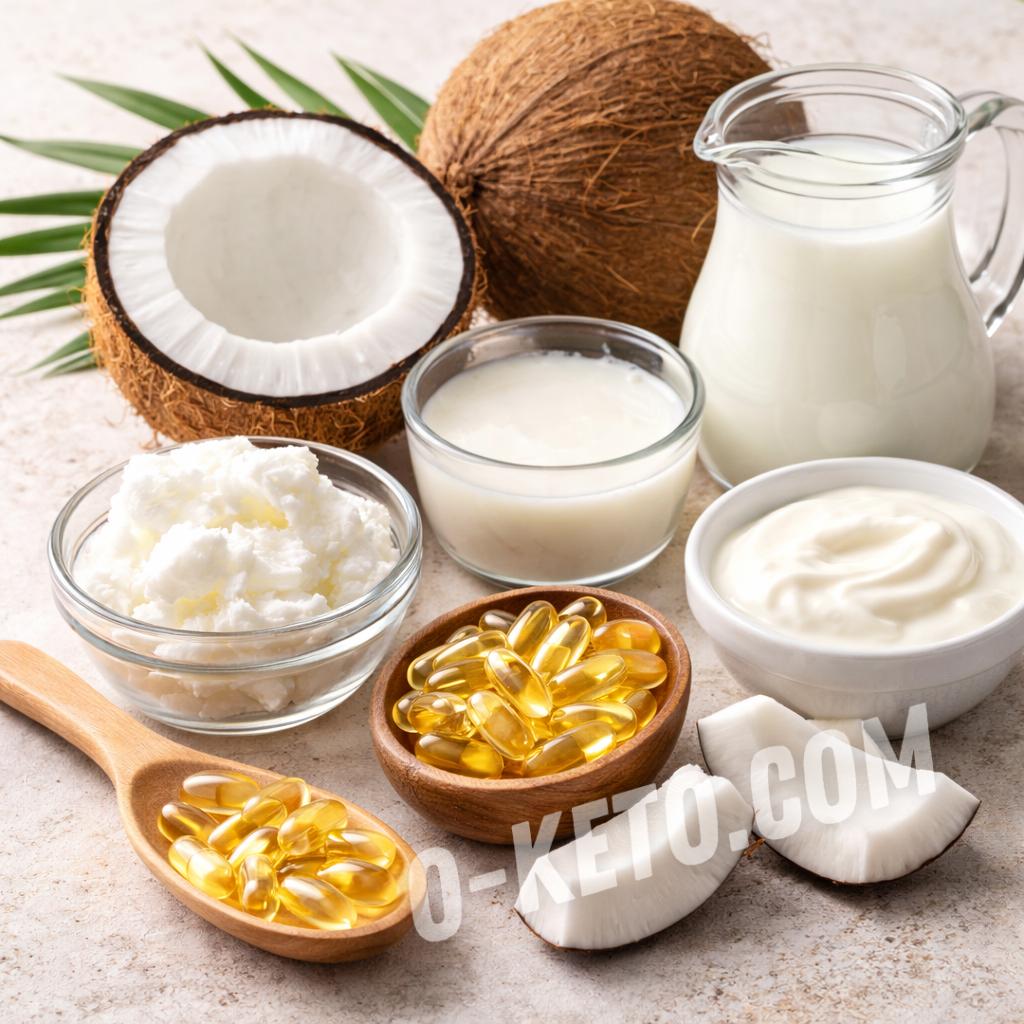

Lauric acid — is a medium-chain saturated fatty acid that occupies a special place among dietary fats due to its metabolic and biological effects.
Unlike long-chain saturated fatty acids, it is absorbed differently and incorporated into metabolism in a different way. The main interest in lauric acid is related to its impact on immunity, microbial balance, and lipid metabolism.
The greatest practical significance of lauric acid lies in its presence in natural fats, primarily coconut and breast milk, where it performs protective and energy functions.
Beneficial Properties
Lauric acid belongs to medium-chain fatty acids and is metabolized faster than classic saturated fats. In the body, it is partially converted into monolaurin — a compound with pronounced biological activity.
Beneficial properties include:
- support for innate immunity due to antimicrobial action;
- antiviral and antibacterial activity of monolaurin;
- relatively quick incorporation into energy metabolism;
- support for the skin barrier and mucous membranes;
- participation in the regulation of microbial balance.
These properties make lauric acid a functional component of fats, rather than just a source of calories.
Daily Requirement and Sources
There is no officially established norm for the consumption of lauric acid, as it is not classified as an essential fatty acid. In traditional diets, its intake is determined by the amount of natural fats of animal and tropical origin.
The main dietary sources of lauric acid include:
- coconut oil;
- coconut milk;
- palm kernel oil;
- breast milk;
- dairy products, especially those made from whole milk.