




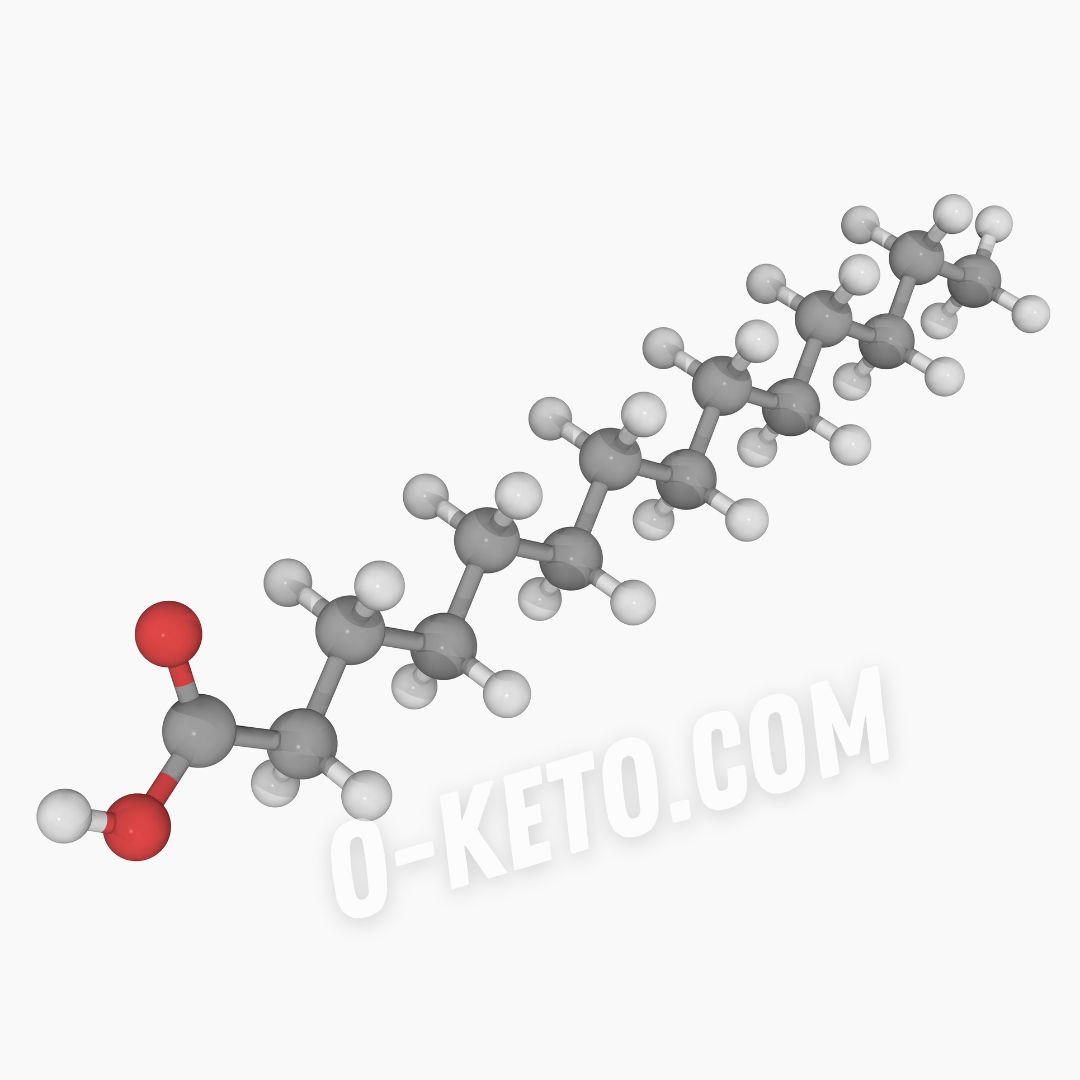

Myristic acid is a saturated fatty acid with 14 carbon atoms, written as C14:0. It is found in dairy fat, coconut oil, palm kernel oil and smaller amounts in meat and some seafood.
It is not an essential fatty acid, so it does not need to be supplemented like a vitamin or mineral. Still, it is part of dietary fat and can contribute to lipid structure, energy metabolism and the modification of certain proteins.
Food sources
Main sources of myristic acid include:
- coconut oil and coconut products;
- palm kernel oil;
- butter, cream, cheese and other full-fat dairy products;
- fatty meat and some fish in smaller amounts.
In real diets it is rarely consumed alone. It usually comes together with other saturated, monounsaturated and short-chain fatty acids.
Role in the body
Myristic acid can be used as an energy source and as part of lipid structures. Its derivatives take part in myristoylation, a process that attaches a fatty acid to certain proteins and helps regulate their location and function in cells.
This does not mean myristic acid should be added deliberately. Practical nutrition depends more on overall fat quality, protein intake, fiber, energy balance and individual lipid response.
Intake and deficiency
No separate recommended intake has been established for myristic acid. Deficiency of this specific fatty acid is not usually treated as an independent clinical problem, because the body receives and synthesizes various saturated fats.
If a diet is too low in fat, problems are more likely related to low energy intake, fat-soluble vitamins, essential fatty acids or hormonal changes rather than lack of myristic acid.
Excess and lipids
Myristic acid belongs to saturated fats that can raise LDL cholesterol in some people. The effect depends on genetics, body weight, insulin resistance, total diet composition and what replaces saturated fat.
If LDL, ApoB or non-HDL cholesterol rises on keto or LCHF, it is reasonable to review butter, heavy cream, coconut oil and palm kernel fat intake. Replacing part of them with olive oil, avocado, fish and nuts may improve markers while staying low-carb.
Keto and LCHF relevance
Myristic acid is not harmful by definition, but it is also not something to maximize. In whole foods it can be part of a normal diet. The key question is total saturated fat load and individual lipid response.