


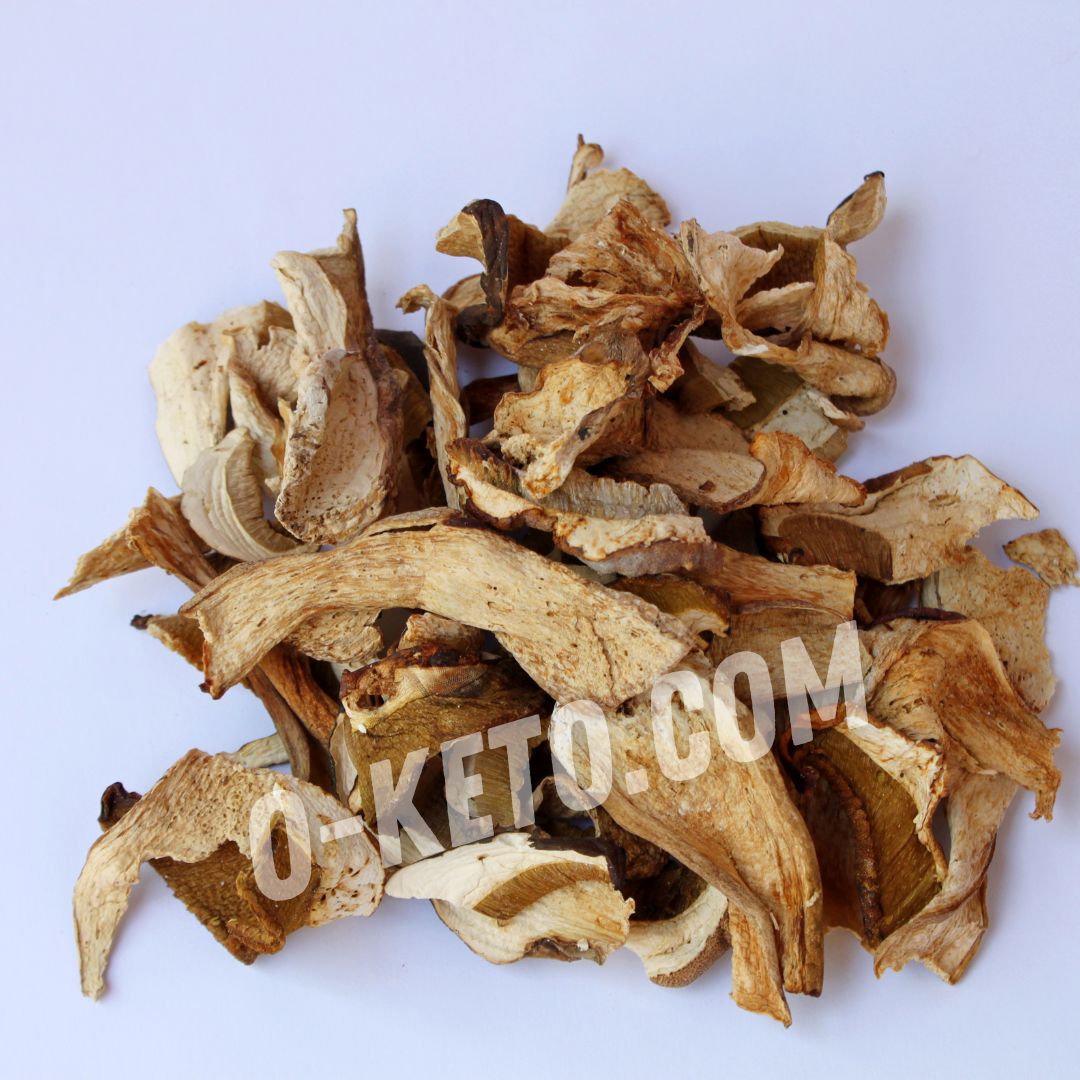

Dried porcini is the concentrated form of Boletus edulis. During drying, water leaves the mushrooms and the forest aroma becomes much stronger. A small handful can change the flavor of a whole pot of soup, sauce, or stew. Dried porcini is therefore used not as an ordinary side dish, but as an aromatic base.
The main advantage is depth of flavor and easy storage. Unlike fresh mushrooms, dried ones can be kept for months, used in small amounts, and added to dishes outside the season. They work especially well where a nutty mushroom aroma, dark broth note, and richness are needed without flour, sugar, or ready-made sauces.
Nutrition
Per 100 g, dried porcini tables show many calories, protein, fiber, and carbohydrates because the product is fully dehydrated. But a real portion is usually much smaller: 5-15 g of dry mushrooms is often enough for a sauce or soup with several servings. After soaking, the weight increases and the concentration per 100 g of prepared product changes.
Dried mushrooms contain potassium, phosphorus, iron, zinc, B vitamins, and some vitamin D if the material was dried with access to light. For the diet, the main point is not micronutrients but the way mushroom flavor makes a dish rich without starchy thickeners.
Place in keto and LCHF
Dried porcini can fit keto and LCHF well when used as a concentrate. A portion of a few grams gives strong flavor and almost does not change the carbohydrate limit of the dish. It suits broths, cream sauces, omelets, meat stews, cauliflower, zucchini, mushroom mixes, and sauces for poultry.
Dry weight matters. If 30-50 g of dried mushrooms are used for one person, that is already a large portion, potentially heavy to digest and noticeable in carbohydrates. In keto cooking, dried mushrooms more often work as a spice or sauce base, while volume comes from fresh button mushrooms, oyster mushrooms, vegetables, or meat.
How to soak
Before cooking, dried porcini is usually covered with warm water for 20-40 minutes; dense pieces may need longer. Then the mushrooms are rinsed, sliced, and added to the dish. The soaking liquid should not be thrown away: it carries a lot of aroma. Strain it through a fine sieve, cheesecloth, or paper filter because sand often remains at the bottom.
If a clean pale sauce is needed, soak and rinse the mushrooms, then use them without the liquid. If deep flavor is needed, add the liquid to broth, cream sauce, or stew. Salt is best added after the liquid because it already has a strong flavor and may intensify saltiness.
How to use
Dried porcini pairs well with butter, cream, sour cream, beef, chicken, turkey, eggs, thyme, parsley, black pepper, garlic, and a moderate amount of onion. In low-carb cooking, it is added to meat sauce, broth-based soup, omelet filling, braised cabbage, cauliflower, and flourless mushroom gratin.
To keep the taste from becoming harsh, dried mushrooms are best heated after soaking: briefly fried in butter or simmered in sauce. For dried mushroom powder, a pinch is enough. It is convenient in meat rubs, cream sauces, and hot soups.
How to choose
Good dried porcini smells clean, forest-like, and nutty-mushroomy. Mold, dampness, smoke, old-oil odor, or dustiness is a bad sign. Color may range from light beige to brown, but pieces should not be wet, sticky, or coated.
It is better when pieces of caps and stems are visible rather than only crumbs. Too much dust suggests old or roughly handled material. When buying from a private seller, confidence in species and collection area matters: wild mushrooms require accurate identification.
Limits
Dried mushrooms are concentrated in flavor and fiber, so a large portion may feel heavy. People with sensitive digestion should start with a small amount and cook the product well after soaking. Children and pregnant people should be offered wild mushrooms especially carefully and only when quality is certain.
Mushrooms actively absorb substances from the environment, so collection area matters. Do not use a product with unknown origin, strange odor, or moisture marks. Dried porcini is valuable as an aromatic addition, not as a daily large portion.
Storage and substitutes
Store dried mushrooms in a tightly closed jar or bag, in a dry dark place, away from grains, strongly scented spices, and humidity. If the kitchen is humid, keep them in the refrigerator or freezer in airtight packaging. After opening, check smell and dryness from time to time.
Dried porcini can be replaced with fresh porcini, shiitake, mushroom powder, morels, dried button mushrooms, oyster mushrooms, or a forest mushroom blend. There is no full replacement for porcini aroma, so in sauces it is often better to use less product of higher quality.


