


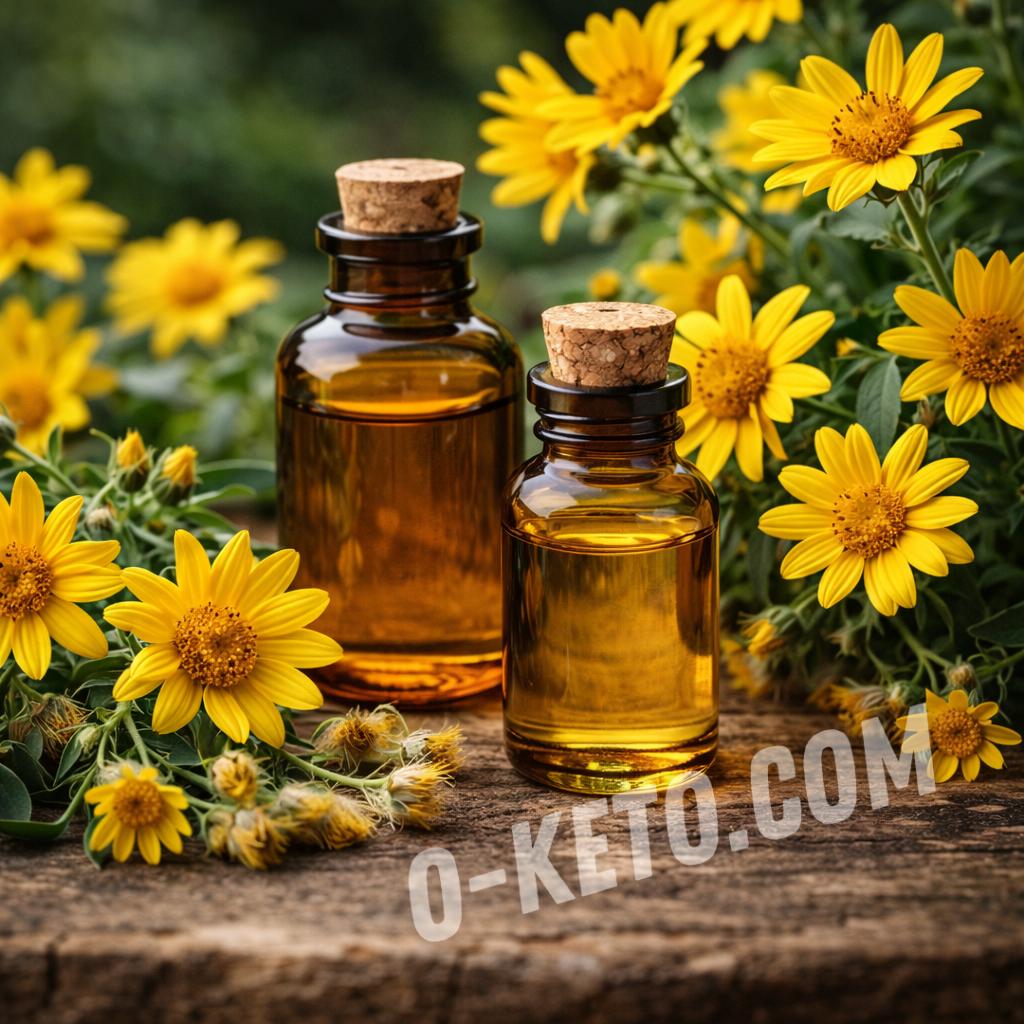

The base oil of arnica is obtained by infusing the flowers of mountain arnica in a neutral vegetable carrier oil. Unlike essential oil, this is a macerate that has a gentle, physiological effect and a high safety profile for external use.
Arnica oil is widely used in body practices, sports recovery, and skincare, especially during increased loads, injuries, and microcirculation disorders.
This oil does not belong to aromatherapy in the classical sense and is not used for inhalations. Its value lies in its ability to gently affect tissues, improve blood circulation, reduce inflammation, and accelerate recovery processes without an aggressive irritating effect.
Composition and Biological Properties
The base oil of arnica retains the lipophilic active substances of the plant, which are gradually extracted during the maceration process. Key roles are played by sesquiterpene lactones, flavonoids, triterpenes, and phenolic compounds that provide anti-inflammatory and vascular effects.
The main properties of arnica oil include:
- reduction of inflammatory reactions;
- support for microcirculation and lymph flow;
- decrease in the severity of swelling and bruises;
- relief of muscle and joint pain;
- acceleration of tissue recovery after loads and injuries.
Due to its gentle action, the oil is suitable for regular use, including long recovery courses.
Application in Body and Skin Care
The base oil of arnica is actively used as a standalone remedy or as a base for massage and therapeutic blends. It spreads well on the skin, has no sharp odor, and is suitable for working on large areas of the body.
The most common areas of application include:
- massage after physical exertion and training;
- care for bruises, sprains, and muscle strain;
- support for recovery after injuries and surgeries;
- treatment of varicose manifestations and blood stasis;
- skin care for couperose and redness-prone conditions.
In cosmetology, arnica oil is used in products to reduce puffiness, diminish signs of fatigue, and accelerate the healing of micro-injuries to the skin.
Features and Limitations of Use
Despite a milder profile compared to essential oil, the base oil of arnica is also intended exclusively for external use. It should not be applied to open wounds and mucous membranes.
The main limitations include:
- allergy to plants of the Asteraceae family;
- acute skin inflammations with compromised skin integrity;
- individual sensitivity.
Recommendations for Safe Use
To achieve maximum effect and reduce risks, it is recommended to:
- use the oil only externally;
- apply it to undamaged skin;
- conduct a skin test before first use;
- avoid intense rubbing during acute inflammations;
- use in courses during recovery states.
The base oil of arnica is a versatile remedy for supporting the musculoskeletal system and skin. It combines effectiveness and gentleness, making it a valuable tool in body therapy, sports practice, and natural skin care.


