


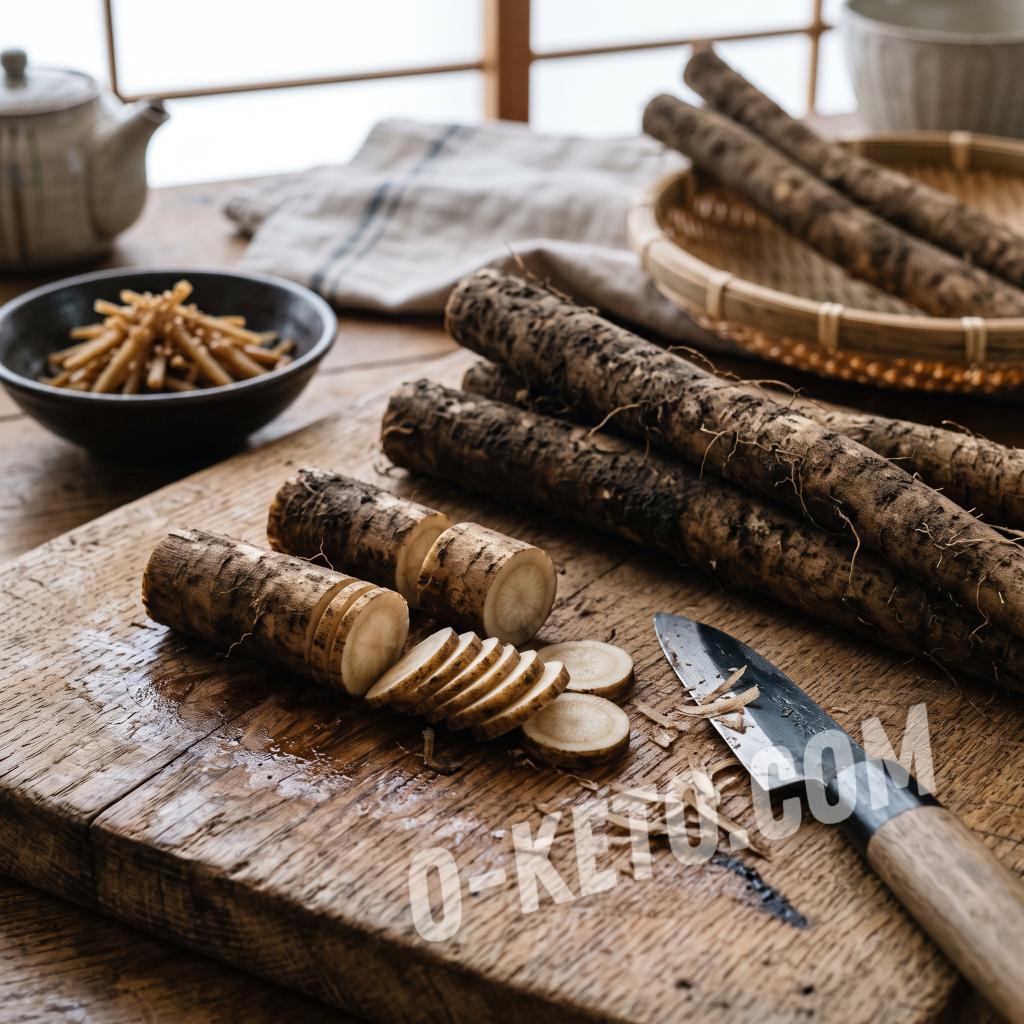

Burdock root is a firm edible root used in Japanese and Korean cooking for soups, simmered dishes, stir-fries, and structured vegetable sides. It is valued for its fibrous crunch, earthy flavor, and ability to keep shape during cooking. In food practice, it is best treated as a real vegetable rather than as a vague “medicinal root” with kitchen branding. It does show up in herbal discussions, but what matters most in cooking is how it tastes, how it behaves under heat, and how to prepare it so that browning and excessive toughness do not get in the way.
What It Is
Burdock root is long, narrow, and strongly fibrous. When fresh, it is quite firm and can discolor quickly after cutting, so cooks often peel it, slice it into matchsticks or angled pieces, and keep it briefly in water before cooking. In Japanese cuisine it is widely known as gobo. Its flavor is not simply a version of potato or radish. It has its own earthy, woody character and is used as much for texture as for flavor.
How It Is Used
Burdock root is added to soups, miso-based dishes, braised vegetable mixtures, stir-fries, and hearty combinations with mushrooms, pork, poultry, and other roots. It works especially well with soy-based flavors, miso, sesame, and deeper savory broths. In salads it is more often cooked or marinated than served raw in large amounts. One of its strengths is that it contributes structure and bite rather than dissolving into softness too quickly.
How To Choose and Prepare It
The best roots are relatively even, not badly dried out, and not heavily cracked or limp. Extremely thick roots can be tougher and more fibrous, while older roots may taste harsher. After peeling, it helps to move the cut pieces into cold water, sometimes with a small acidic touch, to slow discoloration. Thin strips are useful for quick stir-fries, while chunkier cuts work better in soups and braises. It generally takes a bit longer to soften than milder roots such as radish or young turnip.
What Matters Nutritionally
Burdock root is a fibrous, starchy root vegetable with a more noticeable carbohydrate load than very low-carb leafy vegetables. For keto and low-carb cooking, that does not automatically make it unusable, but it does make portion control more relevant. Compared with daikon or plain radish, burdock is usually denser, more filling, and more carbohydrate-heavy. That means it works better as a moderate textural ingredient than as a huge bulk vegetable if carb control is strict.
How It Behaves In Cooking
Once cooked, burdock root tends to hold shape better than many softer vegetables and gives a satisfying bite. That makes it useful in layered soups and mixed vegetable dishes where contrasting textures matter. Its flavor stands up well to miso, soy sauce, Japanese-style broths, sesame oil, and savory meat combinations. When approached as a specific culinary root with moderate carb density rather than as a miracle health root, it becomes much easier to use well.


