


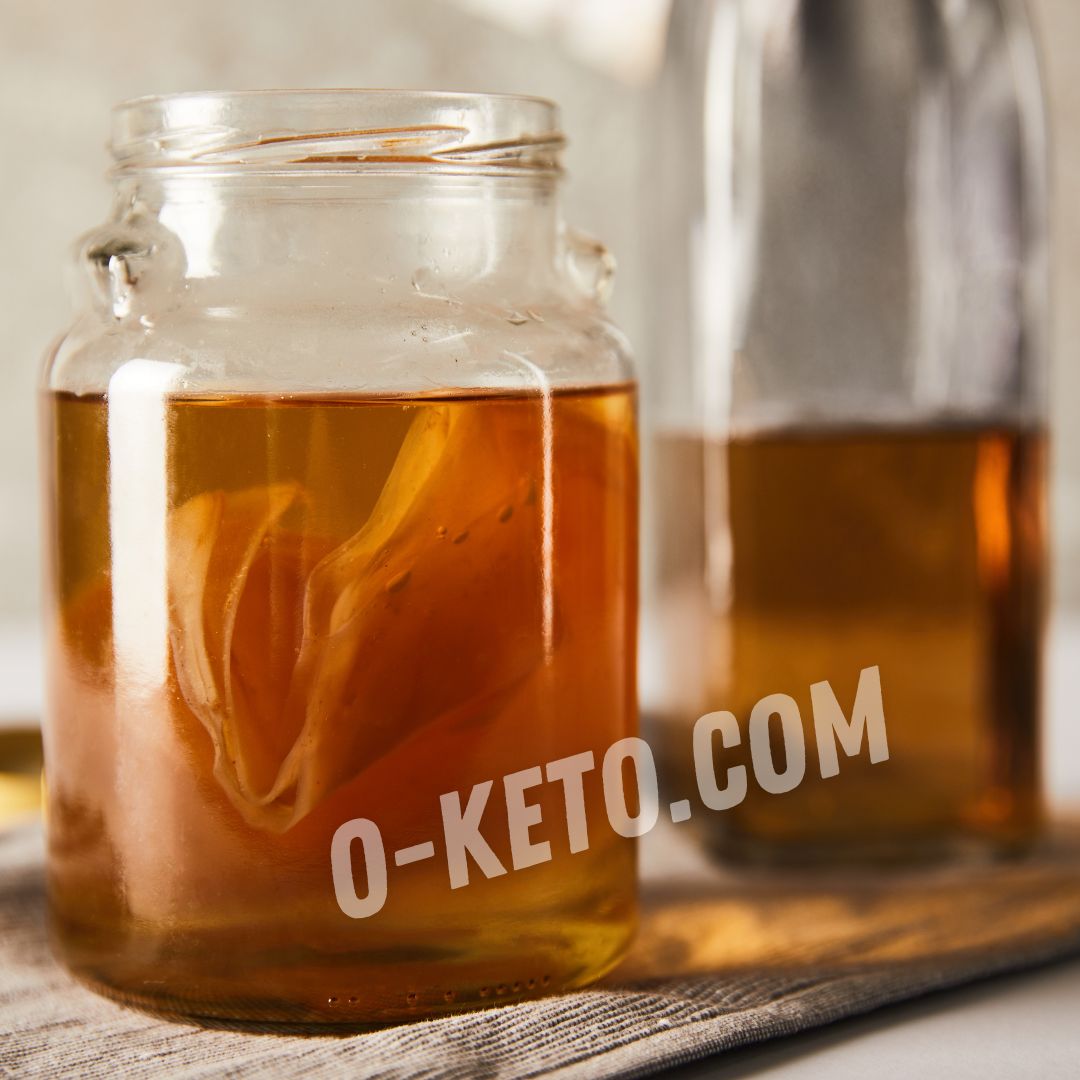

Tea mushroom, or kombucha, is a fermented drink made from sweet tea and a SCOBY culture: a symbiotic community of yeasts and bacteria. The culture looks like a dense, smooth, gelatinous disk, usually light beige or brownish. During fermentation, yeasts and bacteria process part of the sugar, and the drink becomes tart, lightly sparkling, and tea-like with an apple-like acidity.
It is important to distinguish the culture from the finished drink. The “mushroom” is not eaten like an ordinary food; it is used to ferment tea. The liquid after fermentation is what people drink. Taste, acidity, carbonation, and sugar depend on starting sugar, fermentation time, temperature, tea type, and whether fruit juice was added after the first fermentation.
Nutritional value
In 100 ml of finished kombucha there may be about 30–50 kcal, but the range is large. A homemade drink and a store bottle can differ severalfold in sugar. The longer the fermentation, the sharper the acidity and the lower the remaining sweetness, but the drink usually does not become completely carbohydrate-free.
Kombucha may contain organic acids, tea polyphenols, small amounts of B vitamins, and live microorganisms if it is not pasteurized. This does not make it a replacement for food or supplements. For keto, the key number is sugar and carbohydrates per serving.
Is it suitable for keto?
For keto and LCHF, only unsweetened or very low-sugar kombucha in a small portion fits. A practical serving is 100–150 ml, with mandatory sugar checking on the label. If a bottle contains 8–12 g of sugar per 100 ml, it is already a sweet drink rather than a neutral fermented water.
Flavored versions with juice, honey, syrups, fruit puree, and second fermentation on sweet additions need special caution. They may look natural, but in carbohydrates they can be far from plain tart kombucha.
How to use it
Kombucha is usually drunk chilled, in small portions. It can replace sweet soda if the chosen version is dry-tasting and has no added sugar. It can be diluted with mineral water and combined with lemon, lime, mint, ginger, or cucumber. Ice and extra water make the taste milder.
In cooking, tart kombucha can be used as part of a marinade or dressing, but carefully: its taste is more complex than vinegar and may add unwanted sweetness. It is usually not added to hot dishes because aroma fades and live cultures do not survive heat.
How to choose
On the label, check sugar per 100 ml, bottle volume, pasteurization, added juices, and sweeteners. For keto, the better choice is a short ingredient list: tea, water, sugar as fermentation material, culture, and sometimes spices or herbs without sweet additions. Strong sweetness in taste is a reason to reduce the portion or choose another brand.
Homemade kombucha requires clean utensils, proper acidity, and careful culture handling. Mold on the surface, rotten smell, unusual colored spots, or harsh sliminess are signs that the batch is better discarded.
Limitations
Kombucha is acidic and carbonated, so it may irritate with reflux, gastritis, sensitive enamel, or poor tolerance of sour drinks. Unpasteurized versions are not suitable for everyone, especially during pregnancy, reduced tolerance, or strict microbiological safety requirements.
Homemade kombucha may contain a little alcohol, especially after long or closed fermentation. This matters for children, pregnant women, and people who avoid alcohol completely. If the drink causes bloating, reflux, headache, or a strong craving for sweetness, reduce the portion.
How to store it
Keep finished kombucha in the refrigerator. In warmth, fermentation continues, and the bottle can become too sour or overly carbonated. Open a strongly carbonated bottle slowly and over the sink.
A home SCOBY is kept in acidic tea liquid, covered with cloth or a lid depending on the chosen method, away from contamination. After opening, the finished drink is best consumed soon.
If the drink is bottled for a second fermentation, leave room for gas and do not keep bottles warm for too long. Pressure can rise quickly, especially when berries, juice, or ginger are added.
How to choose tea
For homemade kombucha, plain black or green tea without flavorings is most often used. Strongly flavored blends, essential oils, and harsh herbal mixtures may disturb the culture. Sugar is used as fermentation material, but the finished drink should still be judged by taste and, when possible, by recipe data or test strips.
Tea that is too weak gives a flat flavor, while tea that is too strong can make the drink harsh and astringent. For stable results, it is better not to change all parameters at once: tea type, sugar amount, temperature, and time. This makes it easier to understand why the drink became drier, sharper, sweeter, or more carbonated.
What can replace it?
For a tart sparkling drink, use mineral water with lemon, cold sugar-free tea with lime, very diluted apple cider vinegar, or water with ginger and mint. If a fermented note is wanted, choose a lower-sugar kombucha from another brand or unsweetened water kefir after checking carbohydrates.


