


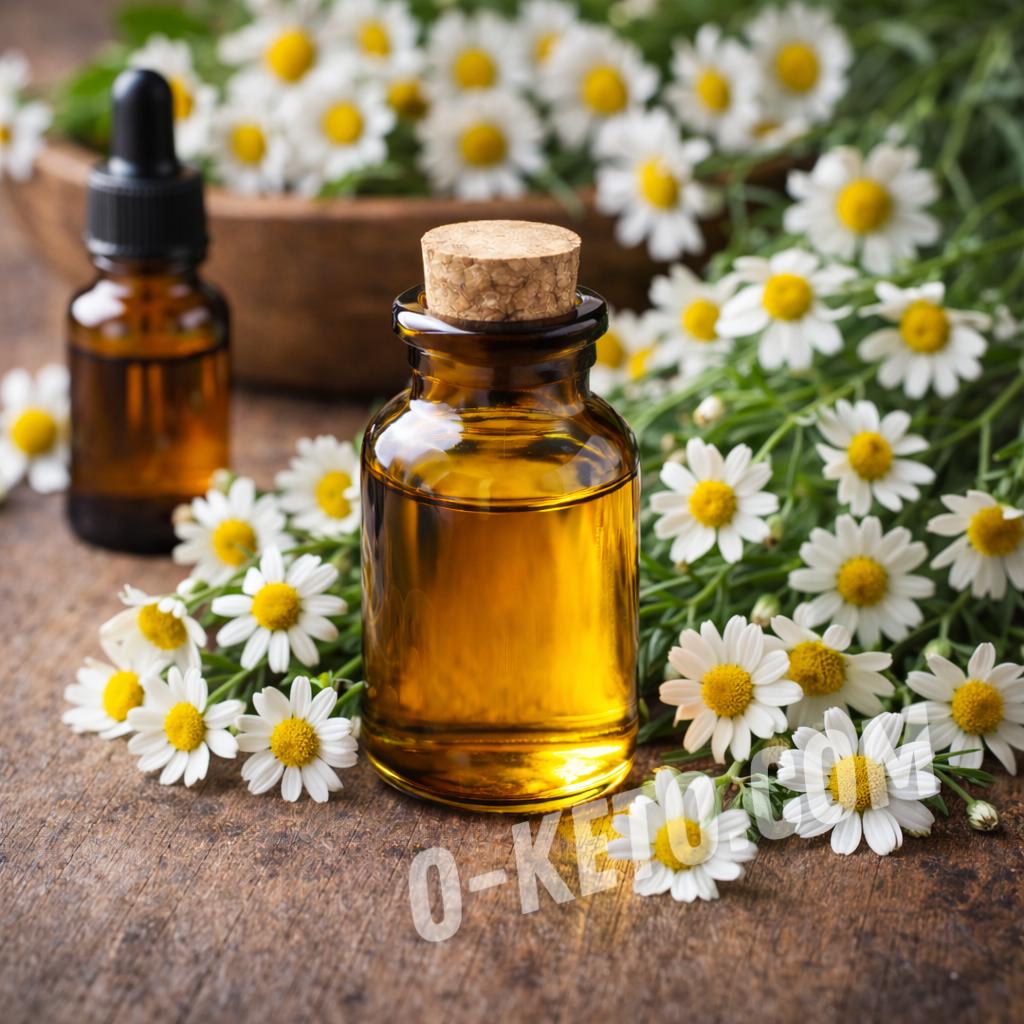

Roman chamomile essential oil is obtained from the flowers of Chamaemelum nobile by steam distillation. Its aroma is soft, warm, slightly sweet, herbal-apple-like, less blue and dense than German chamomile. It is a concentrated aromatic product, not chamomile tea and not a water infusion.
Roman chamomile should be separated from German chamomile, Matricaria recutita. They are different botanical species, with different oil color, composition, and scent. Roman chamomile is usually lighter in color and softer in aroma, while German chamomile often has a blue shade from chamazulene and a heavier herbal note.
Composition and aroma
Esters play a notable role in Roman chamomile oil, along with various monoterpene and sesquiterpene compounds. The exact profile depends on raw material, region, and distillation. Because of this ester profile, the aroma feels rounded, fruity-herbal, with soft apple sweetness and a dry floral shade.
Good oil smells clean, gentle, floral-herbal, and slightly fruity, without rancidity, mold, old dust, or a harsh perfume base. If the smell becomes heavy or sour, do not use the product on skin. Roman chamomile is usually expensive, so a very low price without clear origin should raise caution.
Is it suitable for keto?
For keto and LCHF, Roman chamomile has almost no food role: essential oil is used by the drop and usually not added to dishes. If chamomile taste is needed in a drink or dessert, use food-grade tea, infusion, a properly labeled hydrosol, or food flavoring. Essential oil without food-use approval is not suitable for that.
In a low-carb household, Roman chamomile may be used as a room aroma or cosmetic component, but not as a nutrient source. If the bottle has food-use labeling, the dose still has to be microscopic and technically clear; for home cooking, chamomile tea is usually easier.
How to use it
In a diffuser, Roman chamomile is used moderately: the aroma is soft, but expensive and easily lost in heavy blends. It pairs with lavender, bergamot, neroli, marjoram, sandalwood, frankincense, rose, and sweet orange. In compositions, it softens sharp edges and adds warm floral roundness.
For skin, use only diluted oil and patch test first. It is added to carrier oils, creams, balms, and massage blends as an aromatic component. For the eye area, children’s products, and very sensitive skin, extra caution and low concentration are needed.
Essential oil should not be dropped directly into bath water. Mix it first with a suitable base or emulsifier, otherwise drops remain on the surface and reach skin concentrated. For compresses and home cosmetic formulas, make small fresh blends.
How to choose
The label should show Chamaemelum nobile, plant part, extraction method, country of raw material, shelf life, and intended use. If it says only “chamomile oil,” clarify the species: Roman and German chamomile are not the same. The bottle should be dark glass, with a tight cap and dropper.
For cosmetics, concentration guidance and allergen warnings matter. For food, separate food-use labeling is needed, which most essential oils do not have. Ready-made “chamomile” blends may contain fragrances, carrier oils, and colors, so they should not be treated as pure essential oil.
Limits
Roman chamomile belongs to the Asteraceae family, so caution is needed if chamomile, ragweed, arnica, calendula, or related plants cause reactions. Do not use the oil undiluted, leave it within reach of children, or take it internally without food-use labeling. Pregnancy, childhood, sensitive skin, and regular medication use are reasons to discuss use with a qualified professional.
A soft aroma does not remove concentration. If burning, itching, tearing, or redness appears after application, wash the blend off with a mild cleanser and stop using it. An old bottle with changed smell is better not used on skin.
Storage
Keep the bottle tightly closed in a cool dark place, away from heat and moisture. After opening, write the date on it. Blends with carrier oil should be made in small portions and stored separately from pure oil. Wipe the cap and neck so the bottle closes evenly.
What can replace it?
For tea flavor, replace Roman chamomile with dried chamomile or food-grade infusion, not essential oil. In aromatic blends, lavender, neroli, sweet orange, marjoram, or German chamomile may give a related soft direction, but color, density, and price will differ. In cosmetics, choose replacement by tolerance, not only by plant name.


