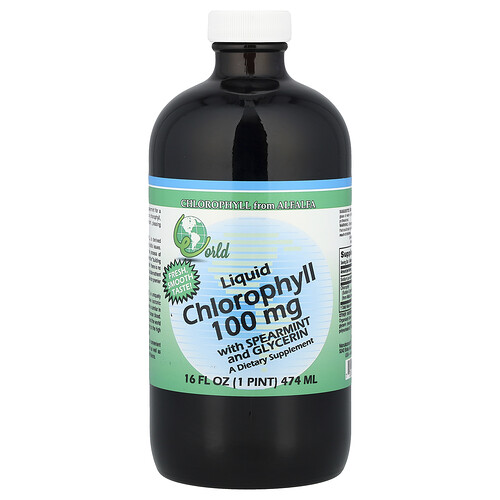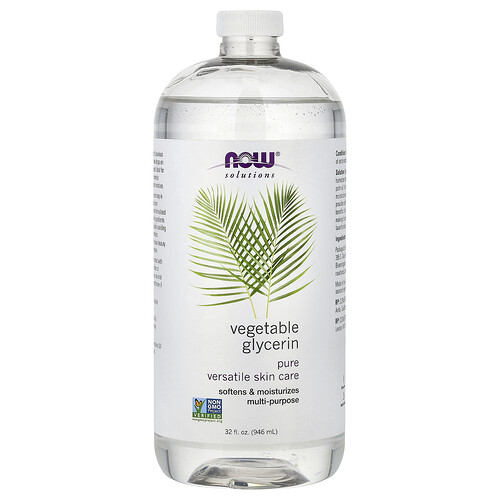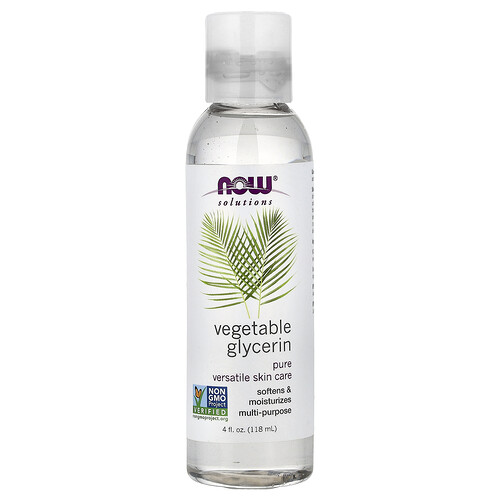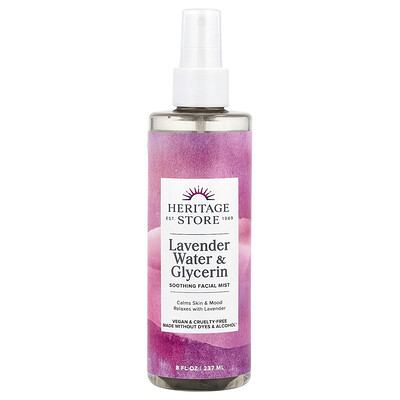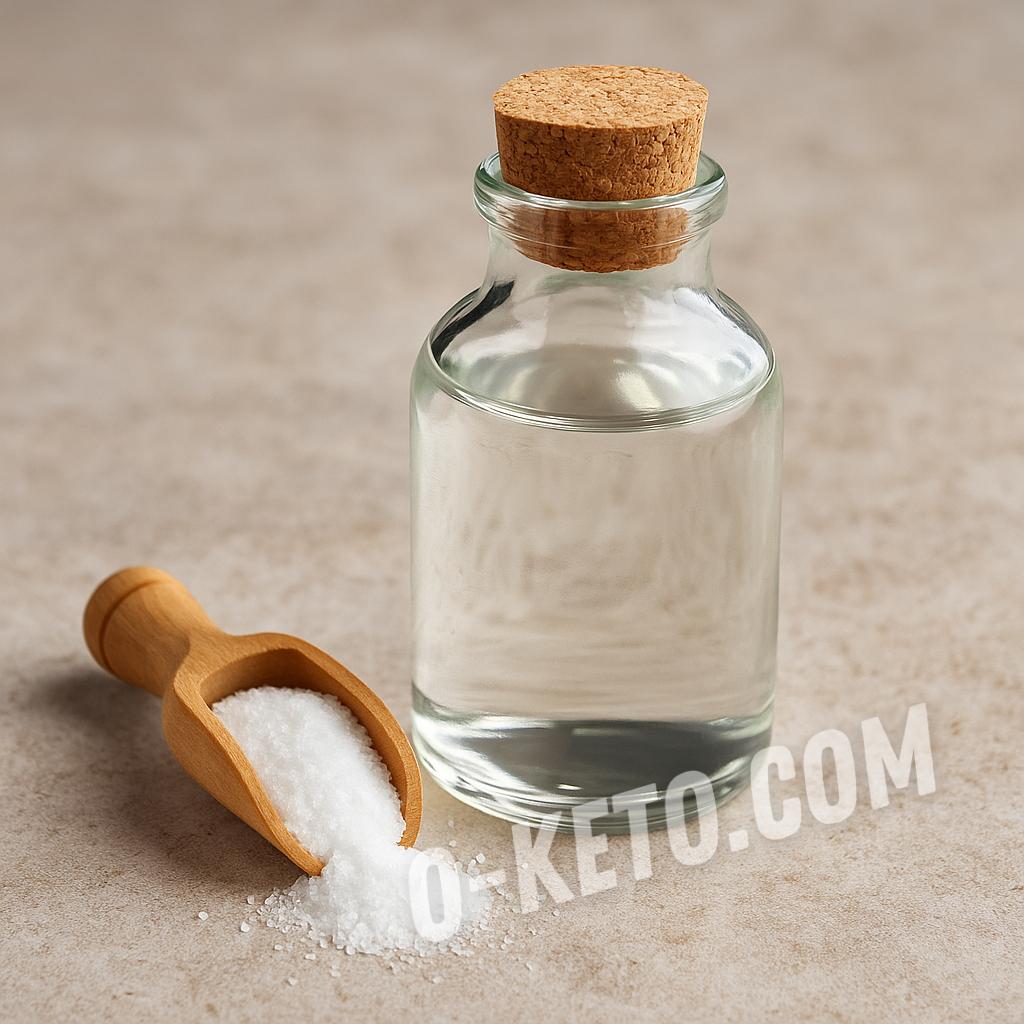

Glycerin, or glycerol, is a clear viscous liquid with a sweet taste. It is obtained from vegetable or animal fats and also by industrial synthesis. In food technology, glycerin is used as a moisture-retaining agent, solvent for flavors, texture stabilizer, and component of some sweeteners.
In home low-carb cooking, it is less common than erythritol or stevia, but it can be useful in recipes where softness, chewiness, and absence of large crystals matter. It is not ordinary sugar and not fat, so it is easy to misunderstand: glycerin affects texture more strongly than the usual sweetness of a dish.
Nutritional value
In 100 g of food-grade glycerin there are about 400 kcal. It contains no protein or fat. On labels it is often listed with carbohydrates or polyols, although chemically it is a trihydric alcohol. The glycemic index is usually given as zero or very low, but glycerin does contain calories, so it should not be treated as an empty ingredient.
Glycerin is sweet, but weaker than sugar: roughly 60–70% of sugar sweetness. In recipes it more often works as a helper than as the main sweetener. It holds water, makes the mass more plastic, reduces dryness, and can soften the sharp edges of some sugar substitutes.
Is it suitable for keto?
For keto and LCHF, food-grade glycerin can be appropriate in small amounts if it is tolerated well and calories are counted. It does not replace normal food and is not needed every day. Most often, 3–10 g per recipe or serving is enough, especially in candies, bars, glazes, ice cream, and soft desserts.
It is important to distinguish food-grade glycerin from cosmetic or technical glycerin. For eating, only a product marked food grade, edible, or pharmacopeial quality is suitable if the producer allows internal use. Flavored mixtures with glycerin may contain sugar, syrups, or alcohol, so the ingredient list should be checked separately.
How to use it
In keto desserts, glycerin helps make texture softer: bars crumble less, candies do not dry out, ice cream becomes less icy, and creams are smoother. It is added by drops or grams and mixed thoroughly with the liquid part of the recipe. If too much is used, the mass becomes sticky and heavy.
Glycerin pairs well with cocoa, nut butter, coconut milk, cream, vanilla, erythritol, allulose, and aromatic extracts. In baking, it can retain moisture, but it does not replace eggs, leavening, flour, or binding fibers. In chocolate and glaze, too much glycerin can worsen setting.
For a first test, it is better to choose the simplest recipe: a small portion of cream, soft candies, or ice cream. Glycerin is added to the liquid part and the mixture is given time to even out. If it is added to a dry mix without thorough blending, sticky areas and uneven sweetness can appear.
In cold desserts, glycerin is especially noticeable because it helps reduce the feeling of ice crystals. But it does not replace the right balance of fat and water. For ice cream, cream, coconut milk, egg yolks, or other ingredients that give body to the dessert still matter.
In syrups and essences, glycerin also helps distribute aroma. That is why it is often not added separately to a finished dish, but mixed in advance with vanilla, citrus zest, cocoa, or another concentrated flavor.
Limitations
The main limitation is tolerance. Large doses may cause a laxative effect, rumbling, nausea, or discomfort. People with sensitive digestion should start with a very small amount. If the product is used in sports drinks or thick syrups, the total amount per day should be considered.
Glycerin should not be presented as an unlimited sweetener. It is sweet, caloric, and technically active. In recipes for children, pregnancy, chronic conditions, or strict medical diets, it is better to follow professional advice and the specific product label.
How to choose and store it
Good food-grade glycerin is clear, without foreign odor, cloudiness, or sediment. The package should state the intended use, ingredients, shelf life, and producer. If the liquid smells like solvent, rancid fat, or has a strange taste, it should not be used in food.
Glycerin is stored tightly closed, away from light, heat, and strong odors. It attracts moisture from the air, so the cap should be closed immediately after use. For precise recipes, it is more convenient to measure it with scales or a syringe, not by eye.
What can replace it?
For sweetness, glycerin can be replaced with erythritol, allulose, stevia, or a sweetener blend. For softness and moisture, inulin, allulose syrup, cream, butter, nut butter, or a small amount of soluble fiber may help. There is no full replacement: glycerin gives sweetness, viscosity, and moisture retention at the same time.