


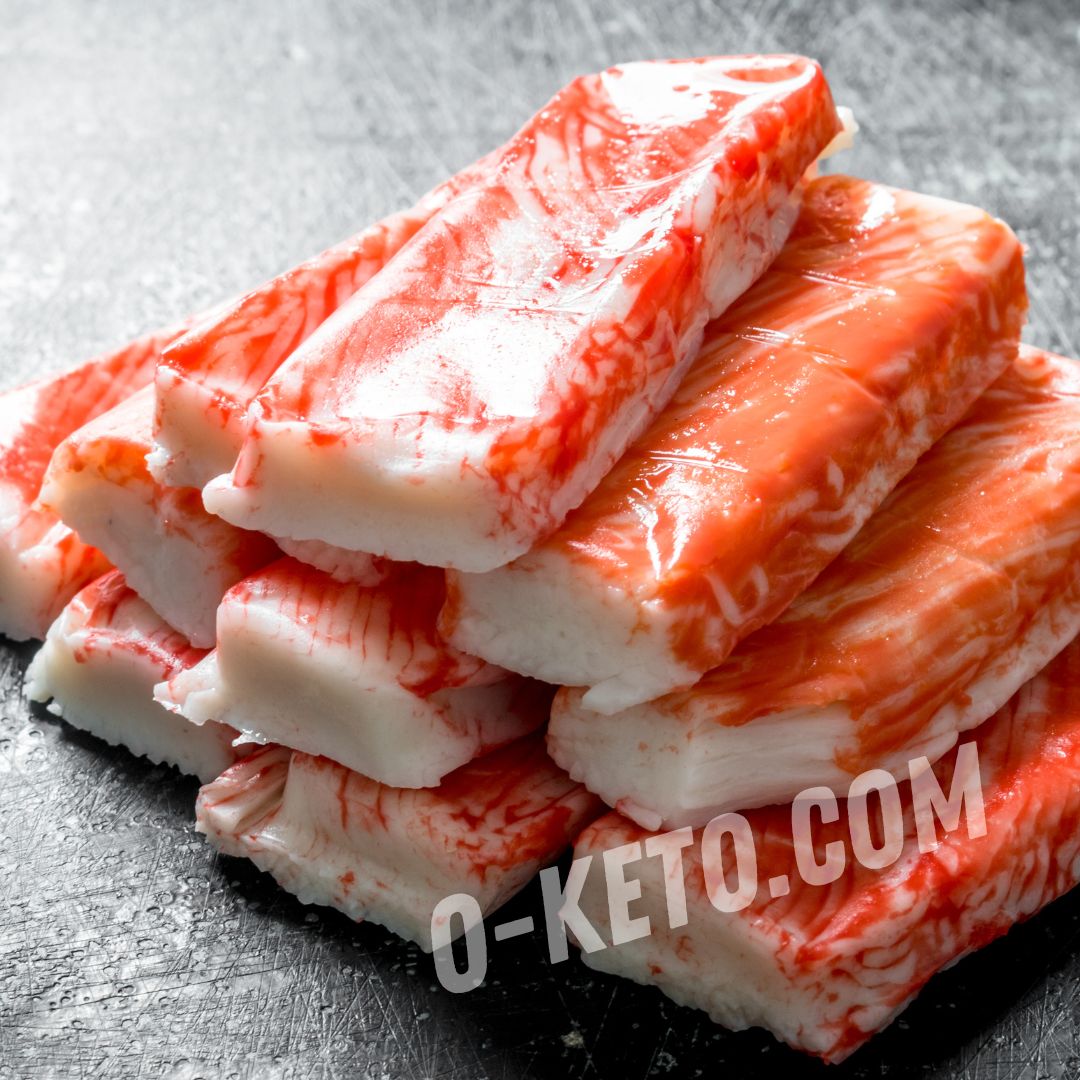

Crab sticks are a ready-to-eat product made from surimi, meaning minced and washed white fish that is shaped and flavored to resemble crab meat. Despite the name, most products contain no real crab or only a minimal amount. Crab sticks are used in salads, rolls, appetizers, fillings and quick cold dishes.
For keto and LCHF, this is a questionable product. The base may be fish, but the ingredient list often includes starch, sugar, vegetable oils, salt, flavorings, flavor enhancers and colorings. So the specific package matters more than the category: different brands can vary a lot in carbohydrates and additives.
Nutrition
Per 100 g of crab sticks, common values are about 95-100 kcal, 8-10 g of protein, 2-4 g of fat and around 10-15 g of carbohydrates. The glycemic index is often listed around 20, but a low index does not automatically make the product convenient for keto when the serving still contains many carbohydrates.
- Calories: about 95-100 kcal per 100 g;
- Protein: about 8-10 g;
- Fat: about 2-4 g;
- Carbohydrates: about 10-15 g;
- Glycemic index: about 20.
The key feature of crab sticks is that carbohydrates are added during processing. They are not there because fish itself is high in carbohydrates, but because of starch, sugar and stabilizers. This is why two packages with the same name can differ greatly in composition.
Are They Keto-Friendly?
For strict keto, crab sticks are usually inconvenient. A 100 g serving can provide 10-15 g of carbohydrates, and in a salad it is easy to eat more, especially with corn, sweet sauce or a lot of onion. Even 50 g should be counted because it is not a zero-carb fish snack.
In more flexible LCHF, crab sticks can remain as an occasional ingredient if the ingredient list is acceptable and the portion is small. It is better to use 30-60 g inside a large salad with egg, cucumber, greens and sugar-free mayonnaise than to eat a whole pack on its own. This keeps the flavor while carbohydrates do not become the base of the dish.
If the goal is a very simple low-carb diet, fish, shrimp, squid, crab meat without starch or other seafood with a clear ingredient list are better choices. Crab sticks are closer to a processed convenience food than to a whole fish product.
How to Choose
Look not only at calories, but also at the ingredient list. A better option starts with fish or surimi, not water, starch or sugar. The more carbohydrates per 100 g, the harder the product is to fit into keto. Sugar, glucose syrup, large amounts of starch, wheat flour and sweet sauces are undesirable.
Protein should be reasonable for a fish product: if protein is low and carbohydrates are high, the package is closer to a starchy snack with fish flavor. Salt also matters: crab sticks are often salty, so it is better not to add many salty sauces to the salad in advance.
How to Use Them
Crab sticks work better as a flavor component than as the base of a low-carb dish. They can be sliced thinly so a small portion spreads through the salad. Dressing is better made from sugar-free mayonnaise, sour cream, unsweetened yogurt, lemon juice, sugar-free mustard and herbs.
Practical options include:
- 30-60 g in a salad with egg, cucumber and greens;
- a filling for lettuce leaves instead of bread or flatbread;
- a small addition to an omelet or egg appetizer;
- a salad without corn, rice, potatoes or sweet sauce;
- occasional use on days when the rest of the carbohydrates are already counted.
Storage and Handling
Crab sticks are usually sold chilled or frozen. After opening, they should be kept in the refrigerator and used quickly, following the date on the label. Sour smell, slime, color changes, swollen packaging and excess liquid with an unpleasant smell are warning signs.
Thaw the product in the refrigerator rather than at room temperature. Refreezing worsens texture and flavor. If crab sticks are used in a mayonnaise salad, the finished dish should not be left warm for long either.
Substitutes
Lower-carbohydrate substitutes include shrimp, squid, white fish, tuna in its own juice, natural crab meat without starch or lightly salted fish in a moderate portion. For salad, eggs, cucumber, avocado, celery and sugar-free mayonnaise can provide a similar soft texture.
If the flavor of crab sticks is specifically needed, choose the option with the fewest carbohydrates and use a small amount. If protein without extra additives is the goal, whole fish and seafood are usually more predictable.
Texture in Salads
Crab sticks are better sliced thinly or pulled into strands, so a small portion is more noticeable in a salad. If cut into large chunks, it is tempting to add more product, and the starch carbohydrates rise with it. Cucumber, egg, greens and avocado add volume without rice or corn.


