


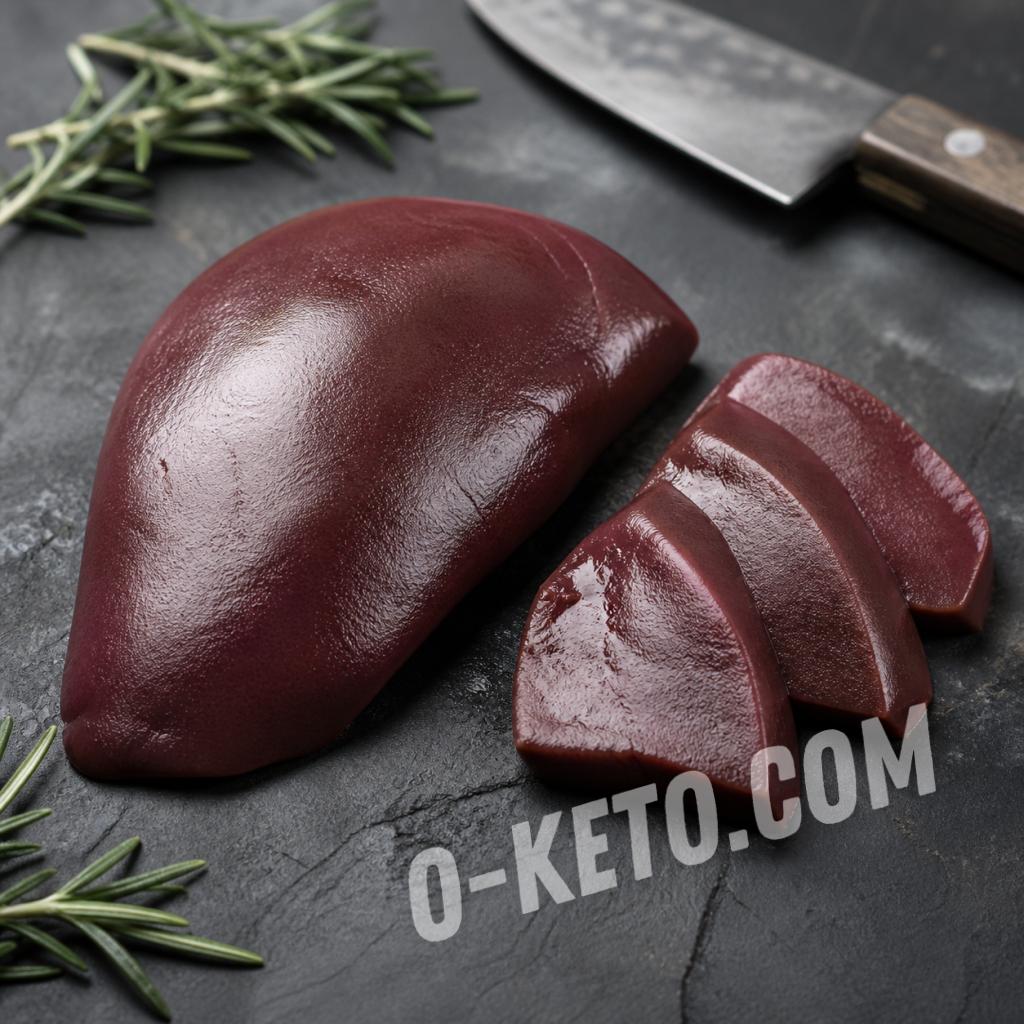

Lamb liver is an organ meat with a dense savory flavor, a tender texture when cooked correctly, and an unusually concentrated supply of several vitamins and minerals. It is sold chilled or frozen, as a whole piece or already sliced. Compared with ordinary muscle meat, liver is usually less fatty but much richer in preformed vitamin A, vitamin B12, copper, and iron. That makes it useful in modest portions, yet it is not a food that needs to appear every day: its nutrient density also creates practical limits.
Flavor, texture, and preparation
Fresh lamb liver is deep red or burgundy, moist on the surface, and firm without feeling hard. Before cooking, remove large membranes, visible ducts, and any damaged edges, then slice it evenly. Thaw frozen liver in the refrigerator rather than on the counter. Some cooks soak it briefly in water or milk to soften the smell, but this is optional and does not replace cold storage. Long soaking can leach water-soluble compounds and leave the surface soft, so it should not be treated as a required safety step.
How to cook it
Liver can be quickly pan-fried, braised with onions and herbs, or baked into a pâté. Thin slices should not be overcooked because prolonged heat makes them dry, firm, and more pronounced in flavor. At the same time, raw liver should not remain undercooked inside, especially when it is served to children, pregnant people, or anyone with reduced immunity. For a low-carbohydrate meal, suitable approaches include butter or ghee, unsweetened cream sauces, and pâté made without flour, dried fruit, or sweet glazes.
Nutritional profile
Raw lamb liver provides about 139 kcal, 20.38 g of protein, 5.02 g of fat, and 1.78 g of carbohydrate per 100 g. It contains essentially no fiber, so net carbohydrate is close to total carbohydrate. Cooking changes the numbers per 100 g because water is lost and oil or other ingredients may be added. Weigh it raw or recalculate the finished recipe consistently rather than mixing the two methods. The protein is complete animal protein, but liver’s defining nutritional feature is its micronutrient density rather than its protein alone.
Vitamins and minerals
Lamb liver is especially rich in preformed vitamin A as retinol, vitamin B12, riboflavin, niacin, pantothenic acid, vitamin B6, and folate. Important minerals include copper, iron, selenium, phosphorus, zinc, and potassium. Iron and B12 support normal blood formation, but liver is not a treatment for anemia; the cause of a deficiency should be established with appropriate testing. The high retinol content also means that larger or very frequent servings are not automatically better. Vitamin A supplements and other organ meats should be considered when planning a regular menu.
How to choose it
Chilled liver should look moist but not slimy, with no gray-green patches, dried edges, or sharp ammonia odor. An unusually loose texture or a large amount of purge in the package may indicate prolonged storage or a temperature problem. With frozen liver, check that the package is intact and not covered with excessive ice. If the product is sold as a pâté or minced mixture, read the complete label because flour, sugar, starch, milk, spices, and substantial salt may have been added.
Limits and tolerance
Because it is rich in retinol, lamb liver is best eaten in moderate portions; during pregnancy, regular servings should be discussed with a qualified clinician. Individual guidance also matters with liver disease, copper-metabolism disorders, gout, or a need to limit preformed vitamin A. Raw or inadequately cooked liver carries a microbiological risk. Allergy to lamb and individual intolerance are additional reasons to avoid it. Liver works best as an occasional nutrient-dense food rather than a universal replacement for muscle meat.
Storage
Keep chilled lamb liver in the coldest part of the refrigerator and cook it within the short period stated by the seller or package. Store raw liver in a covered container away from ready-to-eat food so its juices cannot contaminate other items. Freeze it in small, tightly wrapped portions with as little air as practical; do not refreeze a piece that has fully thawed. Cool cooked liver promptly and refrigerate it. A sour or ammonia-like odor, slimy surface, gray-green color, or swollen package means the liver should be discarded.


