


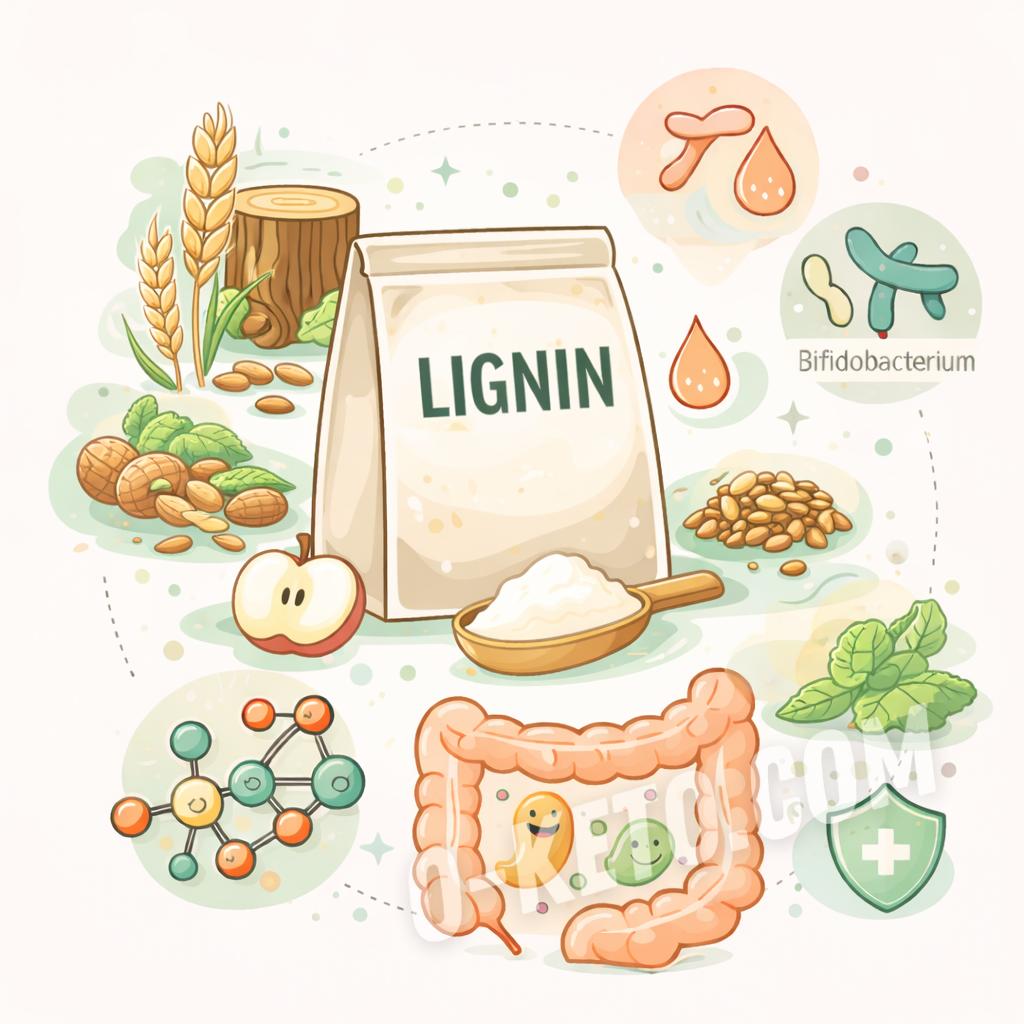

Lignin is one of the main structural components of plants. Together with cellulose and hemicelluloses, it forms plant cell walls and makes stems, seed coats, wood, and coarse plant parts denser. In human nutrition, lignin is an indigestible component of plant food and belongs to the group of insoluble dietary fibers.
It is not a vitamin, mineral, or energy source. Lignin is not digested by human enzymes and is barely used as a food substrate. Its role in the diet is mainly connected with mechanical action, food structure, the volume of plant residue, and the ability to bind some substances in intestinal contents.
What it is
In plants, lignin acts like reinforcing material. It gives stiffness to stems, grain husks, shells, seeds, wood, and the skins of some fruits. The coarser and denser the plant part in the diet, the more likely it is to contain a noticeable share of lignin.
As a dietary fiber, lignin differs from soluble fibers such as pectin or inulin. It does not form a soft gel, add sweetness, or make a product creamy. Its action is rougher and more structural: it increases the share of insoluble residue and can change the consistency of the food mass.
Where it is found
Lignin occurs in whole-grain outer layers, bran, flax and chia seeds, nuts, seeds, legumes, the skins of some vegetables, and dense plant tissues. It is usually lower in soft fruit pulp and refined starchy products. Wood contains a lot of lignin, but wood is not an ordinary food.
There is no separate daily requirement for lignin. It is discussed within the wider topic of dietary fiber, but even there the total number is not the only issue. Tolerance, fiber type, water intake, dietary fat, and digestive pattern matter. The same portion of bran or seeds can feel very different for different people.
Nutritional value
Lignin provides no meaningful calories, protein, fat, or net carbohydrates. In tables, it is usually included in dietary fiber. For keto this may look convenient because fiber is not counted like ordinary sugar or starch. But this does not mean lignin is necessary for everyone or that more is always better.
In whole foods, lignin comes together with other substances: fat and protein in seeds, starch in grains and legumes, acids and polyphenols in fruit skins. Therefore, the product and serving size matter more than lignin by itself. Flax seeds and wheat bran have different profiles, even though both can provide insoluble fiber.
Keto and low-carb eating
On keto, lignin may appear as part of nuts, seeds, leafy greens, vegetable skins, or a small amount of bran. It is not a required component of a low-carb menu. Bowel pattern varies by the whole diet: fat intake, salt, fluids, magnesium, movement, and individual motility all play a role.
If a person tolerates seeds, nuts, and non-starchy vegetables well, a small amount of lignin in those foods is usually not an issue. If coarse fibers cause bloating, heaviness, or discomfort, the amount can be reduced and softer sources chosen instead: peeled vegetables, leafy herbs, avocado, or moderate portions of soaked seeds.
Limitations
Large amounts of lignin and other coarse fibers can irritate a sensitive gut, especially when a lot of bran, seeds, or husks are added suddenly. Bloating, heaviness, changes in stool frequency, and a feeling of fullness may occur. In people prone to constipation, coarse fiber without enough fluid can sometimes make the situation worse.
Another point is binding within the food mass. Very high intake of bran and coarse fibers may reduce the availability of some minerals from a mixed diet. In ordinary culinary amounts this is rarely the main concern, but adding large spoonfuls of bran every day just because it sounds useful is not always wise.
How to use it in food
If the goal is to add a little structure, start with small amounts. Flax seeds can be ground and added to keto crispbread, grain-free porridge, unsweetened yogurt, or minced meat. Chia is usually better soaked. Bran should be introduced carefully because it is rougher and does not suit everyone.
Lignin should not be used as a direct replacement for soluble fibers. Pectin, psyllium, inulin, chia, and bran create different textures and have different tolerance profiles. For thickening a sauce, lignin is not the best option; for keto baking structure, psyllium, ground flax, eggs, almond flour, or coconut flour are more common.
Storage of sources
Foods containing lignin should be stored according to their main nature. Bran and dry seeds are kept in a closed container away from moisture. Ground flax oxidizes quickly, so it is better stored in the refrigerator and not bought in large amounts. Nuts and seeds can turn rancid because of their fat, especially in warmth and light.
If a product smells musty, bitter, or rancid, it is better not to use it. Coarse fibers absorb odors easily, and old bran or seeds can spoil the flavor of a dish even in a small dose.


