


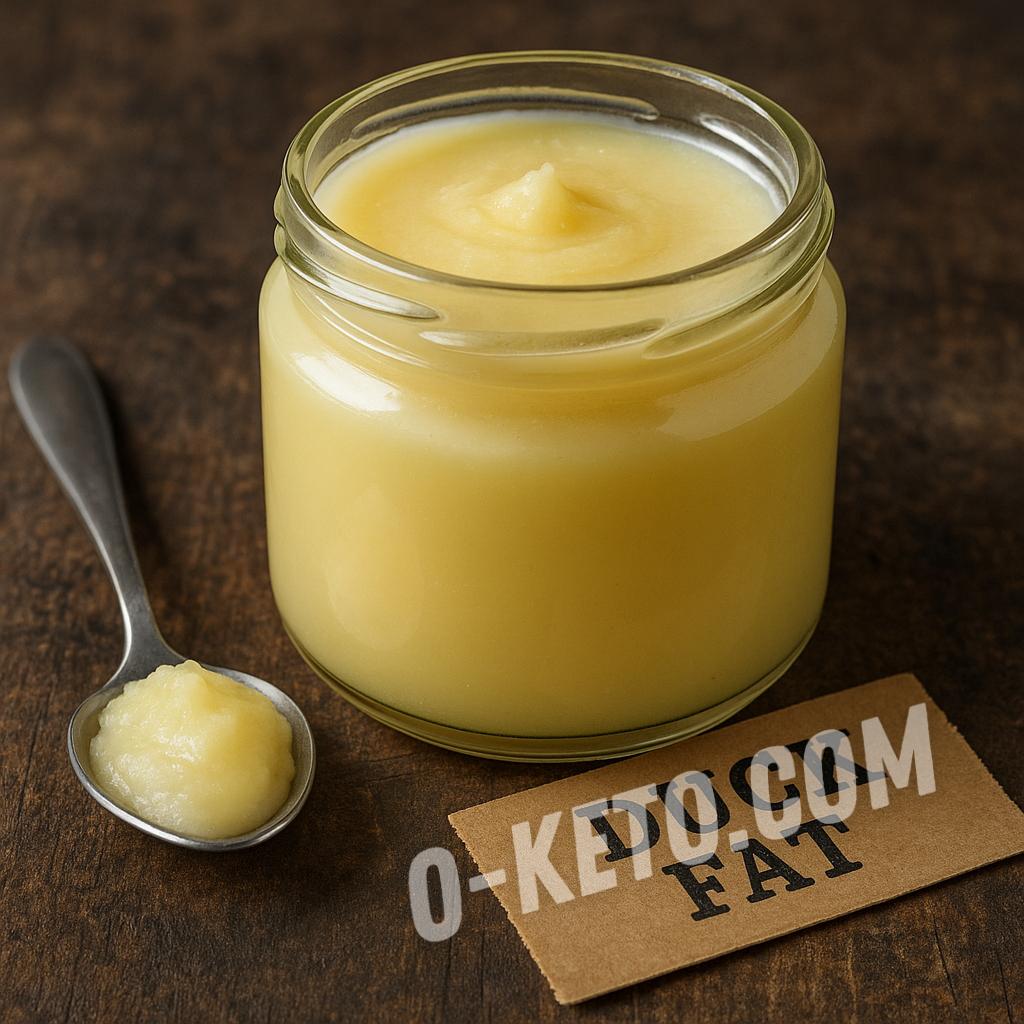

Duck fat is rendered duck fat with a pronounced poultry aroma and a soft, almost creamy texture after cooling. In cooking it is used for frying, roasting, braising, confit, vegetable side dishes, and sauces. It works especially well where the goal is not only to grease a pan but also to add duck flavor and a deep browned crust.
By culinary role, duck fat is closer to beef tallow, lard, and clarified butter than to neutral plant oils. It tolerates normal frying and roasting well, but like any animal fat it needs careful storage: old or overheated fat quickly develops an unpleasant smell and spoils the taste of a dish.
Nutritional value
Duck fat consists almost entirely of fat. In 100 g there are usually about 880–900 kcal, 99–100 g fat, 0 g protein, and 0 g carbohydrates. The glycemic index is zero because the product contains no sugar or starch. One tablespoon may contain roughly 110–130 kcal, so it is better measured by spoon rather than poured freely.
It contains saturated, monounsaturated, and polyunsaturated fatty acids. Exact proportions depend on the bird’s feed and the rendering method, but duck fat is usually softer and more pliable than beef tallow. Small amounts of fat-soluble compounds may remain, yet it is best treated primarily as a cooking fat, not as a vitamin source.
Is it suitable for keto?
For keto and LCHF, duck fat fits by macronutrients: it has no carbohydrates and is almost pure fat. It can make lean foods more filling and flavorful: chicken breast, lean fish, cabbage, mushrooms, zucchini, cauliflower, eggs, or turkey mince.
At the same time, it is very calorie-dense. If the goal is to keep energy intake controlled or avoid overshooting daily fat, duck fat is better used precisely: a teaspoon for vegetables, a tablespoon for a large pan, a little in a sauce. It does not make a dish keto by itself if potatoes, sweet glaze, flour, or sugary sauce are present.
How to use it
The best uses are frying eggs, mushrooms, cabbage, poultry steaks, bread-free patties, cauliflower, and Brussels sprouts. For roasting, duck fat can be melted and spread thinly over vegetables or meat. It gives attractive browning and a flavor that is hard to get from neutral oil.
In classic cooking, duck fat is used for confit: meat cooks slowly in fat at a low temperature. In a home keto menu, this can be simplified: add some fat to a roasting dish, combine it with garlic, thyme, rosemary, bay leaf, and black pepper, then use the resulting fatty juices as a sauce base.
How to choose
Good duck fat has a clean poultry smell without sourness, mustiness, or rancidity. The color may be white, cream, or pale golden. If it is sold in a jar, the ingredient list should be short: duck fat, sometimes salt or spices. Blends with plant oils, flavorings, and sugar need separate checking.
Homemade fat left after roasting duck can be strained through a fine sieve or cheesecloth, cooled, and separated as a clean layer without meat particles. The fewer broth drops, garlic bits, and skin pieces in the jar, the longer it stores. Fat already used for frying is better used faster and not mixed with a new clean portion.
What to pair it with
Duck fat pairs well with cabbage, mushrooms, eggs, poultry, beef, cauliflower, turnip, celery root, moderate amounts of onion, garlic, thyme, rosemary, sage, black pepper, and sugar-free mustard. In sauces it can be combined with cream, starch-free sour cream, or a small amount of lemon juice.
Limitations
The main limitation is calorie density. A large portion easily makes a dish heavy, especially when fatty meat, cheese, cream, or nuts are already present. People who have been advised to limit animal fats should follow their individual recommendations. With sensitive digestion, it is better to start with a small portion.
How to store it
An opened jar is kept tightly closed in the refrigerator. Take the fat only with a clean dry spoon so crumbs and water do not get inside. For long storage, it is convenient to divide the fat into small portions and freeze it. If the smell becomes sharp, sour, or rancid, the product is not used.
What can replace it?
The closest replacements by role are goose fat, chicken fat, lard, beef tallow, clarified butter, and avocado oil for frying. Extra virgin olive oil works for a lighter taste, but it will not give the same duck aroma. For confit, animal fat is a better choice than liquid salad oil.
Sources
- USDA FoodData Central: composition of edible fats and oils
- Food safety and quality of fats and oils during heating and storage
- Saturated fatty acid intake and cardiovascular disease: systematic review and meta-analysis


