


Allicin
Allicin forms when fresh garlic is crushed and alliin meets alliinase; it is valuable for aroma and biological activity, but garlic supplements need caution with blood-thinning medicines and sensitive digestion.
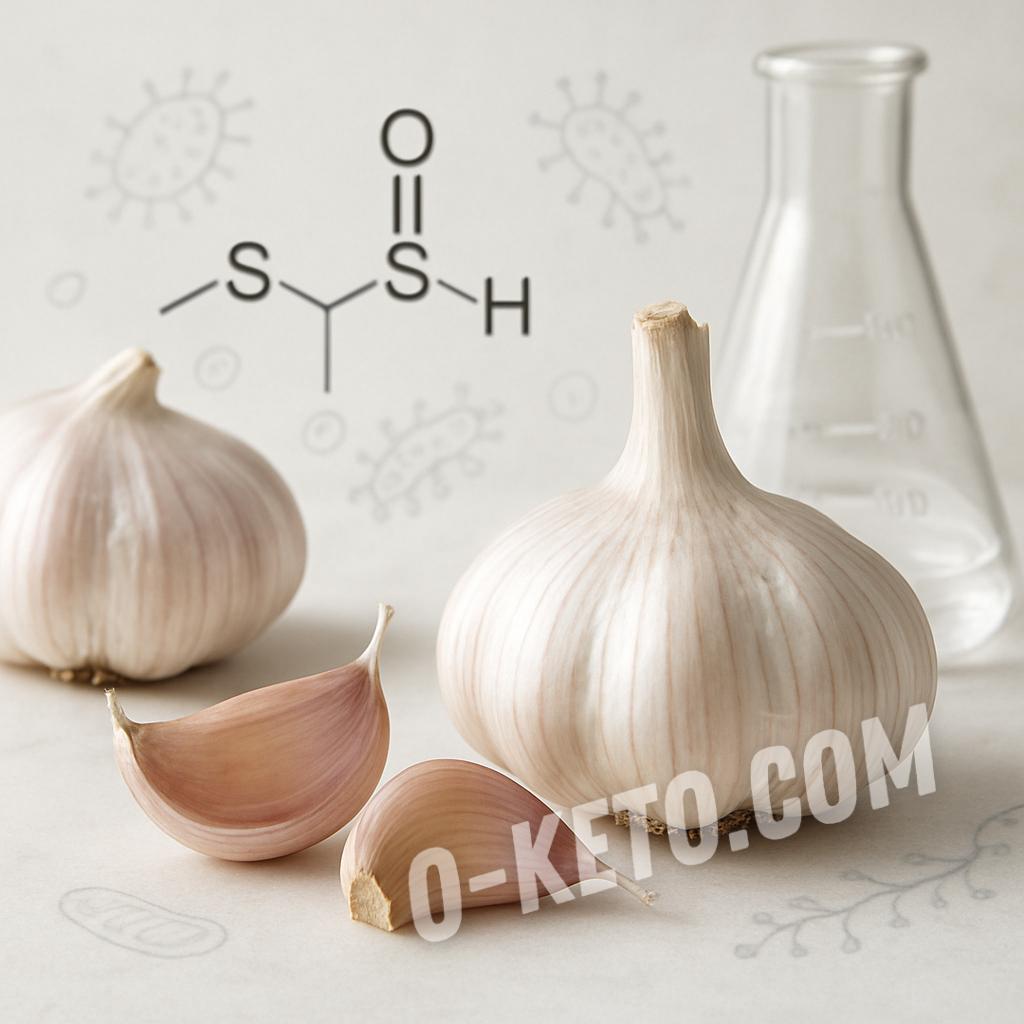
Allicin is a sulfur-containing compound that forms in garlic after the clove is damaged. When garlic is chopped, crushed, or chewed, the enzyme alliinase converts alliin into allicin. This is why freshly crushed garlic smells sharp and very different from an intact clove. Allicin is unstable and quickly changes into other sulfur compounds, so the amount present in food depends on freshness, crushing, waiting time, and heat.
Allicin is often described as a natural antibiotic, but that phrase is too loose. Garlic sulfur compounds have been studied in laboratory settings because they interact with microbes, enzymes, and oxidative processes. Results from a test tube, however, cannot be directly turned into treatment advice for human infections. Garlic can be a useful food and a strong flavor tool, but it does not replace antibiotics, antifungal treatment, diagnosis, or medical care when a real infection is present.
How it forms in cooking
For allicin to form, garlic needs to be crushed or chopped and given a little time before intense heat is applied. If a whole clove or freshly crushed garlic is immediately dropped into boiling soup or very hot oil, part of the enzymatic reaction is reduced. A practical cooking method is to crush the garlic, wait a few minutes, and then add it to the dish. This is especially noticeable in cold sauces, dressings, pesto, guacamole, and marinades, where the aroma remains bright and pungent.
During long frying or roasting, allicin and related compounds change. The flavor becomes softer, sweeter, and less aggressive. That is not a loss; it is a different garlic profile. Raw garlic gives pungency and sulfur intensity, while roasted garlic gives mellow depth and sweetness. The right choice depends on the dish: a sharp dressing, a mild sauce, a rich meat dish, a soup, or a meal for someone with a sensitive stomach.
Food role in low-carb eating
Garlic is useful in low-carbohydrate cooking because a small amount adds a lot of flavor with very little carbohydrate impact. It can make fatty meat, fish, eggs, vegetables, broths, and sauces more satisfying without sugar, starch, or sweet bottled sauces. This matters when people remove sweet condiments and need other ways to keep meals vivid. Garlic combines well with olive oil, butter, lemon, herbs, pepper, ginger, fermented vegetables, and creamy sauces.
That does not mean more garlic is always better. Large amounts of raw garlic can cause heartburn, stomach pain, bloating, nausea, mucosal irritation, and strong body odor. In people with irritable bowel symptoms, garlic may worsen discomfort because of fructans, even when the rest of the diet is low in carbohydrates. In that situation, roasted garlic, garlic-infused oil without garlic pieces, a smaller dose, or different spices may work better than forcing raw garlic into every meal.
Supplements and cautions
Garlic and allicin supplements vary widely in their real active compound content. Labels may mention allicin potential, garlic extract, aged garlic, garlic oil, or garlic powder, but these are not identical products. Stomach acid, capsule coating, alliinase activity, moisture, and storage conditions influence how much active sulfur compound is actually produced or delivered. A large word on the bottle is not enough to judge the biological effect.
Special caution is needed for people who take anticoagulants, aspirin, antiplatelet drugs, or who are preparing for surgery or have a bleeding tendency. Garlic supplements may affect clotting and interact with medicines. High-dose garlic products should also be considered carefully during pregnancy, digestive disease, blood pressure treatment, glucose-lowering medication, and before surgical procedures. Ordinary culinary garlic is usually easier to control and safer to interpret. It works best as an aromatic food, not as a stand-alone treatment plan.
If you have any questions about the term "Allicin", you can ask them to AI. Please note, a low-cost OpenAI model is used. It may answer questions about disease treatment with errors!


 1 / 4
1 / 4


 1 / 4
1 / 4 1 / 4
1 / 4 1 / 4
1 / 4 1 / 4
1 / 4
 1 / 4
1 / 4