


ATPO (antibodies to thyroperoxidase)
Reflect autoimmune activity against thyroid tissue and help evaluate the likelihood of autoimmune thyroiditis only when interpreted with TSH, free T4, free T3, ultrasound findings and clinical context.
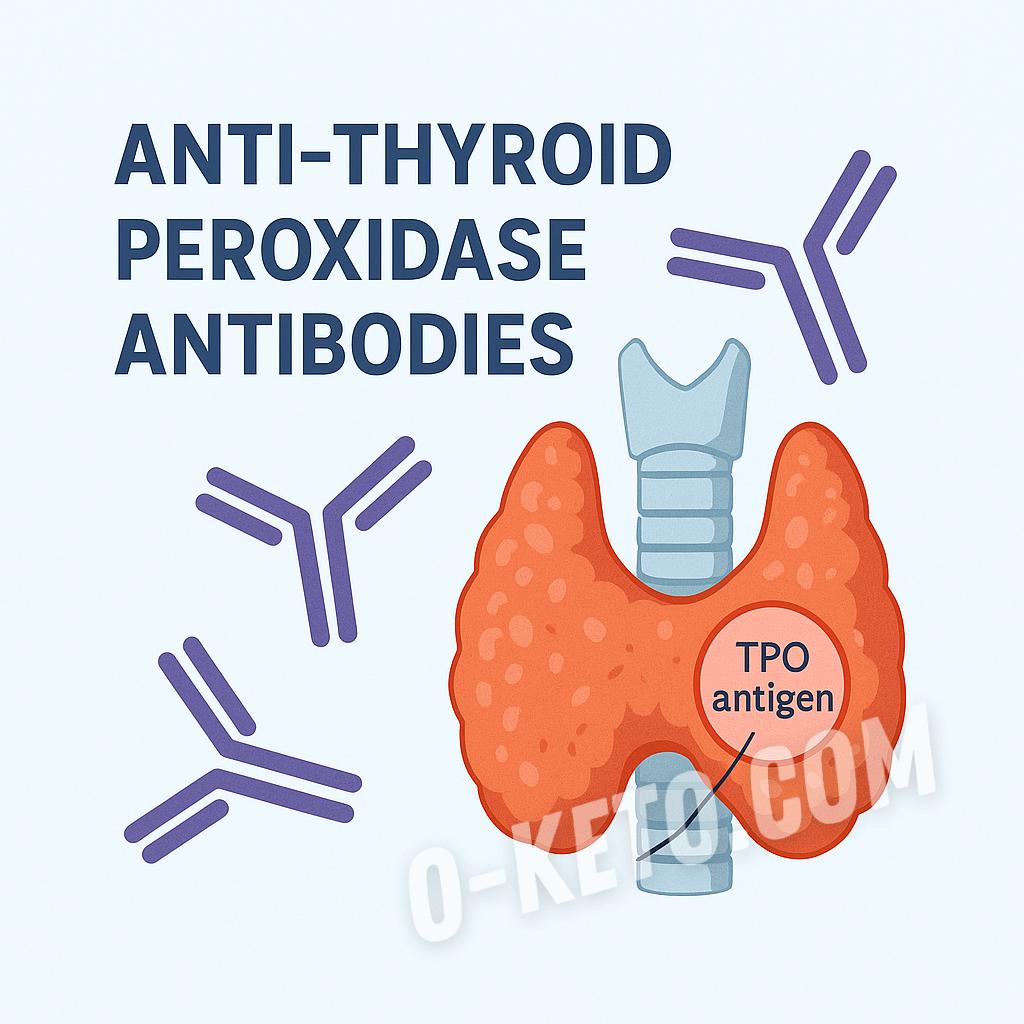
Antibodies to thyroid peroxidase, often called TPO antibodies, are laboratory markers of autoimmune activity directed against thyroid tissue. They are not hormones and they do not directly show how well the thyroid is functioning at this exact moment. Their main value is different: they help estimate whether an immune process is increasing the likelihood of autoimmune thyroiditis, future thyroid damage or unstable thyroid function over time. That is why they should never be interpreted apart from TSH, free T4, free T3, ultrasound findings and symptoms.
What the test shows
Thyroid peroxidase is an enzyme involved in thyroid-hormone synthesis. When the immune system produces antibodies against it, the probability of autoimmune thyroid involvement rises. In practice, elevated TPO antibodies are most often associated with autoimmune thyroiditis, but they may also appear in Graves disease and sometimes in people who currently have no obvious thyroid dysfunction.
Because of that, a positive TPO antibody result is not the same as an automatic diagnosis of hypothyroidism. It is a marker of immune background and future risk that must be placed into the larger picture.
When the test is especially useful
TPO antibodies are often checked when TSH is abnormal, thyroid symptoms are present, ultrasound looks suspicious, the family history contains autoimmune disease, or pregnancy and fertility planning make thyroid stability especially important. The test also helps estimate whether an already detected thyroid abnormality is likely to have an autoimmune basis.
Sometimes the antibodies are found incidentally in a person with few symptoms. In that setting the key question is not how to “treat the antibodies,” but whether TSH, free hormones, thyroid structure and clinical complaints are actually changing.
How it is read with TSH and other markers
If TPO antibodies are elevated, clinicians next look at TSH and free hormones. High TSH together with antibodies often supports a hypothyroid direction. Low TSH with a different hormonal pattern may suggest thyrotoxic phases, Graves disease or another mechanism. Ultrasound can show whether thyroid tissue already has structural signs of autoimmune involvement.
It is also important to remember that antibody titers do not always mirror symptom severity. One person may have high titers with preserved thyroid function, while another already has dysfunction with less dramatic antibody numbers. Interpretation therefore depends on the total clinical and laboratory context rather than the antibody value alone.
What not to do with the result
A common mistake is trying to treat “the antibodies only” without documented thyroid dysfunction and without understanding the whole picture. The opposite mistake is completely dismissing elevated antibodies in someone with symptoms, abnormal TSH or relevant family history. The test is useful not for panic and not for false reassurance, but for clarifying whether an autoimmune mechanism is likely.
Nutrition, selenium, iodine and other supportive questions should be discussed only after the broader thyroid picture is understood. High-dose iodine, in particular, should not be started casually when autoimmune activity or unstable thyroid function may already be present.
Why the test does not replace diagnosis
TPO antibodies are useful as a directional marker, not as a stand-alone diagnosis. They do not answer how symptomatic the person is today, whether thyroid replacement is needed, whether thyrotoxicosis is present or how quickly function will change. Those answers come from TSH, free hormones, ultrasound, symptoms and follow-up over time.
The best use of TPO antibodies is as one piece of a broader thyroid puzzle. In that role they truly help rather than create unnecessary alarm or rushed decisions.
Time trend also matters. When thyroid function is still preserved, the priority is usually not an urgent attempt to “eliminate antibodies,” but calm follow-up of TSH, free hormones and symptoms over time. That approach helps avoid both missing true dysfunction and overtreating a laboratory sign of autoimmunity by itself.
If you have any questions about the term "ATPO (antibodies to thyroperoxidase)", you can ask them to AI. Please note, a low-cost OpenAI model is used. It may answer questions about disease treatment with errors!


 1 / 4
1 / 4
 1 / 4
1 / 4
 1 / 4
1 / 4


 1 / 4
1 / 4