


HOMA Index
The HOMA index is a calculated marker that helps estimate insulin resistance from fasting glucose and fasting insulin, but it should be interpreted together with HbA1c, waist size, diet, and clinical context.
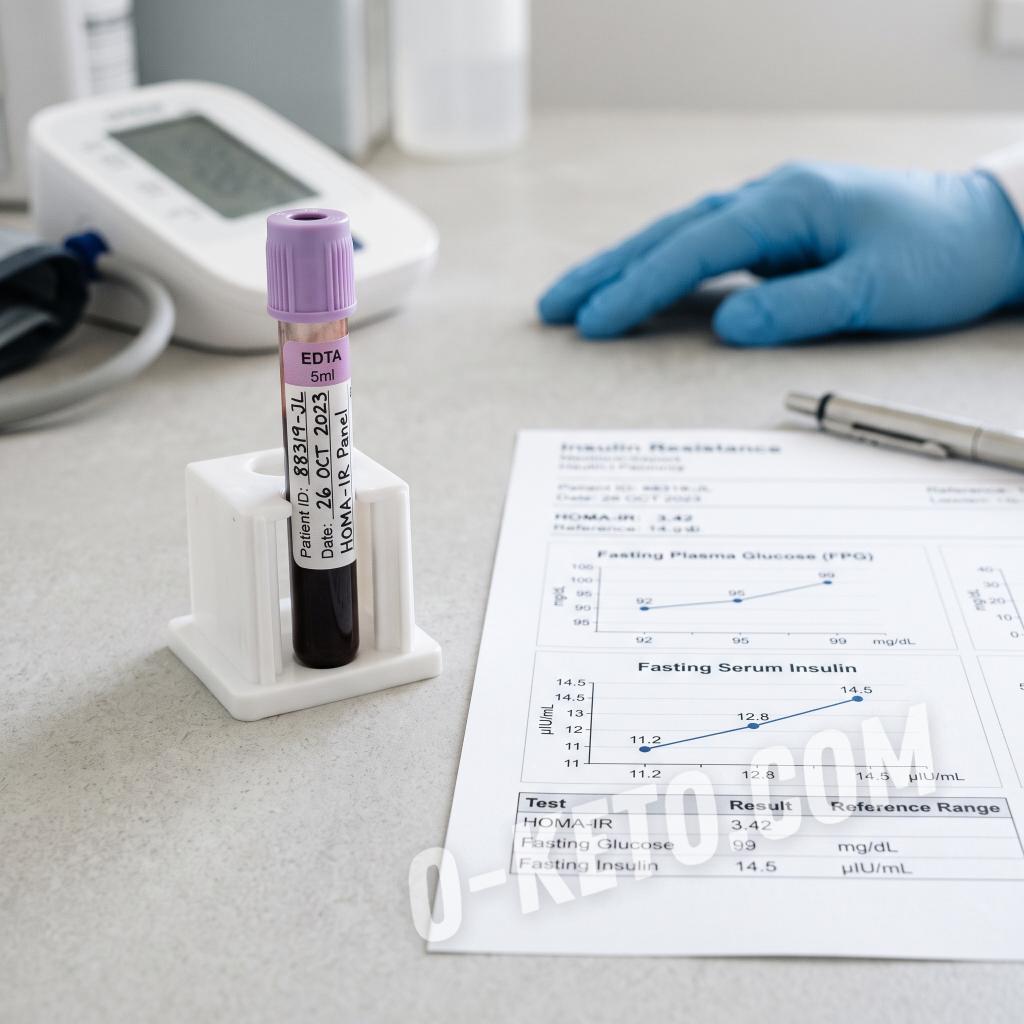
The HOMA index is used as a calculated marker for estimating insulin sensitivity. It is not measured as a separate lab analyte. Instead, it is derived from fasting glucose and fasting insulin, which means its meaning always depends on how well a person prepared for the blood draw. Poor sleep, stress, alcohol, a heavy late meal, acute illness, or an intense workout the day before can all distort the number. Even so, the index is practical because it can reveal early carbohydrate-metabolism strain before fasting glucose becomes obviously abnormal.
What the index reflects
HOMA reflects how much insulin the body appears to need to keep fasting glucose under control. When the value rises, it may suggest that tissues are responding less efficiently to insulin and the pancreas has to compensate by producing more. In everyday interpretation this pattern often supports suspicion of insulin resistance. That said, it is not a standalone diagnosis and should never be treated as a final answer on its own.
The index becomes especially useful when fasting glucose still looks acceptable on paper, but a person already has warning signs such as waist-centered weight gain, cravings for sweets, fatigue after carbohydrate-rich meals, unstable energy, or difficulty losing weight despite effort. In those situations HOMA can uncover a hidden compensatory phase of metabolism.
What can distort the result
Conditions of testing matter a lot. If blood was not drawn after a true fast, if the person slept poorly, was under acute stress, trained hard the evening before, or was recovering from an infection, the number may shift. Medications can also matter, including glucocorticoids, some psychiatric drugs, hormonal regimens, and diabetes treatments. Because of that, the index should be judged in the context of ordinary life rather than after extreme restriction or an artificial attempt to improve the value for one test day.
HOMA is also less universal in settings where insulin secretion itself is already markedly impaired, in some endocrine disorders, during pregnancy, or in specific forms of diabetes. In those situations the overall clinical picture matters more than a single formula.
How to read it with nearby markers
The HOMA index is most helpful when viewed together with fasting glucose, fasting insulin, and HbA1c. If HOMA is elevated while glucose still looks only mildly changed, that can indicate that the pancreas is already compensating for reduced tissue sensitivity. If triglycerides are also elevated, waist circumference is growing, and blood pressure is drifting upward, the suspicion becomes stronger.
On the other hand, a borderline result after a week of poor sleep, illness, or marked overtraining may deserve repetition under calmer conditions. Weight trend, family history of diabetes, and waist size all matter because carbohydrate metabolism rarely shifts in isolation.
Why one number is not enough
A common mistake is to treat HOMA as a yes-or-no test for insulin resistance. In reality it is a working marker that helps decide whether to look deeper into lifestyle, body composition, sleep quality, dietary pattern, and additional laboratory data. A mild elevation does not automatically mean disease, but a value inside a laboratory range does not always guarantee ideal metabolic health either.
The practical role of the HOMA index is to show direction, not to create panic. If the value is repeatedly elevated, it is reasonable to take a closer look at diet, abdominal fat accumulation, sleep, physical activity, and related markers. If the result is uncertain, repeating it alongside nearby metabolic tests is usually more informative than interpreting it in isolation.
When the index is especially practical
The HOMA index is often most useful before overt diabetes is present, when symptoms are still vague and easy to dismiss as stress, age, or ordinary fatigue. If body fat is accumulating mainly around the waist, hunger returns too quickly, and carbohydrate-heavy meals are followed by sleepiness or unstable energy, the index can help connect those feelings with a real metabolic pattern. It is also helpful in follow-up: if the value improves after weight reduction, better sleep, more regular movement, and a lower intake of rapidly absorbed carbohydrates, that trend supports the idea that metabolic pressure is truly decreasing.
At the same time, the index should not become a treatment target by itself. Its real role is to highlight a direction and to help judge whether lifestyle or medical steps are improving the metabolic environment. In practice, several repeated measurements under similar conditions are usually more informative than one isolated result. That is what turns HOMA into a useful working tool rather than a random number on a lab sheet.
If you have any questions about the term "HOMA Index", you can ask them to AI. Please note, a low-cost OpenAI model is used. It may answer questions about disease treatment with errors!


 1 / 4
1 / 4

 1 / 4
1 / 4


 1 / 4
1 / 4 1 / 4
1 / 4