


DHT (dihydrotestosterone)
Dihydrotestosterone is a more potent androgen formed from testosterone by 5-alpha-reductase. DHT testing is useful in selected hormonal situations, but blood levels do not always reflect local hormone activity in skin, follicles and prostate.
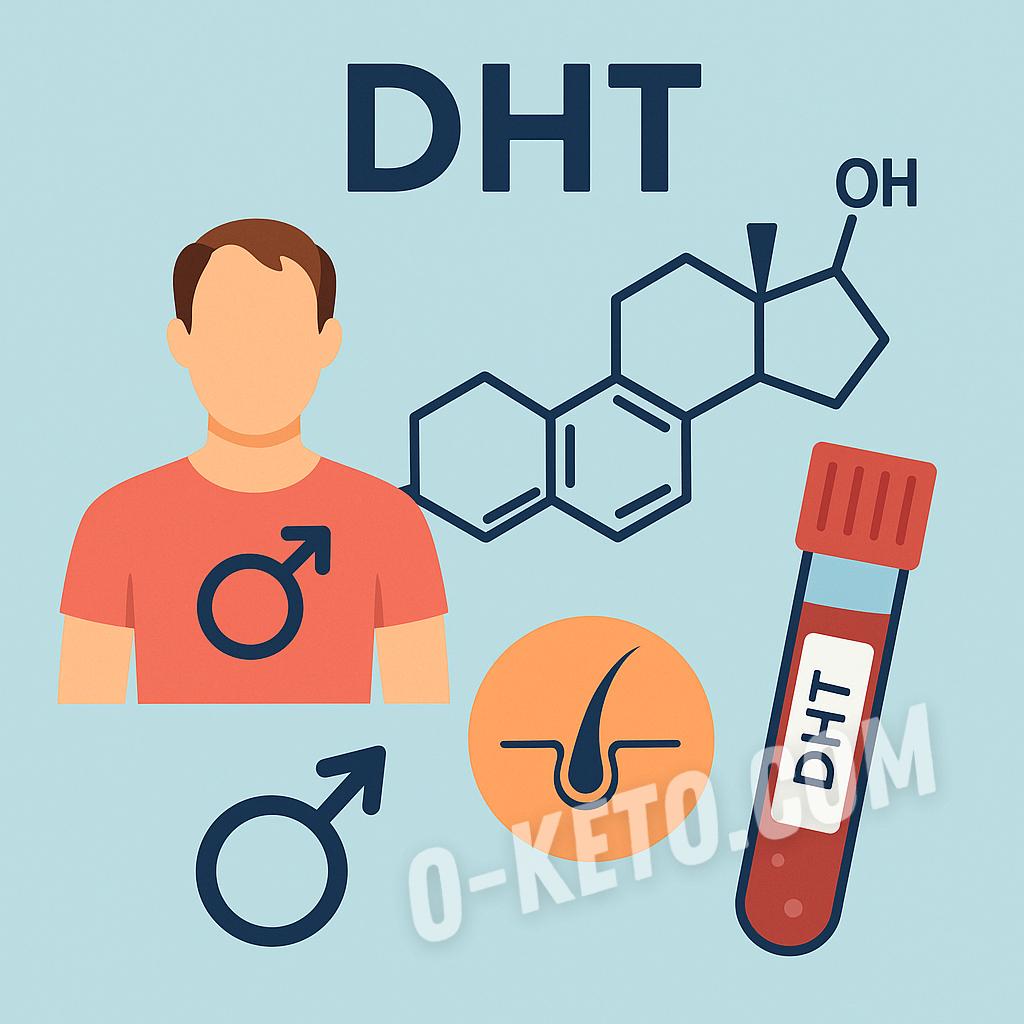
DHT, or dihydrotestosterone, is an androgen formed from testosterone by the enzyme 5-alpha-reductase. It binds androgen receptors more strongly than testosterone and is especially important in tissues where this enzyme is active: skin, hair follicles, prostate, external genital tissues and some other sites.
DHT should not be treated simply as bad testosterone. It is needed for male sexual development, external genital maturation, sebaceous-gland activity, body-hair growth and several androgen-dependent processes. The problem is not the existence of DHT itself, but excess, tissue sensitivity, medication effects or the wrong context.
How DHT is formed
The main pathway is conversion of testosterone into DHT through 5-alpha-reductase. Different enzyme isoforms are active in different tissues: some are more connected with skin and liver, others with prostate and genital tissues. Blood DHT therefore does not always show precisely what is happening inside a specific follicle, sebaceous gland or prostate.
This is an important difference from total testosterone. A person can have only moderately high testosterone but clear local androgenic signs because of enzyme activity or receptor sensitivity. Conversely, high testosterone does not always mean clinically important DHT excess.
When the test may help
DHT is not usually checked as a routine male hormone. It may be useful when 5-alpha-reductase disorders are suspected, in some differences of sexual development, marked androgenic symptoms, monitoring of testosterone therapy, assessment of response to 5-alpha-reductase inhibitors and selected cases of hair loss or prostate issues.
In women, the test may be discussed with marked hirsutism, severe acne, androgen-pattern hair loss or suspicion of an androgen source. More often, evaluation starts with total and free testosterone, SHBG, DHEA-S, androstenedione, 17-hydroxyprogesterone, prolactin, TSH and the clinical picture.
Skin, hair and prostate
DHT is often discussed in androgenetic alopecia, acne, oily skin and benign prostate enlargement. The relationship is not a simple formula of higher DHT equals more disease. Genetics, receptor sensitivity, local enzyme activity, age, inflammation, medications and overall hormone status all matter.
5-alpha-reductase inhibitors reduce DHT formation and are used medically for specific indications. They can also have side effects, including sexual, emotional and skin-related effects. Suppressing DHT just in case because of hair loss or acne is not a good idea without medical supervision.
What affects the result
DHT is influenced by testosterone level, 5-alpha-reductase activity, age, sex, medications, testosterone therapy, anabolic steroids, finasteride, dutasteride, antiandrogens and some hormonal conditions. The laboratory method also matters because steroid-hormone measurement can vary in accuracy.
Sampling time and preparation depend on the clinical question and laboratory instructions. If DHT is assessed during therapy, the timing of the last pill, dose or injection matters. Without that information, the result is easy to misread.
Nutrition and low-carb context
Keto or LCHF is not a direct way to raise or lower DHT. Nutrition may influence the androgen system indirectly through body weight, insulin resistance, inflammation, sleep, energy deficit, protein, zinc, iron and stress. In PCOS, improving insulin resistance may reduce androgenic signs, but DHT is not always the key test.
If hair shedding worsens during a strict diet, the cause may not be DHT. Rapid weight loss, low protein, low iron, low zinc, insufficient energy, stress or a recent infection can all contribute. Hair complaints therefore deserve more than androgen testing: ferritin, TSH, complete blood count, vitamin D when deficiency risk is present and the history of the previous months may be relevant.
What to compare it with
DHT is interpreted with total and free testosterone, SHBG, LH, FSH, DHEA-S, androstenedione, estradiol, PSA in men when indicated, skin, hair and prostate symptoms and medication history. Normal DHT does not exclude local tissue sensitivity, and high DHT is not a diagnosis by itself. The test is valuable only when it answers a specific clinical question.
If you have any questions about the term "DHT (dihydrotestosterone)", you can ask them to AI. Please note, a low-cost OpenAI model is used. It may answer questions about disease treatment with errors!


