


E1414 (acetylated distarch phosphate)
Acetylated distarch phosphate combines cross-linking and acetylation so foods hold moisture, freezing and reheating better; on keto it is not a carb-free substitute.
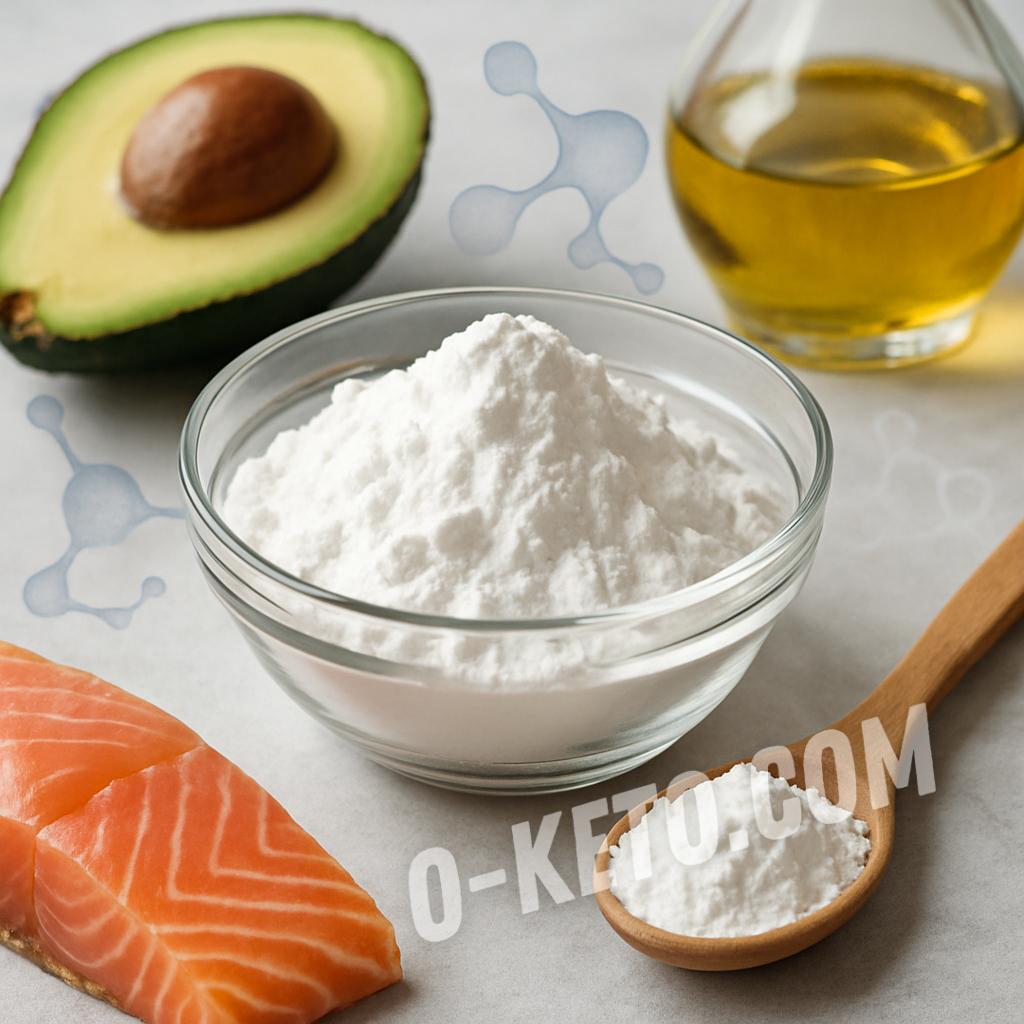
E1414 is acetylated distarch phosphate. It is a modified starch with two important technological changes: starch chains are partially cross-linked with phosphate bridges and additionally acetylated. This combination helps the ingredient hold water, tolerate freezing, heating, mixing and storage without strong separation or loss of texture.
If E1412 can be imagined as a stronger cross-linked starch, E1414 adds more softness, cold-storage stability and protection against water release. This is convenient in creamy foods, fillings, sauces and semi-finished products that need to look fresh after shelf life, refrigeration or reheating. Nutritionally, however, it remains a processed starch ingredient.
Why acetyl groups are used
Acetylation changes how starch interacts with water and other components. In a finished food this can reduce starch retrogradation, the process in which a gel becomes firmer over time and releases water. Acetylated starches are therefore useful where tenderness, moisture, storage stability and normal behavior after cooling or freezing are important.
Phosphate cross-linking adds resistance to heat, acidity and mechanical stress. Together, these properties make E1414 convenient for complex industrial formulas. Technological reliability is not the same as nutritional value. This ingredient does not add complete protein, is not a beneficial fat and does not make a finished food low-carb simply because its texture is neat.
Where E1414 appears
Acetylated distarch phosphate may appear in frozen meals, creamy sauces, dessert fillings, ready soups, dairy analogues, meat and fish semi-finished products, fruit preparations and foods intended for reheating. It is especially useful where a product must survive cooling and heating cycles without becoming watery, separating or losing a pleasant consistency.
On a label, E1414 should be judged by its position in the formula. If it appears near other starches, flour, sugars, syrups or maltodextrin, the product is probably held together by a carbohydrate technological base. If it appears at the end of the list and the serving is small, its importance may be moderate. In thick sauces, creams and ready meals, however, this starch often creates the texture itself.
Keto and LCHF context
For keto and LCHF, trace E1414 does not need to be demonized, but it should not be treated as neutral fiber. It is starch processed for industrial convenience. In strict keto, products with acetylated and phosphorylated starches among the main ingredients are usually best avoided, especially desserts, sauces, semi-finished foods and sugar-free products with a soft creamy texture.
In a more flexible low-carb diet, suitability depends on portion size, total carbohydrate load and personal response. If a product causes sleepiness, quick return of hunger, cravings or a glucose rise, its technically polished texture does not make it a good choice. Sometimes it is easier to make a sauce with cream, egg yolk, cheese, gelatin or reduction than to search for an industrial replacement with several starch stabilizers.
Tolerance and limitations
In food-use amounts, E1414 is usually treated as a technological additive rather than as a separate medical issue. But finished foods containing it often include several factors that affect digestion: fats, salt, acids, polyols, emulsifiers, flavors and other thickeners. Bloating or discomfort after such a food cannot automatically be assigned to one code, but it is a good reason to reconsider the whole category of processed foods.
For celiac disease and strict gluten avoidance, the starch source and reliability of labeling matter. E1414 can be made from different plant sources, and the additive number does not reveal the raw material. The honest low-carb conclusion is this: traces of acetylated distarch phosphate may be unimportant, but products where it creates the main texture require carbohydrate counting and should not replace simple whole food.
If you have any questions about the term "E1414 (acetylated distarch phosphate)", you can ask them to AI. Please note, a low-cost OpenAI model is used. It may answer questions about disease treatment with errors!


 1 / 4
1 / 4

 1 / 4
1 / 4
 1 / 4
1 / 4

 1 / 4
1 / 4
