


E1450 (sodium octenyl succinate starch)
Sodium starch octenyl succinate helps emulsify and hold aromatic oils in powders and drinks; on keto it is not a carb-free guarantee, but a processed carrier.
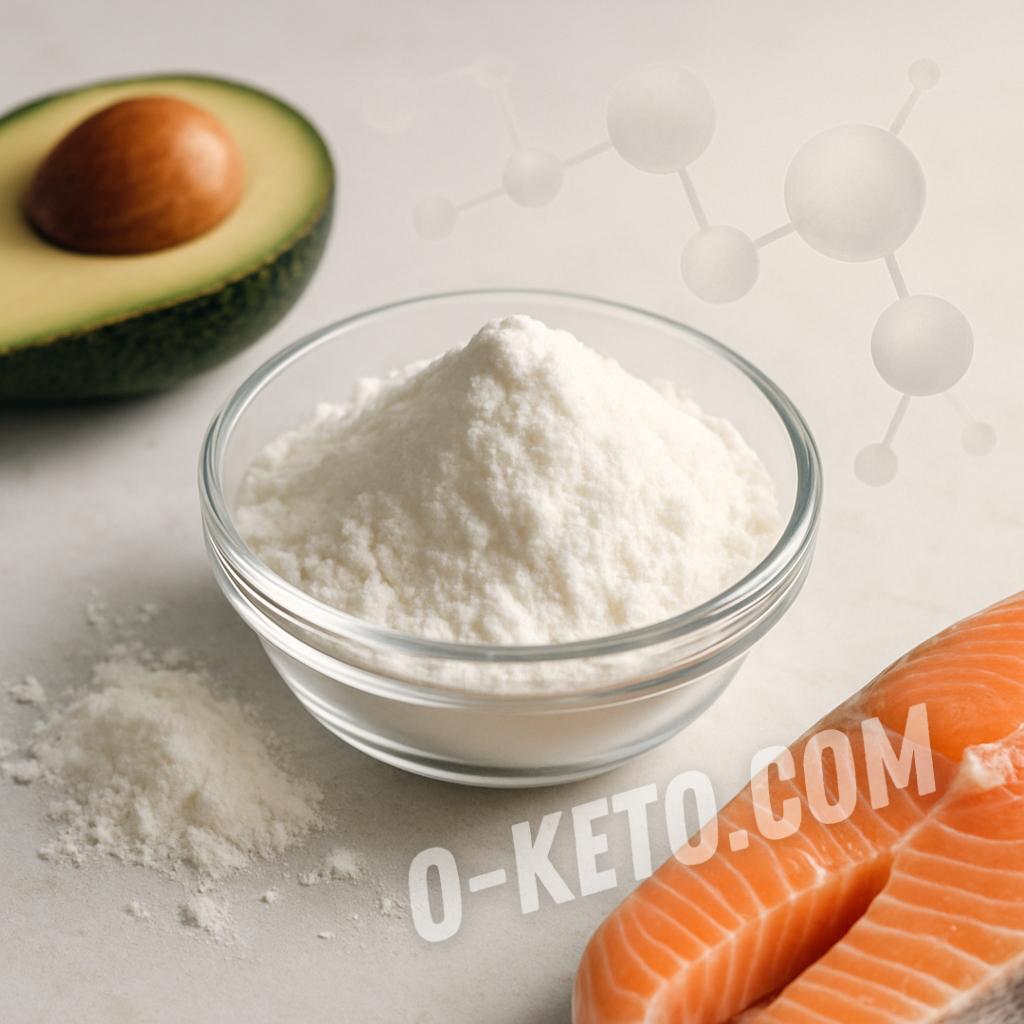
E1450 is sodium starch octenyl succinate. Unlike many modified starches that mainly thicken, E1450 is valued especially for emulsifying properties. Its molecule gains regions that interact better with fat and water at the same time. This helps hold aromatic oils, colors, fat-soluble components and emulsions in powders, drinks, sauces and dry mixes.
In simple terms, E1450 is useful where oil or flavor needs to be distributed evenly in a water-based or dry system. Plain starch is not very good at this. Sodium starch octenyl succinate can work as a carrier and stabilizer: it helps make powdered flavor, a dry drink, sauce or emulsion more uniform. That makes it technologically different from starches used only for thickness.
How E1450 works
Octenyl succinate groups give starch amphiphilic properties: part of the structure is attracted to water, while another part interacts better with the fat phase. Because of this, E1450 can stabilize small oil droplets and help convert aromatic oils into powder form. This is especially important in drinks, flavorings, vitamin premixes, sauce mixes and products that need even distribution of lipophilic substances.
This does not make the ingredient nutritionally valuable by itself. It remains a starch derivative with a different technological role. If E1450 is listed, it does not always mean a thick starchy sauce. Sometimes it is a carrier for flavor or microencapsulated oil. From a low-carb perspective, however, amount, serving size and total carbohydrates still need to be checked.
Where E1450 appears
Sodium starch octenyl succinate may appear in powdered drinks, flavorings, dry mixes, sauces, emulsion products, glazes, encapsulated oils, sports products and diet mixes. It helps hold flavor, color, oil and beverage cloudiness without separation. In some cases the quantity may be small, but the role in product stability is meaningful.
On a label, it is useful to separate two situations. If E1450 appears at the end of a flavoring, its carbohydrate contribution may be trace. If it is part of the base of a powdered drink, meal replacement, sauce or sweet mix, together with maltodextrin, sugar, syrups and starches, the product may be meaningfully carbohydrate-containing. Its emulsifying role does not make it neutral.
Keto and LCHF context
In keto and LCHF, E1450 should not be judged exactly like a thick starch, but it should not be ignored either. In a flavor capsule or tiny amount in a seasoning, it may be practically irrelevant. In a powdered drink, bar, sauce mix or diet-style product, it may be part of a broader system of carbohydrate carriers. That system matters more than one code.
Sports and weight-loss products deserve special caution. They may promise protein, vitamins or low sugar while containing flavor carriers, maltodextrin, starches and sweeteners. In diabetes, insulin resistance and strict ketosis, checking sugars alone is not enough; all carbohydrates per serving matter. If the product is consumed daily, even small carriers become a regular part of the diet.
Tolerance and practical choice
In ordinary amounts, E1450 is not a separate problem for most people. Products containing it, however, are often complex: flavors, sweeteners, acids, emulsifiers, colors, protein isolates and other carriers can together affect digestion and appetite. If a powdered drink or sauce causes bloating, sweet cravings or unstable satiety, the whole formula may be responsible.
For strict low-carb choices, it helps to separate whole food from technological mixtures. Meat, fish, eggs, vegetables and simple sauces usually do not need E1450. Powders, flavored drinks and industrial emulsions need it more often. This is not an automatic ban, but it is a good reason to ask why the product is needed in the diet and whether a simpler option with recognizable ingredients would work better.
If you have any questions about the term "E1450 (sodium octenyl succinate starch)", you can ask them to AI. Please note, a low-cost OpenAI model is used. It may answer questions about disease treatment with errors!

 1 / 4
1 / 4


 1 / 4
1 / 4


 1 / 4
1 / 4

