


E150d (a caramel IV, sulfite-ammonia caramel)
Sulphite ammonia caramel E150d is a dark class IV caramel colour often used in drinks and sauces; for LCHF, the full composition, serving size and regularity matter more than the code alone.
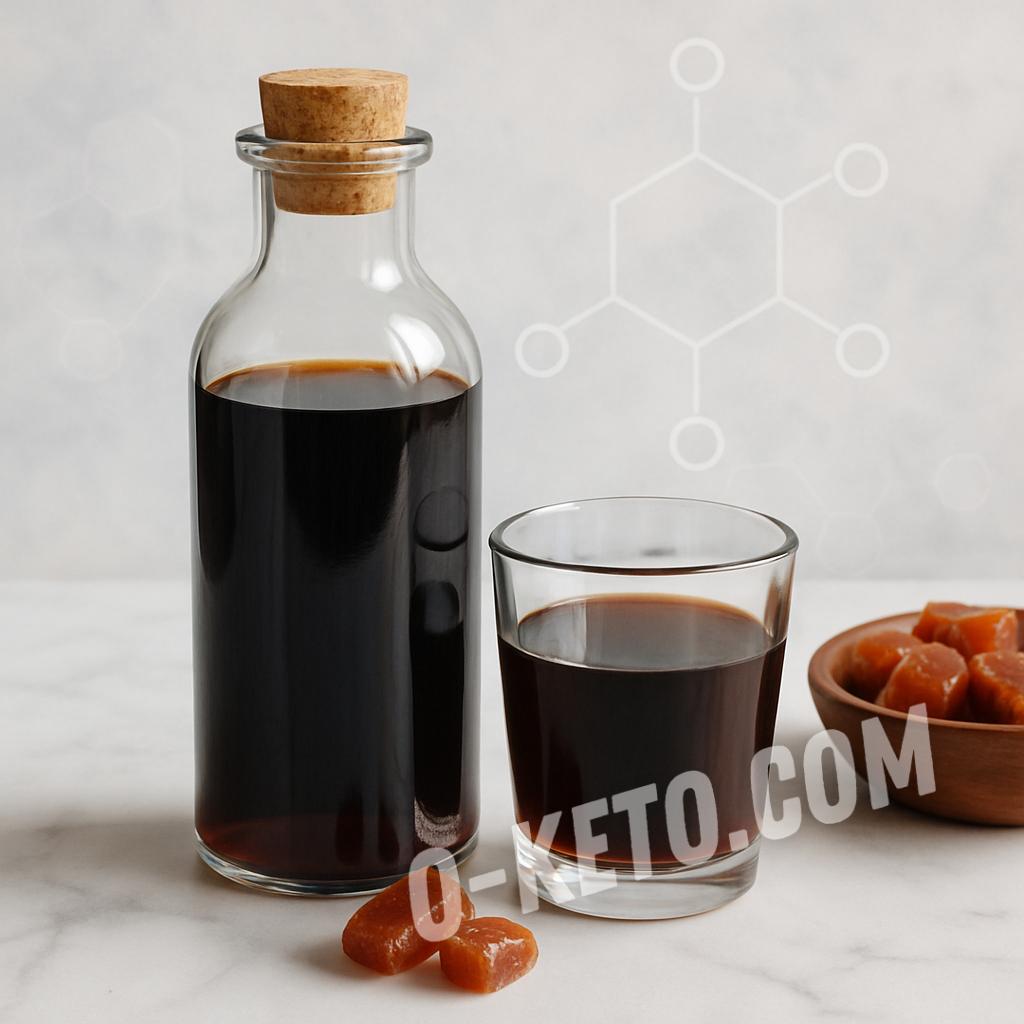
E150d, or sulphite ammonia caramel, is a class IV caramel food colour. It is produced by heating carbohydrate raw materials with both sulphite and ammonium compounds. It is one of the most common dark caramel colours because it gives a stable brown shade and works well in many drinks, sauces and industrial products where appearance must remain consistent from batch to batch.
Nutritionally, E150d should be understood without panic and without naivety. It is not a spoonful of sugar or homemade caramel, even though the technology starts from carbohydrate material. In the finished product it is usually used for colour, not sweetness. The products containing it can be very different: from nearly carbohydrate-free drinks or vinegars to sweet sauces, syrups and dessert mixes.
Why E150d is separate
Caramel colours are divided into four classes, and E150d is defined by the combination of sulphite and ammonia processing. This affects colour intensity, solubility, stability and the possible profile of processing by-products. E150d therefore cannot simply be treated as the same thing as E150a, even though both give brown colour. For the technologist they are different tools; for the consumer they are different codes that need context.
E150d is often chosen when a dark, strong and stable shade is needed. It may help a drink look familiarly dark, a sauce seem thicker and more roasted, or a dessert appear more caramel-like. Colour can strengthen flavour expectations more than actual nutritional value. A brown product is therefore not necessarily more natural, aged or nourishing.
Where it appears
E150d is often associated with dark carbonated drinks, but the list is wider. It may appear in sauces, marinades, vinegars, bouillon products, confectionery, desserts, some alcoholic drinks, flavoured products and prepared mixes. In some cases it only standardises shade; in others it is part of a broader sensory design together with acids, sugar, sweeteners and flavourings.
For a label reader, the role of the product matters more than the fact that it is brown. A small serving of sauce with meat, a glass of sweet soda and a dessert syrup are different nutritional situations. The same colourant may be present in all of them, but carbohydrate load, appetite effect and place in the diet will be completely different.
Safety, 4-MEI and control
For ammonia and sulphite ammonia caramels, 4-methylimidazole, or 4-MEI, is often discussed as a possible processing by-product. EFSA considered such compounds in its re-evaluation of caramel colours. The practical conclusion is not that every product containing E150d must immediately be excluded, but that specifications, production control, permitted use levels and total intake matter.
If a person rarely consumes products with E150d, this colourant is usually not the main dietary factor. If dark carbonated drinks, sweet sauces and industrial desserts are present every day, the problem becomes broader. Regularity brings not only colourant exposure, but also a habit of sweetness, acids, flavourings, large portions and replacement of real food with products of low nutrient density.
Relevance for keto and LCHF
E150d does not automatically mean that a product contains many carbohydrates. A dark drink or sauce may be low in carbohydrate if it contains no sugar, starch or syrups. In practice, however, E150d often appears in products where sugar, glucose-fructose syrup, molasses, maltodextrin, fruit concentrates, sweet flavoured bases or large amounts of sweeteners are also present.
For low-carbohydrate eating, three questions are useful. How many carbohydrates are in the serving? Does the product trigger cravings or overeating? Does it replace normal sources of protein, fat, minerals and fibre? E150d itself is responsible for colour, but the product around it may be relatively neutral or completely unsuitable for regular LCHF eating.
How to decide
If E150d appears near the end of the ingredient list, the product is used rarely and it is not based on sugar, there is no need to make the code the central problem. If it appears in a sweet drink, syrup, sauce or dessert, the whole product needs assessment. Large liquid servings deserve special caution because they are easy to consume quickly, provide poor satiety and often reinforce intense flavour habits.
A diet with good satiety rarely needs frequent products where colour, acidity, sweetness and flavour are assembled artificially. Meat, fish, eggs, natural fats, leafy greens, vegetables, fermented foods and simple homemade sauces provide more value than searching for the perfect industrial dark drink. E150d can be an acceptable label detail, but it should not become a daily companion of eating.
If you have any questions about the term "E150d (a caramel IV, sulfite-ammonia caramel)", you can ask them to AI. Please note, a low-cost OpenAI model is used. It may answer questions about disease treatment with errors!


 1 / 4
1 / 4


 1 / 4
1 / 4 1 / 4
1 / 4
 1 / 4
1 / 4