


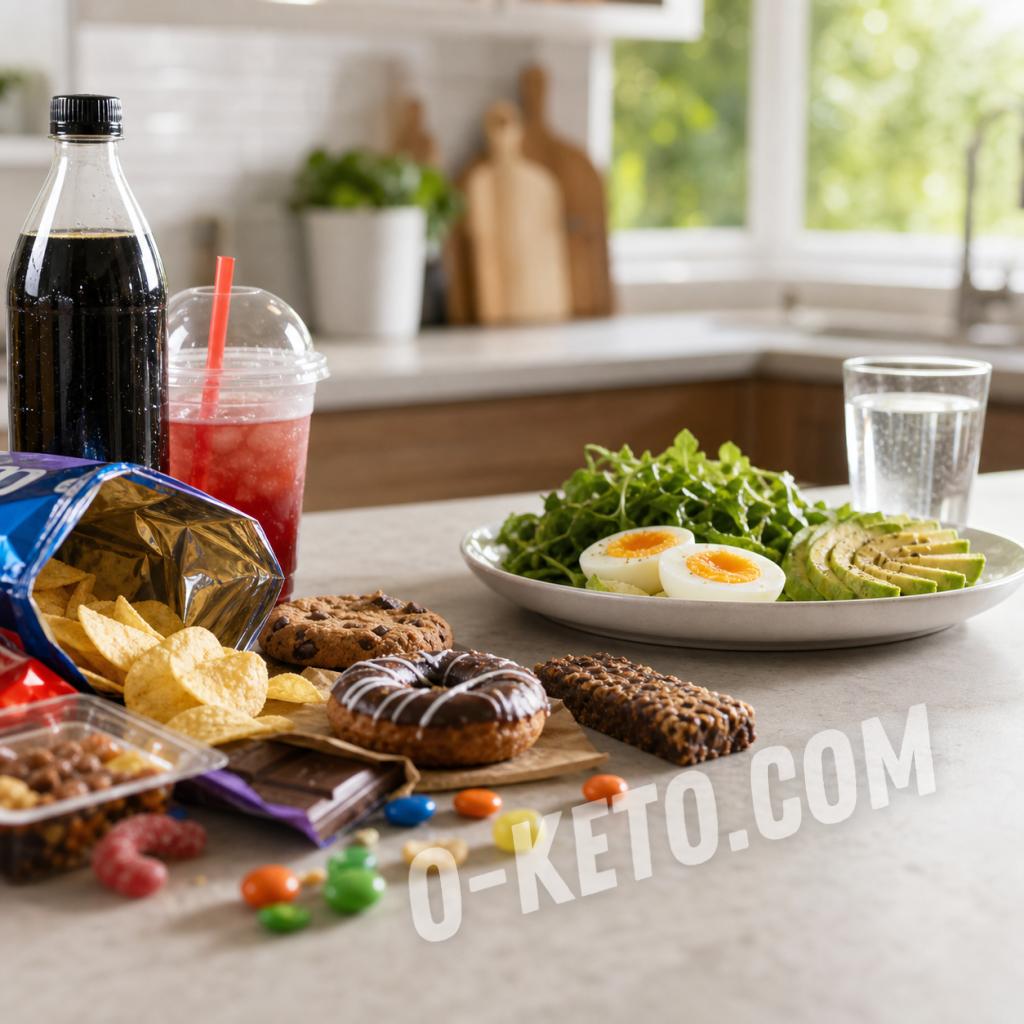

Snacking is often presented as a harmless habit or even as a strategy to prevent overeating, but in real life it can easily do the opposite. For many people it keeps appetite active, shortens the comfortable gap between proper meals, and makes weight loss harder instead of easier. The problem is usually not one emergency snack on the road or an occasional piece of fruit. It is the repeated pattern of eating often enough that the body is rarely truly hungry and rarely truly satisfied. Food becomes a constant background stimulus rather than a clear meal with a beginning and an end.
When food arrives too often, especially in the form of sweet drinks, bars, cookies, fruit snacks, flavored yogurts, or other so-called healthy snacks, glucose and insulin receive new signals many times during the day. After that, many people become hungry again quite quickly or start looking for another bite, something sweet, or something crunchy. This creates a loop in which the snack gives brief relief but also makes the next wave of appetite come sooner. The effect is especially obvious with refined carbohydrates and sweet taste, because they often provide very little real satiety.
Why hunger often comes back stronger after a snack

One reason is that many snacks do not give the body a full meal-completion signal. They are often low in protein, low in volume, low in fiber, and too dense in quickly available energy. A person eats something small, but the metabolic response has already started: appetite is stimulated, insulin may rise, and the brain is reminded that food is available, yet real fullness never arrives. A short time later hunger returns again. That is why the problem may look like weak willpower from the outside, while in reality the eating pattern itself keeps driving the next urge to eat.
The problem becomes stronger when snacking happens while driving, working, scrolling, feeling stressed, or fighting boredom. In that situation food stops being a proper meal and turns into a fast tool for emotional relief. The brain begins to associate discomfort, fatigue, tension, or mental resistance with the need to grab something edible. Over time people may stop clearly separating true physiological hunger from the simple desire to feel better for a few minutes.
For some people the insulin response after a snack creates an extra trap. If a person is already prone to insulin resistance or chooses sweet and starchy foods, hunger may come back soon not because the body objectively needs more food, but because the previous snack has once again destabilized appetite and blood sugar regulation. In practice it feels like a loop: you eat, feel briefly better, and then want more again much sooner than expected.
How snacking interferes with weight loss
Weight loss depends not only on total calories but also on how calmly the body can go between meals without constant food stimulation. If someone has breakfast, then a snack, then another meal, then sweet coffee, then a bar, then fruit, then a few nuts, then dessert, appetite keeps getting restarted throughout the day. In that pattern it becomes harder to tolerate meal gaps, harder to access stored body fat calmly, and harder to feel a stable rhythm of hunger and satiety.
Another issue is that snacks often hide weak main meals. If lunch is low in protein, too small, or built around fear of natural fat, hunger comes back quickly. Instead of fixing the structure of the meal, the person adds another small eating event. From the outside it looks like I eat only a little, but in practice the whole day turns into a sequence of mini-feedings that never produce deep satisfaction.
This is also where calorie counting often breaks down. On paper the diet may not look excessive, but repeated small snacks can quietly add a lot of energy while still failing to create fullness. A person feels that food intake is modest, yet still cannot comfortably wait until the next proper meal and still sees weak progress on the scale. The issue is not only arithmetic. It is the mismatch between appetite control and the pattern of constant eating.
That is why for some people constant snacking can be even more disruptive than a carbohydrate-heavy diet without snack breaks. A high-carb pattern already creates appetite problems, but when several snacks are added on top, the pancreas receives more signals through the day and spends less time in a calmer state. This raises the likelihood of hyperinsulinemia, makes appetite less stable, and keeps the body closer to an endless search for the next food signal.
Which snacks usually keep the problem going
The worst options are usually sweet and starchy foods: cookies, crackers, dried fruit, sweet yogurt, granola, cereal, bottled smoothies, juice, sweetened coffee, sports drinks, protein bars, pastries, and many products marketed as fitness or sugar-free. They may look light and manageable, but they often maintain a preference for sweet taste and reinforce the habit of eating more often than the body actually needs.
Even more respectable snacks such as nuts, cheese, or fruit can become a problem if they are not a rare exception but a permanent bridge between meals. The key is not to label every food as bad. The key is to look honestly at the pattern. If a snack is followed by more hunger, more picking, more cravings, and less ability to wait comfortably for lunch or dinner, then that version of snacking is working against your goal.
What helps break the cycle
The most useful solution is usually not heroic self-control but rebuilding the base of the day. Each main meal should first be checked for enough protein, enough volume, vegetables or other tolerated fiber, adequate salt, and real satiety. For many people that alone reduces the desire to snack much more than another round of discipline ever could. When a meal truly feels complete, the mind stops circling around food every hour or two.
The next step is to remove the most automatic and least useful snacks: eating in front of a screen, tasting food continuously while cooking, sweet drinks, office nibbles, and evening eating just because others are eating too. It also helps to ask a direct question before grabbing food: am I truly hungry, or am I tired, irritated, anxious, procrastinating, or simply looking for quick pleasure? This sounds simple, but it often restores a surprising amount of control.
If dropping snacks abruptly feels too hard, a useful transition step can be to move the usual snack into a regular meal instead of treating it as a separate eating event. What used to happen between breakfast and lunch can temporarily become part of lunch or a dessert immediately after it. For many people this is a softer way to leave the constant-snacking pattern: the number of food signals falls, but the process does not feel like an all-or-nothing punishment.
If the goal is fat loss, keto or low-carb can make this easier for some people because lowering sugar and refined carbohydrates often makes appetite calmer and meal gaps easier to tolerate. Even without strict keto, the main principle stays the same: the fewer chaotic snacks and the more satisfying the real meals, the easier it becomes to control hunger and the steadier weight loss tends to be. A good sign is the ability to move toward the next meal without panic, without constant thoughts about food, and without the feeling that appetite keeps swinging all day.
Sources
- The Effect of Discretionary Snack Consumption on Overall Energy Intake, Weight Status, and Diet Quality: A Systematic Review
- Eating Frequency, Food Intake, and Weight: A Systematic Review of Human and Animal Experimental Studies
- Effect of Short- and Long-term Protein Consumption on Appetite and Appetite-regulating Gastrointestinal Hormones: A Systematic Review and Meta-analysis of Randomized Controlled Trials
- The Effect of Fiber on Satiety and Food Intake: A Systematic Review
- Snack Food, Satiety, and Weight
- Frequency of Meals and/or Snacking and Energy Intake: A Systematic Review – National Academies of Sciences, Engineering, and Medicine


