


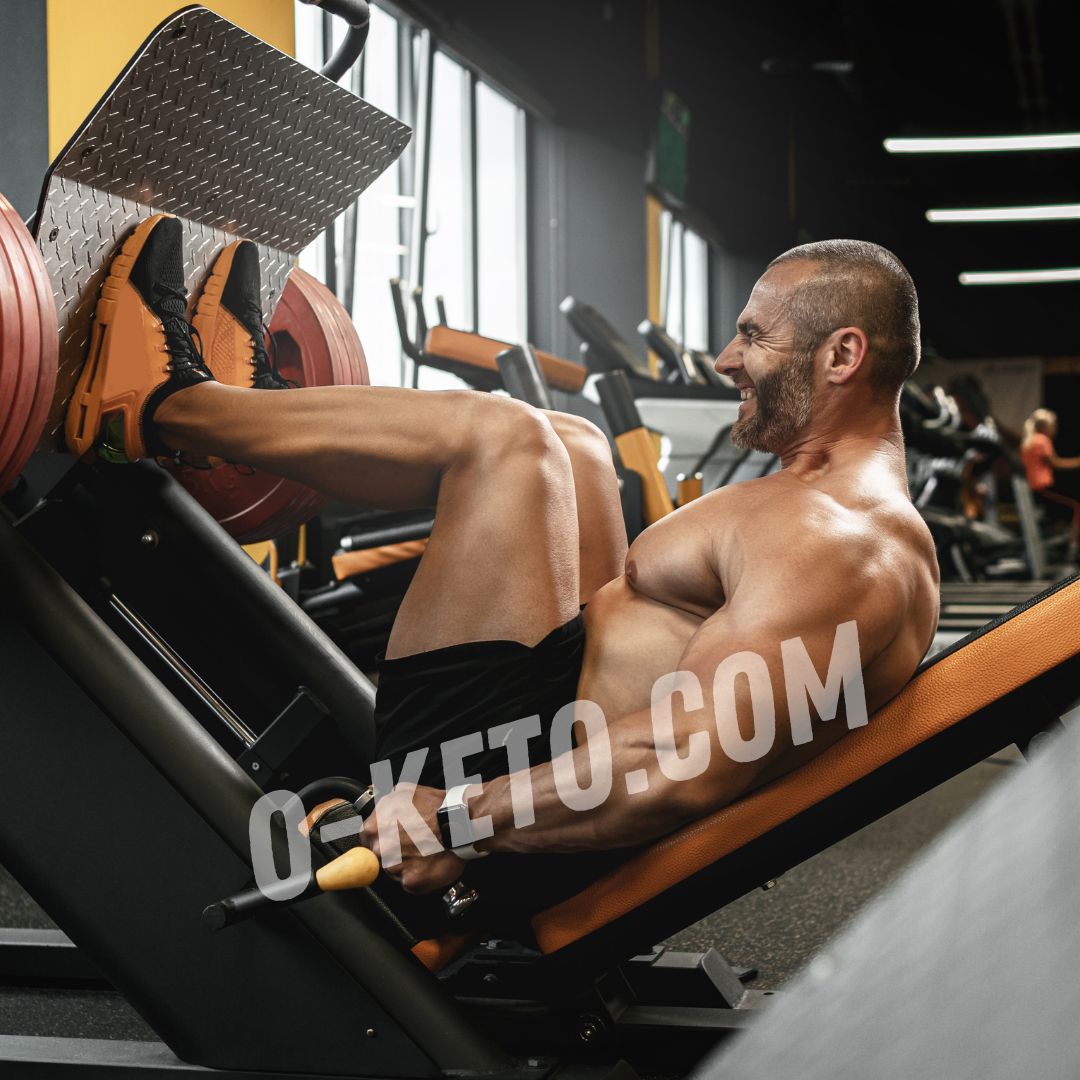
Leg press is a popular exercise performed on a machine that effectively targets the lower body.
It serves as a great alternative to squats for those looking to strengthen their legs and increase their mass while minimizing strain on the back.
The leg press is done on a specialized machine where you push a weighted platform with your legs. The foot position on the platform allows you to change the focus of the load on different muscle groups.
Muscles Engaged During Leg Press
- Quadriceps. The primary muscle group, especially with a narrow foot placement.
- Gluteal Muscles. Actively work when the feet are placed low and the platform is lowered deeply.
- Hamstrings. Engaged with a wide foot placement or deep repetitions.
- Calf Muscles. Partially involved for stabilization during the movement.
- Stabilizing Muscles. The core and lower back help maintain a stable body position.
Execution Technique
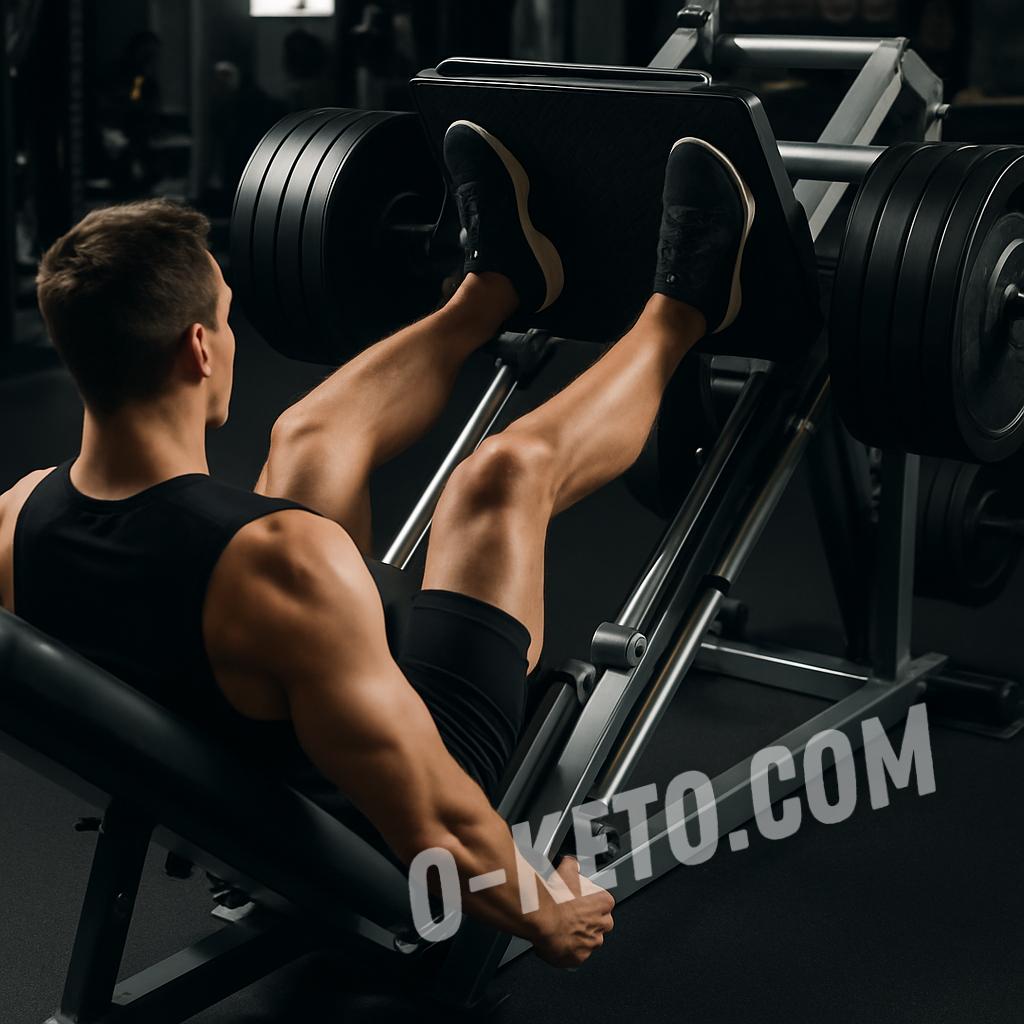
Preparation:
- Sit in the machine, pressing your back and lower back against the seat back.
- Place your feet on the platform shoulder-width apart, with your toes slightly turned outward.
- Hold onto the handles of the machine for better stabilization.
Starting Position:
- Ensure your knees are slightly bent, and the platform is secured on the locks.
- Release the platform from the locks by pressing with your feet.
Lowering:
- Slowly lower the platform by bending your knees.
- Stop when the angle in your knees reaches about 90 degrees (or less if flexibility allows).
Raising:
- Engage your leg muscles and push the platform upward, returning to the starting position.
- Do not fully straighten your knees to avoid excessive strain on the joints.
Completion:
- After completing the set, return the platform to the safety locks.
Benefits
Back Safety: spinal load is minimal compared to squats.
Focus on Legs: the exercise allows you to concentrate on working the legs, excluding stabilizing muscles of the upper body.
Versatility: allows you to change foot positions to redistribute the load on different muscles.
Strength and Mass Development: effectively contributes to increasing muscle mass in the lower body.
Impact of Foot Position on Load
High Foot Position: focuses on the gluteal muscles and hamstrings.
Low Foot Position: increases the load on the quadriceps.
Wide Foot Placement: more work on the inner thigh muscles (adductors).
Narrow Foot Placement: engages the quadriceps and outer thigh muscles.
Common Mistakes and How to Avoid Them
Excessive Lowering of the Platform: can cause knee or lower back injuries.
Lower the platform only to a comfortable depth.
Fully Straightening Legs at the Top: creates unnecessary strain on the knee joints.
Keep your knees slightly bent.
Rising Lower Back from the Seat Back: can lead to lower back injury.
Ensure your back remains pressed against the seat.
Too Fast Repetitions: increase the risk of injury.
Perform the movement slowly and in a controlled manner.
Incorrect Weight Choice: too heavy a weight worsens technique.
Work with a weight that allows you to maintain proper technique.
Tips for Beginners
- Start with Light Weights: this will help you master the technique and avoid injuries.
- Warm Up: do light warm-ups for your knees and hips before sets.
- Control Your Breathing: inhale when lowering the platform, exhale when pushing up.
- Work Through Full Range: if flexibility allows, lower the platform to a 90° angle in your knees.
Comparison with Other Leg Exercises
Squats: experience a higher load on stabilizing muscles and the spine.
Lunges: load is distributed to each leg alternately.
Leg Press: safer for the back and allows working with heavier weights.
Sources
- Comparison of Joint and Muscle Biomechanics in Maximal Flywheel Squat and Leg Press
- Effects of technique variations on knee biomechanics during the squat and leg press
- Analysis of muscle activation during different leg press exercises at submaximum effort levels
- Core Muscle Activation in Three Lower Extremity Exercises With Different Stability Requirements


