


Do you often burn yourself in the kitchen? It's a sign:
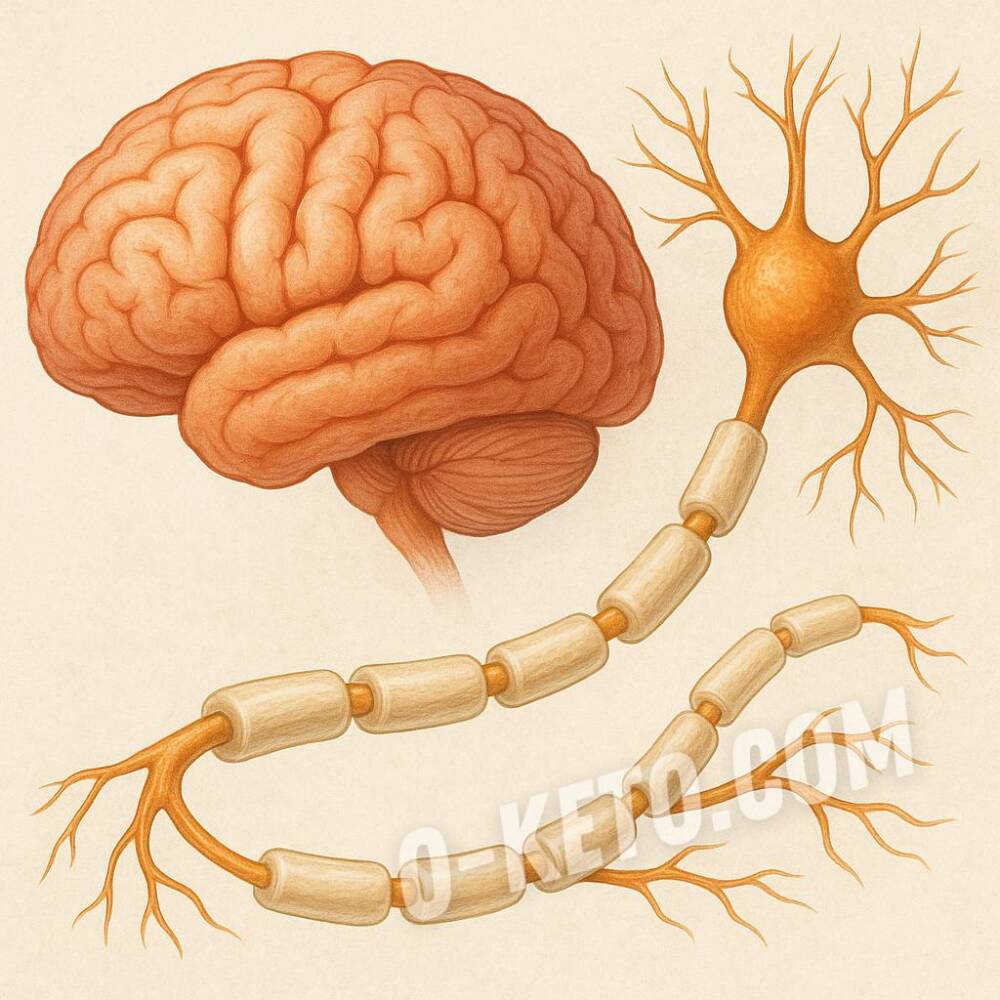
If you often get burned, it is a sign of damage to the myelin sheaths. They determine how quickly information is delivered to the brain. If the sheaths are in good condition, you will pull your hand away from the hot surface before you get burned. This is because the speed of information transmission is 100 meters per second. Myelin sheaths are made up of fats and proteins. They are constantly damaged, so the body regularly repairs them. But if there are not enough of these components in the diet, there is nothing to restore. And the reaction speed decreases from 100 meters to 2 meters per second. Damage to the myelin sheaths can also occur due to the predominance of pathogenic microflora.
Myelin sheaths play a key role in the speed of nerve impulse conduction, and their condition is directly related to the body's response to dangerous stimuli, including hot objects.
Myelin — is a special layer composed mainly of lipids (about 70–80%) and proteins (20–30%), which forms a kind of "insulation" around the axons of nerve cells. This sheath acts as an electrical insulator, accelerating the transmission of impulses along nerve fibers by tens and even hundreds of times.
With healthy myelin sheaths, the transmission of signals along motor and sensory fibers can reach speeds of 80–120 m/s. This means that information about touching a hot object reaches the spinal cord and brain almost instantly, activating the reflex withdrawal of the hand even before the conscious sensation of pain.
Damage to Myelin Sheaths
Myelin sheaths undergo constant micro-damage during the functioning of the nervous system and require regular restoration.
When myelin sheaths are damaged (for example, due to a deficiency of fats in the diet, a lack of B vitamins, especially B12, or due to chronic inflammatory and demyelinating processes), the speed of impulse transmission decreases.
In the absence or significant damage to the myelin sheath, the speed of impulse conduction drops to 0.5–2 m/s (an average of about 1 m/s). This leads to a delayed reaction: the brain receives the signal with a delay, and a person physically has time to get burned more severely.
Examples of conditions where the speed drops to ~1 m/s:
- Multiple sclerosis (demyelination of the CNS)
- Polyneuropathies (including diabetic)
- Deficiency of vitamin B12 or copper (necessary for myelin synthesis)
- Chronic deficiency of fats and cholesterol in the diet
- Deficiency of plasmalogens
What are Plasmalogens and Why are They Needed for Myelin
Plasmalogens are partially synthesized by the body itself, but their full formation requires metabolites from beneficial gut bacteria. Bifidobacteria and some strains of Lactobacillus are involved in the production of plasmalogen precursors.
In dysbiosis (the predominance of pathogenic flora), the production of these metabolites sharply decreases.
As a result:
- The synthesis of plasmalogens decreases.
- Myelin sheaths are renewed less effectively and become more fragile.
- The speed of impulse conduction decreases → higher risk of burns, numbness, and paresthesias.