


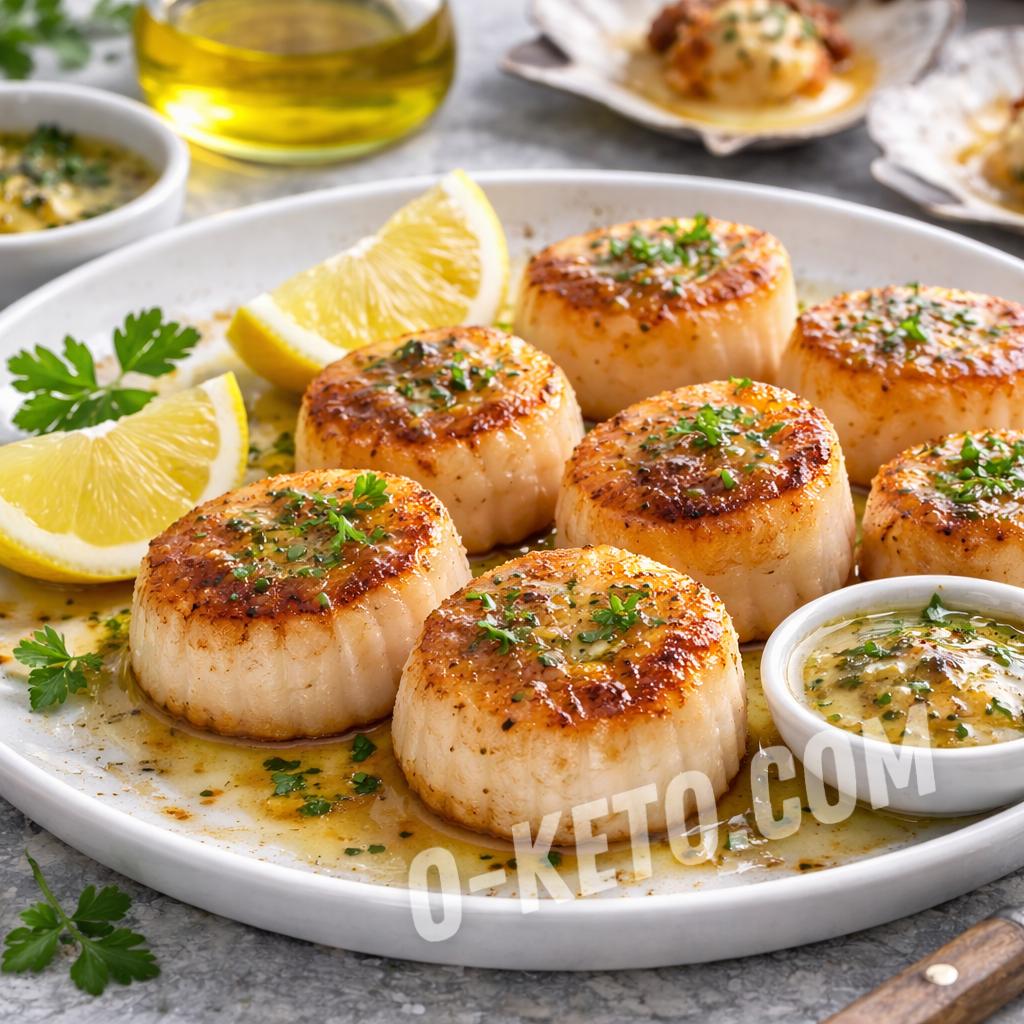

Scallops are one of the most exquisite bivalve mollusks.
Only the adductor muscle, which holds the shell closed, and the roe — “coral” — are used for food. Scallop meat has a delicate, almost creamy texture and a pronounced sweetness.
They can be eaten raw or seared so that the inside remains juicy and almost rare.
Choosing Scallops
Scallops are quite expensive everywhere. They inhabit deep waters, and significant waste is generated during processing, which affects the price. Their shells are so beautiful that they are often used for serving dishes.
Live Scallops. This is the most valuable option. Fresh scallops are easier to dry, making it easier to achieve a caramelized crust when frying and to maintain texture.
How to choose:
- the shells are tightly closed or close when touched;
- the smell is fresh, marine;
- the meat is firm, without sliminess;
- the coral is bright, without dark spots.
How to open:
- insert a short, sturdy knife between the shells;
- twist the knife to widen the gap;
- cut the adductor muscle;
- remove the meat along with the coral.
Frozen Scallops on the Shell. Usually sold already cleaned on one shell. They do not need additional cleaning — just thaw and cook:
- thaw slowly in the refrigerator;
- add garlic butter to each shell;
- cook on the grill or under the broiler;
- do not overcook.
Frozen Scallop Meat. Most often sold without coral. Thawing should be as gentle as possible — at least 24 hours in the refrigerator, after which it should be thoroughly dried before frying.
Best Cooking Methods
- frying;
- grilling;
- baking;
- raw.
When frying, it is important to use a very hot pan and a minimal amount of oil. The scallop is seared for 1–2 minutes on each side until golden brown, leaving the center juicy. Full cooking deprives it of tenderness and sweetness.
Best Pairings:
Practical Recommendations
- be sure to dry before frying;
- salt just before cooking;
- do not cover while frying;
- let it “rest” for 1–2 minutes after removing from heat;
- do not flip too often.
Scallops are a product of precision. They require high temperature, short cooking time, and minimalism in spices. With the right approach, they reveal a sweet, juicy, and almost creamy flavor.


