


TOP-5 studies on keto, low-carbohydrate diets, and intermittent fasting from 01.06.2026 - 08.06.2026
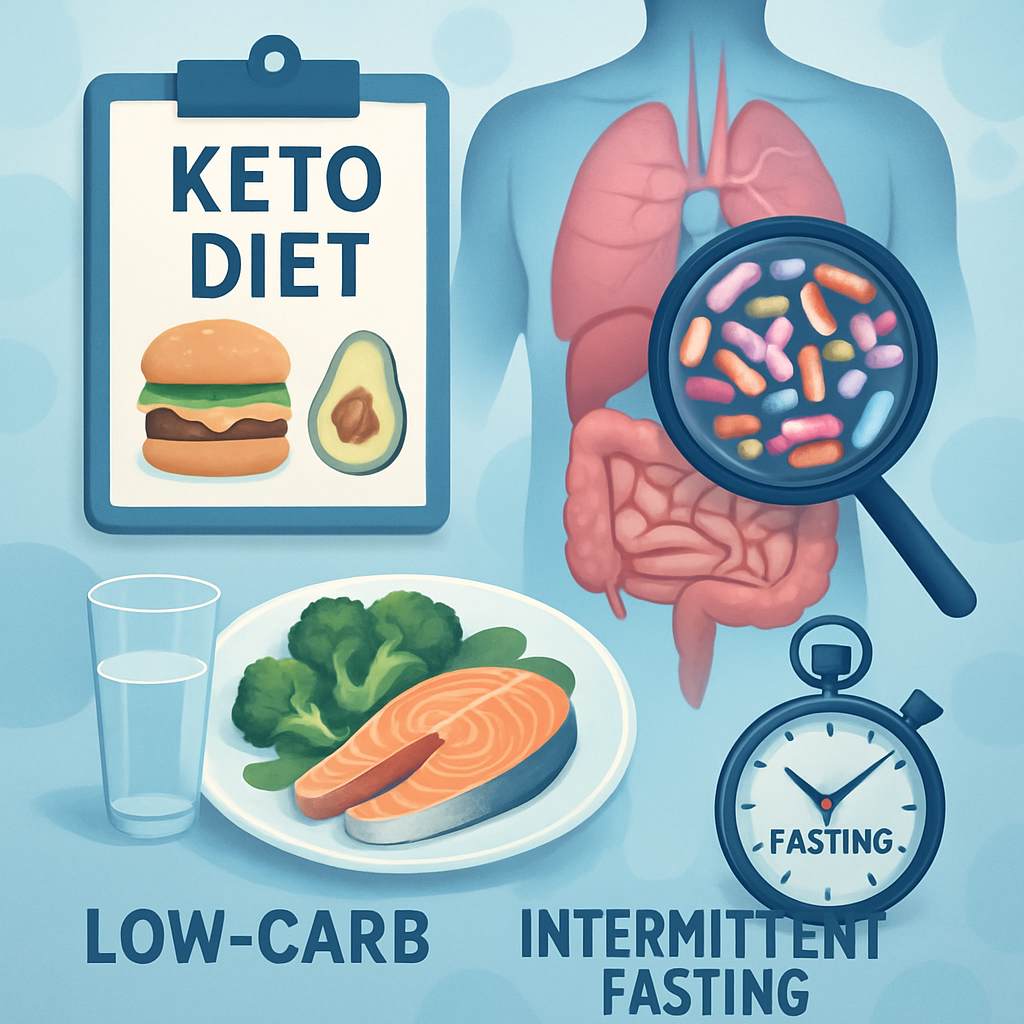

The ketogenic diet as a therapeutic strategy for neurodegenerative diseases: from mechanisms to translational challenges; Very low-carbohydrate ketogenic diet in women with endometrial cancer and overweight who have not previously received treatment: a randomized feasibility study; The ketogenic diet modulates depressive behavior; The ketogenic diet may regulate autophagy in mesenchymal stem cells; Can targeting the gut microbiome become a new treatment option for intermittent claudication?.


5. Can targeting the gut microbiome become a new treatment option for intermittent claudication?
About the work.
The study aims to evaluate the potential use of the gut microbiome as a new treatment method for intermittent claudication. Various dietary interventions and their impact on microbial balance are considered.
Results.
The available abstract does not describe the results in sufficient detail.
4. The ketogenic diet as a therapeutic strategy for neurodegenerative diseases: from mechanisms to translational challenges.
About the work.
The review explores the molecular mechanisms through which the ketogenic diet may protect against neurodegeneration, including the use of ketone bodies and reduction of oxidative stress. Potential benefits of the diet in various neurodegenerative diseases are discussed.
Results.
The available abstract does not describe the results in sufficient detail.
3. Very low-carbohydrate ketogenic diet in women with endometrial cancer and overweight who have not previously received treatment: a randomized feasibility study.
About the work.
The study aims to assess the feasibility of a very low-carbohydrate diet in women with overweight and endometrial cancer. Participants were randomized to receive either a very low-carbohydrate diet or a standard diet for 21-28 days.
Results.
Fifteen participants completed the study, with 91 ± 4% of VLCD meals consumed, a weight loss of 5.5 ± 0.8%, and no serious adverse effects. Glucose and insulin levels decreased by 22 ± 5.9% and 60 ± 3.8%, respectively, while total cholesterol and low-density lipoproteins increased by 6 ± 2.7% and 17.8 ± 8.9%. RNA-Seq showed enrichment of CD8 + T-cells, confirmed by immunohistochemical analysis.
2. The ketogenic diet modulates depressive behavior through intestinal bacteria's tyrosine metabolism.
About the work.
The study aims to investigate the mechanism by which the ketogenic diet (KD) affects depression-related behavior in mice. The impact of changes in the gut microbiome on the protective effect of KD was assessed.
Results.
The ketogenic diet induces rapid and dynamic changes in the gut microbiome, and its depletion reverses the protective effect of KD against depression-related behavior. Colonization of mice with the KD-enriched bacterium Roseburia intestinalis maintains the diet's protective effect. The protective effect of KD is associated with a reduction in the co-metabolite p-Cresol sulfate, the addition of which neutralizes the protective effect of KD.