


TOP-5 Studies on Sports and Bodybuilding from July 11, 2026 to July 18, 2026
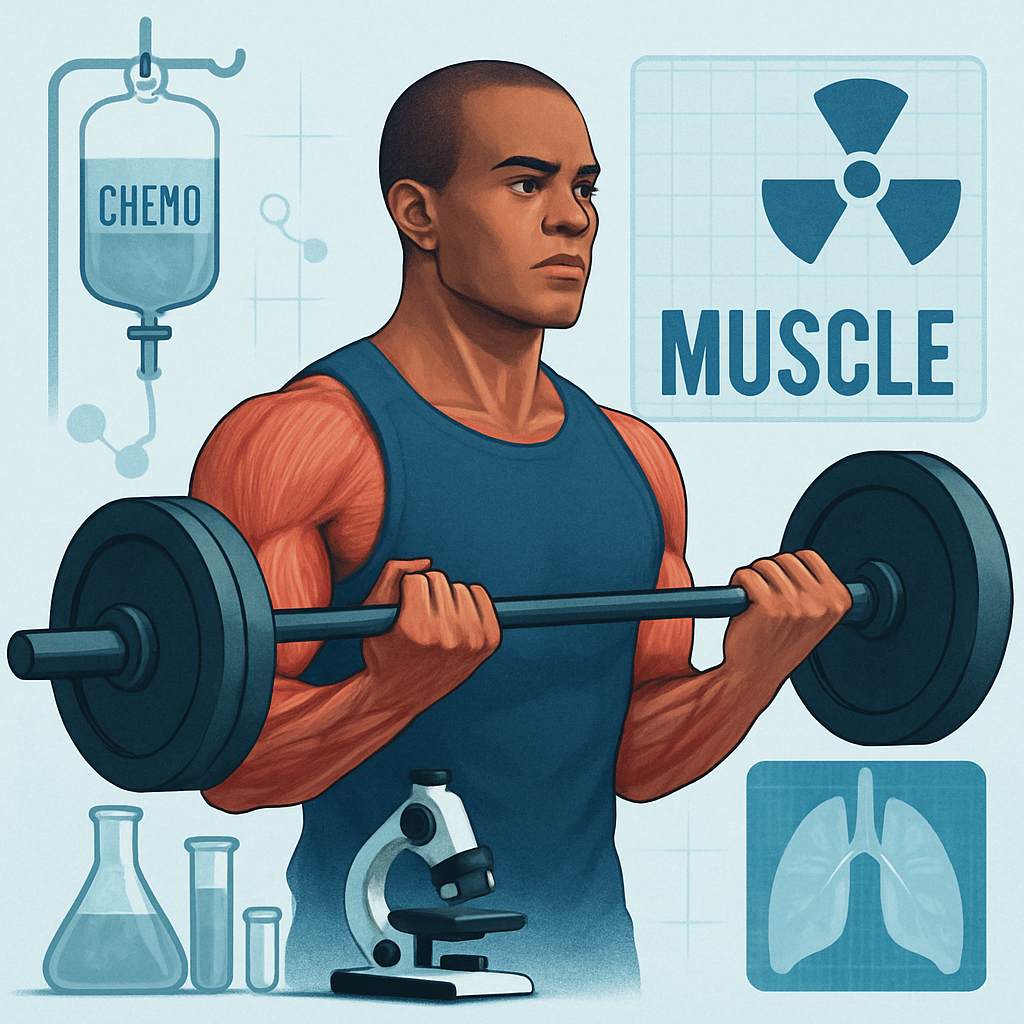

The effect of progressive resistance training on lean soft tissue mass in patients with head and neck cancer during combined chemo- and radiotherapy: a randomized controlled trial DAHANCA 31; The effect of resistance training with/without photobiomodulation on muscle and respiratory function in difficult-to-control asthma: a randomized study; The effect of blood flow restriction training on endothelial function and arterial stiffness: a systematic review and meta-analysis; Sleep-disordered breathing as a risk factor for sarcopenia in older adults: a narrative review; Initial dose of cardioplegia indexed to left ventricular mass in mitral valve surgery.


5. The effect of progressive resistance training on lean soft tissue mass in patients with head and neck cancer during combined chemo-radiotherapy: a randomized controlled trial DAHANCA 31.
About the study.
The study aimed to assess the impact of progressive resistance training on soft tissue mass and functional outcomes in patients with head and neck cancer undergoing chemoradiotherapy. Results from the training group were compared to a control group that did not engage in physical activity.
Results.
Patients in the resistance training group lost 3.4 ± 0.6 kg of soft tissue mass, which was not different from the control group. However, performance measures for chair stand and arm curl exercises significantly improved in the resistance training group compared to the control group (p < 0.05).
4. The effect of resistance training with/without photobiomodulation on muscle and respiratory function in difficult-to-control asthma: a randomized study.
About the study.
The study aimed to evaluate the effects of combined resistance training and photobiomodulation therapy on muscle and respiratory functions in patients with difficult-to-control asthma. Results of resistance training with and without photobiomodulation were compared.
Results.
RT+PBMT safely improves peripheral muscle strength and physical performance better than RT alone. The intervention did not improve lung function or asthma control.
3. The effect of blood flow restriction training on endothelial function and arterial stiffness: a systematic review and meta-analysis.
About the study.
The study aimed to compare the effects of blood flow restriction training (BFRT) and conventional training on endothelial function and arterial stiffness. Data from 35 trials with a total of 764 participants were included.
Results.
BFRT did not demonstrate advantages over conventional training regarding flow, AIx, CAVI, artery diameter, and ankle-brachial index. Effects depended on the protocol: BFRT with resistance improved FMD, while BFRT using manual grip and some interval/aerobic protocols reduced FMD.
2. Sleep-disordered breathing as a risk factor for sarcopenia in older adults: a narrative review.
About the study.
The study examines the relationships between obstructive sleep apnea and sarcopenia in older adults, focusing on pathophysiological mechanisms. Population-based studies and genetic data supporting bidirectional causal relationships are discussed.