


TOP-5 studies on keto, low-carb diets, and intermittent fasting from 17.08.2026 - 24.08.2026
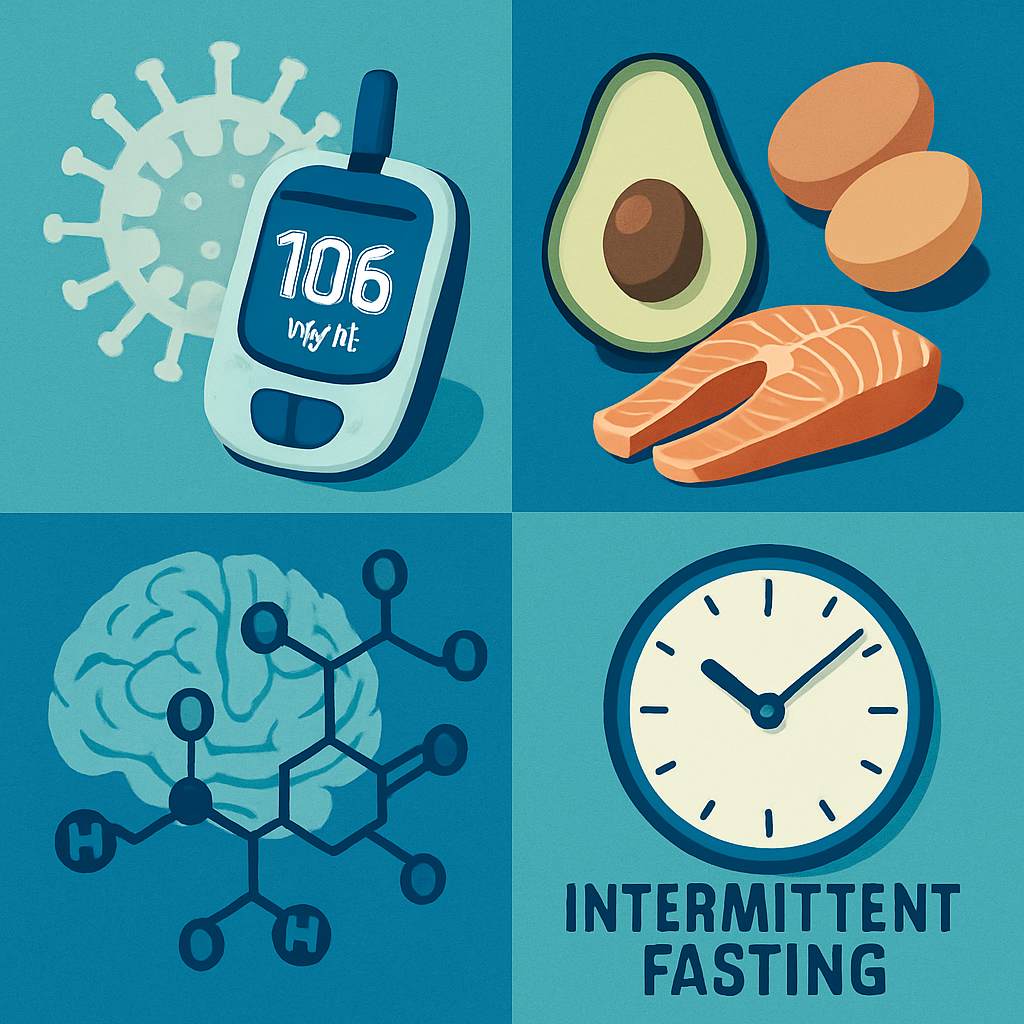

Early onset of euglycemic diabetic ketoacidosis after starting empagliflozin treatment, triggered by acute influenza; Ketogenic diet suppresses synaptic activity; β-Hydroxybutyrate reduces neuronal excitability; Intermittent fasting alleviates neuropathic pain and cognitive deficits; Meal timing affects cardiovascular and neuroendocrine physiology and disease risk.


5. Early onset of euglycemic diabetic ketoacidosis after starting empagliflozin treatment, triggered by acute influenza and ketogenic diet.
About the study.
The study focuses on a case of early onset of euglycemic diabetic ketoacidosis (euDKA) in a patient with type 2 diabetes after starting empagliflozin amidst influenza and a ketogenic diet. It discusses the factors contributing to the development of euDKA and the need to reassess the diabetes diagnosis with low insulin requirements.
Results.
The patient exhibited high levels of β-hydroxybutyrate and metabolic acidosis despite minimal insulin requirements. C-peptide levels were maintained, and antibodies to glutamic acid decarboxylase and islet cells were negative.
4. β-hydroxybutyrate reduces neuronal excitability through GIRK channels.
About the study.
The research aims to explore the molecular mechanisms linking metabolic state to seizure suppression using β-hydroxybutyrate (β-HB). The effects of β-HB on neuronal excitability and synaptic transmission in the hippocampus of mice were compared.
Results.
Administration of β-HB rapidly reduced the duration of status epilepticus. β-HB hyperpolarized granule cells of the dentate gyrus, increased action potential threshold, and decreased firing frequency. β-HB suppressed synaptic transmission to granule cells, leading to reduced population activity and neuronal excitability.
3. Ketogenic diet suppresses synaptic activity.
About the study.
The publication addresses the topic: Ketogenic diet suppresses synaptic activity.
Results.
The publication does not have an available abstract in the source.
2. Intermittent fasting alleviates neuropathic pain and cognitive deficits through the neuroimmune mechanism Alistipes finegoldii-Hippurate-STING.
About the study.
The research aims to evaluate the impact of intermittent fasting on chronic pain and cognitive impairments and to explore the mechanism associated with the microbiota and metabolites. The effects of intermittent fasting and the addition of live bacteria Alistipes finegoldii were compared in various models of chronic pain.
Results.
Intermittent fasting reduces mechanical allodynia, thermal hyperalgesia, and cognitive deficits, as well as decreases anxious behavior. Strengthening intestinal barrier integrity, reducing neuroinflammation, and altering microbiota, with A. finegoldii as the most enriched species, were noted.