


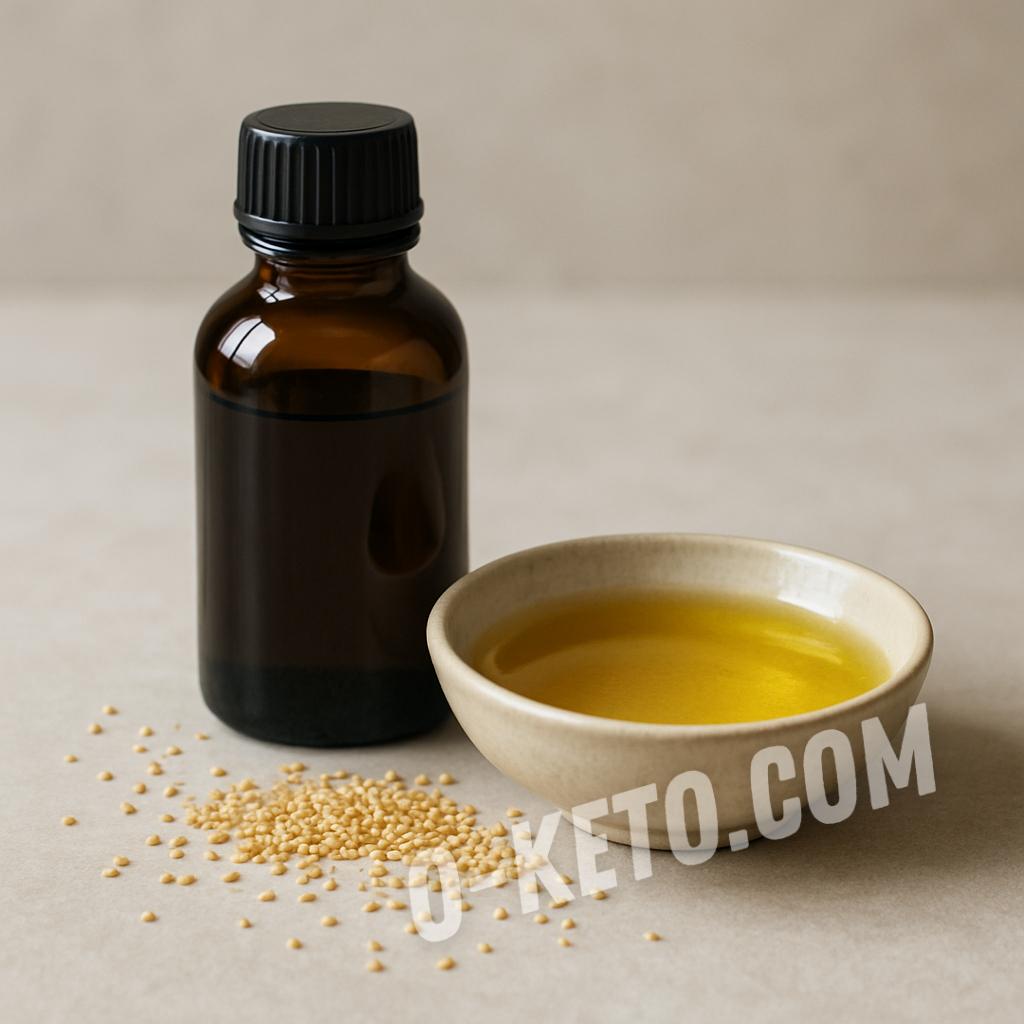

Amaranth oil is pressed from amaranth seeds rather than the leafy part of the plant. It is a dense specialty oil with a grainy, nutty flavor and is usually treated less as an everyday neutral fat and more as a concentrated product for dressings, finished dishes, and small functional additions. Interest in it comes not only from its fatty acid profile, but also from its association with squalene and tocopherols.
For keto and LCHF, amaranth oil is straightforward from a macro perspective: it contributes fat with virtually no carbohydrates. Still, that does not automatically make it the best daily oil. It tends to be more expensive than olive, avocado, or coconut oil, and it also carries a meaningful share of omega-6 fats. It usually makes more sense as a rotation oil than as the single base fat in a kitchen.
What kind of oil it is
Amaranth is an ancient pseudocereal, and its seeds do not yield large amounts of oil, which is one reason the finished product is often costly. On the market you can find cold-pressed versions, more refined versions, and supplement-style capsule products. Flavor depends heavily on processing: cold-pressed oil is usually more aromatic, while refined oil is softer and more neutral.
In compositional terms, amaranth oil is usually discussed for its linoleic and oleic acids, its moderate saturated fat fraction, and its minor compounds such as squalene, tocopherols, and phytosterols. The problem is that “amaranth oil” on a label does not guarantee the same profile from brand to brand, so product quality matters more here than with many cheaper oils.
How it fits into keto
As a food, it is basically a fat source. It does not kick someone out of ketosis by itself if it is a real unsweetened oil without starches or flavoring blends. The more relevant keto question is not carbohydrate load, but how it fits into the overall fat balance of the diet. If the menu is already heavy in seed oils rich in omega-6, pouring in large amounts of amaranth oil just because it sounds “healthy” is not automatically a good idea.
It works best in modest amounts: in vinaigrettes, over cooked vegetables, in creamy sauces, or stirred into warm finished dishes after heat is off. That is often enough to get the flavor and the functional interest without building the whole kitchen around it.
How to use it
Amaranth oil usually works better as a finishing oil than as a heavy-duty frying fat. Good uses include:
- salad dressings with mustard, lemon juice, or mild vinegar;
- cold sauces based on yogurt, sour cream, or tahini;
- a small drizzle over roasted vegetables;
- finishing creamy soups after cooking;
- blending with seed or nut pastes when a grainy nut-like note is welcome.
Deep frying or long high-heat cooking is usually not where this product makes the most practical sense.
How to choose and store it
Look at extraction method, bottle size, dark packaging, and the realism of the producer’s information. A small bottle is often better than a large one if the oil is used only occasionally. It also helps when a brand gives more than vague wellness language and actually explains refinement level, composition, or storage conditions.
After opening, keep the bottle tightly closed, away from heat and light. If the aroma turns stale, cardboard-like, damp, or rancid, the oil is no longer worth using. With an expensive specialty oil, freshness matters a lot because once oxidation takes over, both flavor and value drop quickly.
Practical limitations
Amaranth oil is still just one oil, not a magic shortcut to a better diet. It can fit keto well, but mainly when used deliberately: in sensible portions, from a decent producer, and as part of a broader fat strategy rather than a miracle staple.


