


Gastritis
Gastritis is inflammation of the stomach lining that may relate to Helicobacter pylori, medications, alcohol, stress, impaired mucosal protection and meal patterns, so understanding the cause matters more than simply suppressing discomfort.




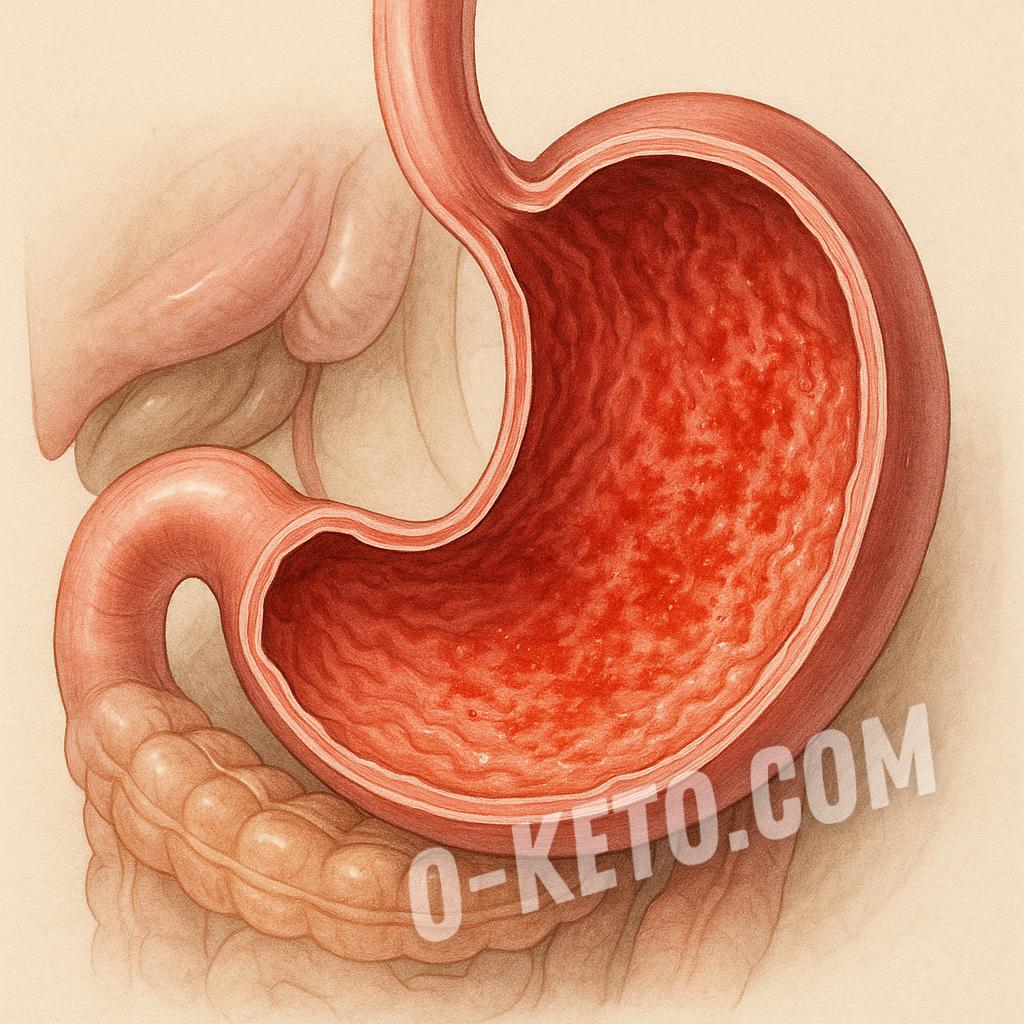
Gastritis means inflammation of the stomach lining, but in everyday language the term is often used for almost any upper abdominal discomfort. In practice it is important to distinguish true inflammatory gastritis from functional dyspepsia, reflux and other conditions that can create similar symptoms. Gastritis may bring burning, heaviness, epigastric pain, nausea, early satiety and poorer tolerance of meals, yet symptoms alone do not explain the mechanism. That is why it is more useful to think not only about an “irritated stomach,” but about the factors that injure or weaken the protective lining.
What commonly causes gastritis
Frequent causes include Helicobacter pylori, nonsteroidal anti-inflammatory drugs, alcohol, smoking, major physiological stress, bile reflux and impaired mucosal defense. Some people become symptomatic after repeated painkiller use, others because of H. pylori infection, and others through a combination of alcohol, meal disruption and other stressors. The same word, “gastritis,” can therefore imply very different management depending on the cause.
Identifying the mechanism is what makes treatment meaningful rather than only symptomatic.
Why symptoms do not reliably reveal the cause
Pain, burning, heaviness and nausea may occur in gastritis, functional dyspepsia, peptic ulcer disease and GERD. Some people have clear mucosal inflammation with only moderate symptoms, while others experience severe discomfort without a dramatic endoscopic picture. Gastric symptoms therefore do not reward overconfident self-diagnosis; duration, relation to meals, medication exposure and the broader background matter.
This is especially important when someone has been “treating gastritis” for years without knowing whether H. pylori was confirmed, ulcer risk exists or another condition is hiding behind the same label.
Meals, alcohol and the protective lining
Food by itself is not the only cause of gastritis, but it may intensify irritation when alcohol, erratic timing, overeating, long fasting gaps, excess coffee and poor sleep are also present. During inflammation the stomach often tolerates large portions, fatty meals and rushed eating less well. For that reason some strategies help not because there is one perfect diet, but because they reduce mechanical and chemical stress on the lining.
Low-carbohydrate or other eating patterns should be judged by tolerance rather than ideology: if a regimen clearly worsens symptoms, that matters more than the name of the diet.
When more serious risks should be considered
Weight loss, vomiting blood, black stool, anemia, progressive weakness, increasing difficulty eating, persistent night pain and symptoms that remain despite ordinary measures all deserve more careful evaluation. In such cases the goal is no longer only comfort; it is also exclusion of peptic ulcer disease, complications, marked inflammation and other pathology.
It is also important to remember that prolonged uncontrolled use of painkillers or alcohol may keep injuring the mucosa even when medicines temporarily reduce the symptoms.
The most useful overall approach
The most sensible way to think about gastritis is as an inflammatory or irritative process in the stomach lining in which the cause matters most: H. pylori, medication exposure, alcohol, meal pattern or a combination of factors. Once the mechanism is clearer, it becomes easier to tailor food, treatment and follow-up rather than simply living from one episode of discomfort to the next.
Why clarifying the cause changes management
Once it becomes clearer whether discomfort is linked to H. pylori, medication exposure, meal pattern or another mechanism, the need for endless guessing about what is “irritating the stomach today” begins to fall away. Clarifying the cause is what makes treatment shorter, more precise and safer than repeating the same symptom-based remedies blindly.
That is why with prolonged stomach complaints it is often wiser to clarify the cause and risks properly once than to live for years under the broad label of “gastritis” without knowing what keeps the inflammation or discomfort going.
If you have any questions about the term "Gastritis", you can ask them to AI. Please note, a low-cost OpenAI model is used. It may answer questions about disease treatment with errors!


 1 / 4
1 / 4

 1 / 4
1 / 4


 1 / 4
1 / 4

 1 / 4
1 / 4